Songhai Goffa Headdress – The Original Head Fashion of Mali
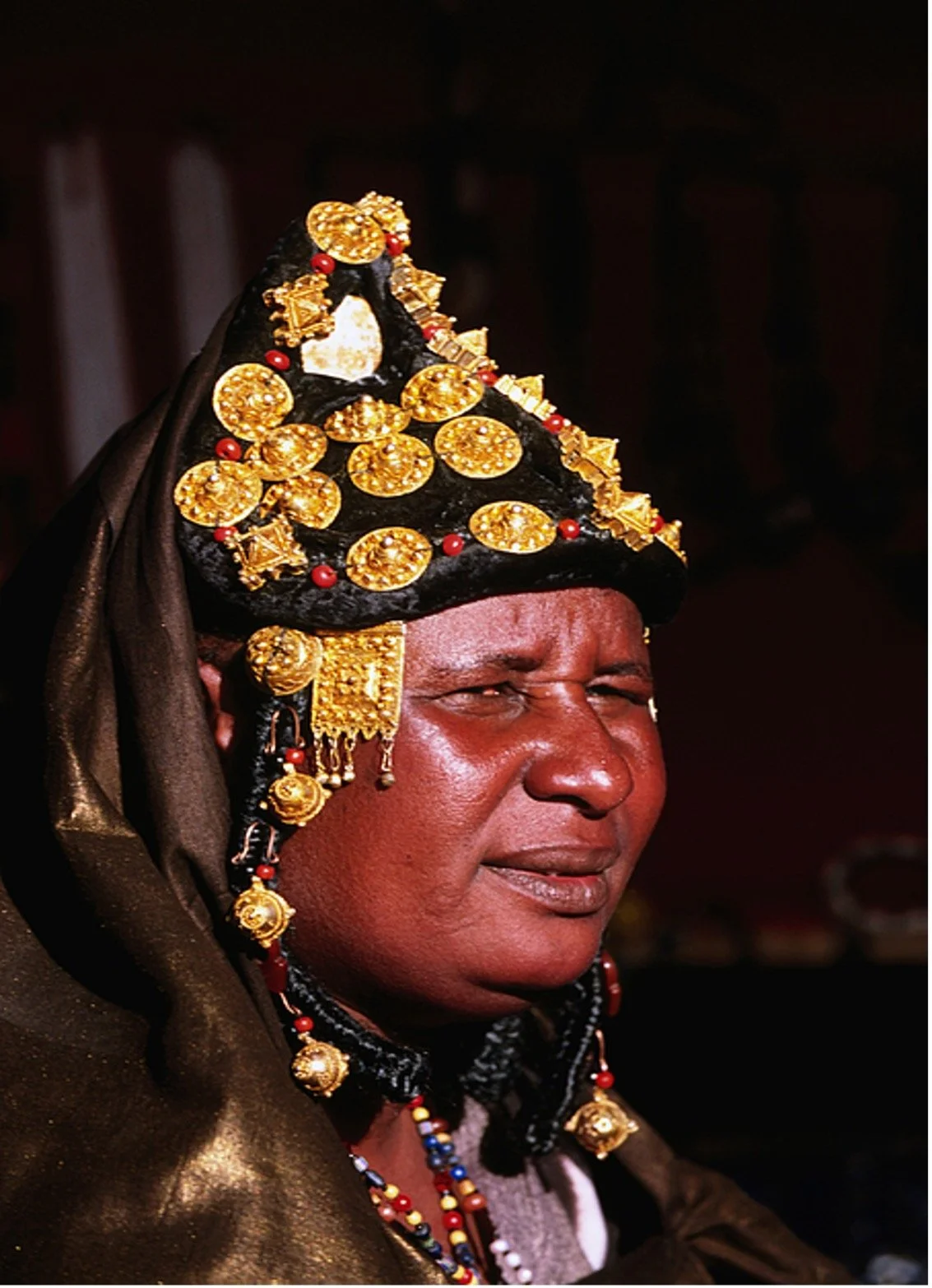
Songhai Headdress, photographed by Frans Lemmens
Fashion icons, items, and examples are typically represented more by clothing and footwear, rather than by accessories such as bags and neckwear. Even less represented are headwear. Nevertheless, if there is one thing abundant in Africa when it comes to fashion, it is headwear. Virtually every culture possesses headwear that speaks of its history and tradition when worn.
One particularly prominent headdress with as much allure and history as a headdress could hold is the Songhai headdress, which is known by another name (Goffa) in some circles. This article examines the traditional headwear of the Songhai and Tuareg.
A Heady Introduction
The head or hair is a vital part of a female, in cultural terms. It offers aesthetic, social, psychological, and religious significance. For some cultures, hair is proudly displayed and decorated, while for others, it is covered with a glamorous or simple head covering. For the Songhai and Tuareg people, glamorous is the way to go.
The headdress is a celebrated assemblage of various materials, including cloth, beads, and precious stones, all woven together in a stylized manner. However, due to its historical use by royalty, there are many ways it can be stylized and worn, making it quite challenging for outsiders to identify the caste by the headdress they are wearing.
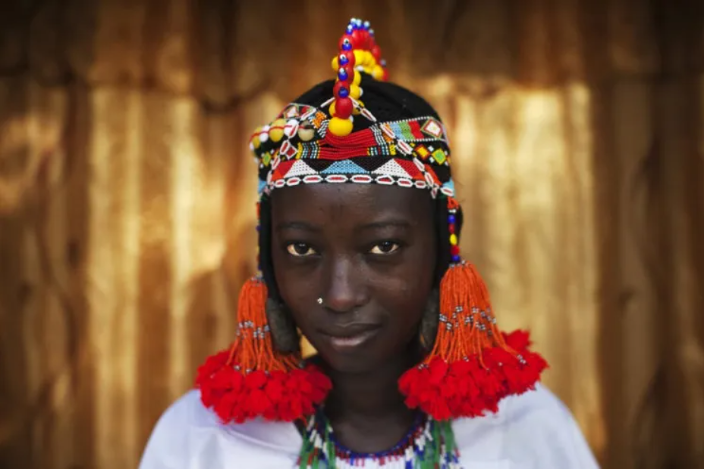
Songhai Headdress made by Hally Bara, photographed by Joe Penney
Who Exactly Wears It?
The Goffa is exclusively worn by married women of the Songhai and Tuareg cultures, particularly those who live in Mali and Niger. It helps to identify or visually differentiate between married and unmarried women in ceremonies and essential cultural events associated with these cultures.
Some of these cultures refer to the headdress as a hairstyle because it can be worn in conjunction with the hair in certain instances and events. However, the fact remains that the Songhai people designed the Goffa as a separate piece from the head and wear it like a crown, confirming its status as a headdress.
Traditionally, royalty and members of the elite class wear the Songhai headdress, especially on special occasions. The headdresses are marked by exceptional and expensive jewelry, gemstones, beads, or sometimes fake hair, which is why it is called hairstyles.
The braids (whether real or fake) were sometimes interwoven with precious metal adornments such as silver or gold called Kurkuru. That served to indicate the high affluence of the wearer’s family ties. The high cost of the headdress and its attachments also contributed to its perceived prestige symbol, as few people could afford to wear it when and where necessary.
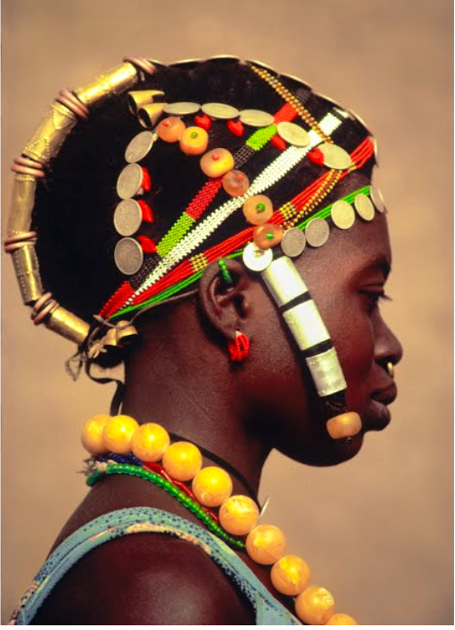
Songhai Headdress by Carol Beckwith
What It Stands For
In the Tuareg and Songhai communities, the headdress signifies a crown worn by married women to denote status, honor, and dignity. The Goffa holds much importance in historical contexts in several cities in Mali, especially in Timbuktu, an ancient capital of the Songhai Empire, where the Goffa was exclusively reserved for the queens. That is why it has been associated with various nicknames, one of which is “the hairstyle of the queens.” While this highlights its historical importance, it does not explicitly imply that the Goffa was a mark of absolute power both in the Songhai Empire at the time and in Mali in general.
Nowadays, every married woman can wear a Goffa, but still, only a few can wear theirs with as many precious stones and elegance as those worn by the economically privileged. While it continues to evolve, it also maintains its significance as a symbol of marital status, prosperity, honor, and dignity.
Conclusion
The Goffa maintains its relevance as a pulsating symbol of culture, identity, and tradition among the Songhai and Tuareg people even today. It may no longer be seen as a symbol of marital status today, but one thing is clear: a glance at the Goffa reveals that it is more than just a headdress; it is a living testament to ancestral pride, and a woven archive and quiet proclamation of belonging.