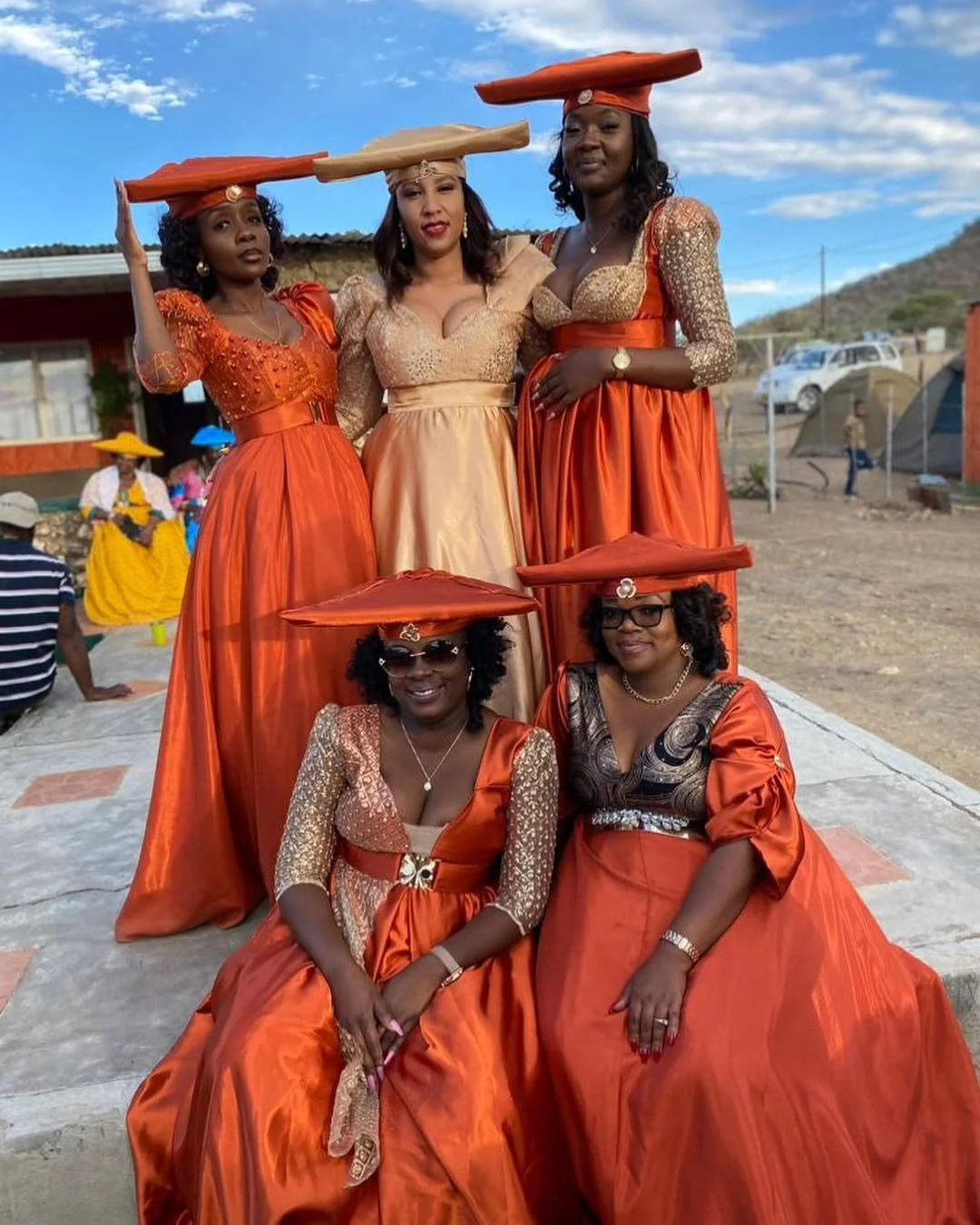
A Group of Namibian Women Stunningly Rocking Herero Dress During a Wedding.
Image Source: Herero Dress
The story woven into the very fabric of the Namibian Herero headpiece, the otjikaiva, is far more profound than mere fashion. It is a powerful narrative of resilience, a tangible act of resistance, and a vibrant symbol of cultural endurance in the face of immense historical trauma. This iconic headdress, alongside the voluminous ohorokova gowns, represents a living testament to how a people can reclaim their identity and narrate their past through clothing.
Before the late 19th-century arrival of German colonizers in Namibia, the Herero people adorned themselves in minimalist, functional garments made primarily from animal hides, particularly cattle leather. Women wore simple leather skirts and aprons, embellished with beads and shells that eloquently conveyed their status and beauty. These indigenous styles were deeply intertwined with Herero cultural beliefs, reflecting intricate kinship systems, age, and marital status, ideally suited to Namibia's arid climate.
However, the 1880s brought a stark transformation with the German colonizers, who imposed rigid European fashion norms and dress codes. Herero men and women were coerced into abandoning their traditional attire in favor of Victorian-style European clothing. Missionaries and colonial officials framed this enforced transformation as a "civilizing mission," a blatant attempt to erase indigenous identity under the guise of modernization.
Between 1904 and 1908, a dark chapter unfolded as German forces perpetrated one of the 20th century's earliest genocides against the Herero people. In a remarkable act of defiance, the survivors began to appropriate the very clothing imposed upon them,the voluminous Victorian gowns, as a profound political statement. Wearing this colonial dress became a powerful form of resistance and remembrance, honoring ancestors who suffered unspeakably under German rule while simultaneously rejecting the shame once associated with African bodies in their traditional attire.
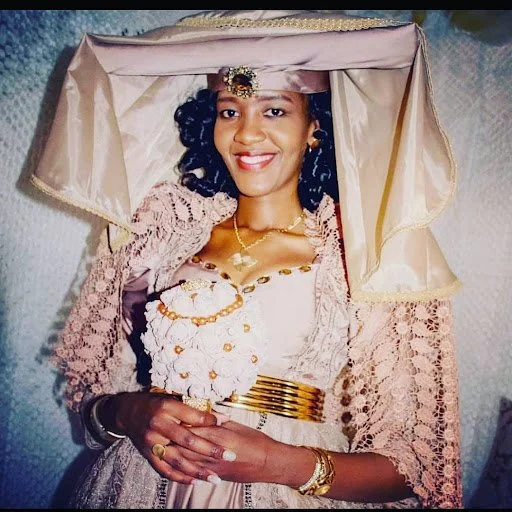
Closeup View of Namibia’s Headpiece Worn During Special Occasions
Image Source: Tjiua Ombazuyoe
Today, the elaborate Herero dress, known locally as the ohorokova, is a striking ensemble featuring full-length gowns with long sleeves, layers of petticoats, and high collars. These gowns are typically crafted from vibrant, modern fabrics, seamlessly blending bold African prints with the adopted Victorian structure. What originated as a symbol of colonial oppression has been triumphantly reclaimed and reimagined into significant cultural symbols of dignity, spirituality, and femininity.
The most iconic element of Herero fashion, the otjikaiva headdress, is distinctive for its shape, strikingly resembling cow horns. This design holds immense cultural significance within Herero society, where cows are revered as sacred, representing unparalleled wealth, status, and a symbol of survival. By integrating the sacred symbolism of cattle into their fashion, Herero women ingeniously merge cherished tradition with their transformed colonial dress, powerfully reinforcing their identity through every thread and fold.
Herero attire assumes particular prominence during ceremonies and commemorative events, most notably on Herero Day. This annual gathering serves as a poignant occasion to honor past leaders and remember the devastating genocide. Women proudly don these magnificent gowns, transforming the streets into vibrant runways of memory, politics, and enduring tradition. The dresses themselves are dynamic, evolving each year with new patterns and fabrics, demonstrating that tradition is not static but a living, expressive, and contemporary force.
Herero fashion has rightly garnered global attention for its striking visual impact and profound historical depth. Photographers like Jim Naughten and designers such as Maxchosa Africa have brought these dresses into the spotlight, sparking both widespread admiration and crucial conversations on cultural appropriation. Despite this global fascination, the attire remains firmly rooted in the Herero worldview, where fashion transcends mere aesthetics to serve as a powerful medium of cultural storytelling and, ultimately, a means of survival.
As Namibia continues its journey of modernization, younger generations of Herero women remain deeply committed to honoring the extraordinary legacy of their foremothers. Some innovators reimagine gowns with sustainable fabrics, while others meticulously maintain traditional silhouettes in new contexts, such as weddings and significant state events. The Herero dress, born from trauma and ingeniously adapted, endures as a magnificent monument of cultural resilience. It stands as a powerful assertion of African identity, woven with pride, memory, and an unyielding spirit that refuses to be erased. This is not just fashion; it is resistance beautifully, powerfully, and defiantly worn.