Function vs Visibility: What Bawsty Reveals About Fashion Systems
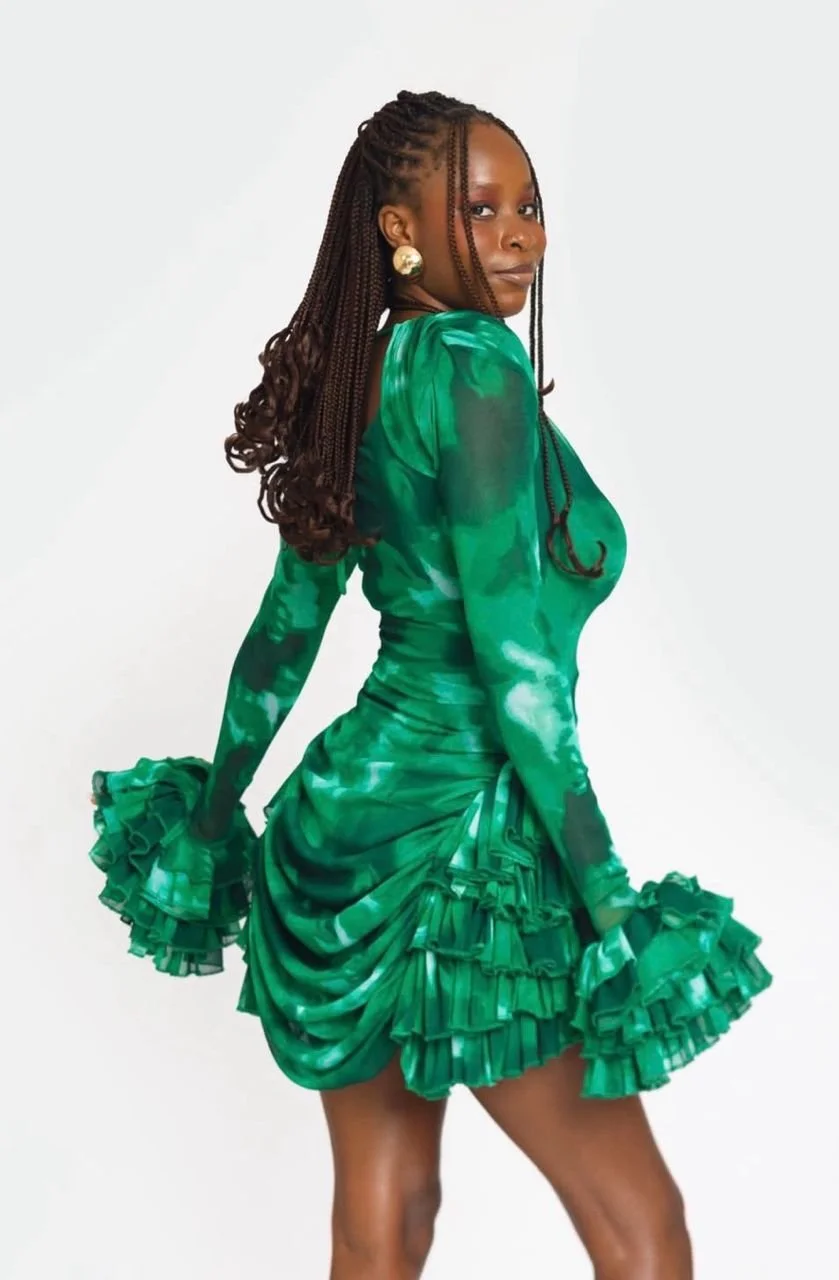
Model wearing Bawsty
Image sourced from ‘Bawsty’ on Instagram
If you’re a busty woman, then the Bawsty brand is for you.
Bawsty is a brand focused on designing clothes that support busty women without necessarily relying on undergarments. So it’s not just about pretty pieces, but about designing pretty pieces that solve a problem.
And that distinction matters.
The brand was founded by two women: Morenike Olusanya and Damilola Onosowobo.
Olusanya is, in a way, the voice. She’s the one who speaks, markets, and explains. She has described herself as the “noisemaker,” the person responsible for making sure the brand is seen and heard.
Onosowobo operates on the other side of the brand. She does the building, the structuring, and making things work. Together, they split what many small brands collapse into one person: vision and execution, voice and system. That split is part of why Bawsty functions as clearly as it does.
Bawsty began from something simple and straightforward. Clothes did not fit busty women properly. So the founders built a brand around solving that problem. They tested their designs on real bodies, adjusting fit repeatedly, and prioritizing comfort and support without sacrificing style.
The result is outfits that are not just visually appealing, but considerate. This is labor-intensive work, so it is slow and requires a willingness to keep refining.
And yet, this kind of precision does not always result in global visibility. Because in fashion, what goes viral is not always what is most “functional.”
Global fashion tends to reward brands that circulate easily, have broad audiences, and whose value can be communicated at a glance. Bawsty’s value lies in how the pieces hold the body. Even without a bra. It does more than look good; it works. But also, the target remains busty women, so it’s not so easy to scale.
Also, the brand operates a slow-fashion model in Nigeria, a country with an unstable material market. This heavily limits the brand’s capabilities.
But for Bawsty, growth is not just about designing so many clothes. It is about constant communication, explaining the pieces, and building trust. It is also about building a community that understands what the brand is trying to do.
They do all this to ensure that the women who need Bawsty find the brand and love it. For many women-led brands, especially in Nigeria, visibility is not given. It is built daily, through effort that extends far beyond the outfits.
And even then, there are limits imposed by location. To become “global,” one requires access to buyers, to the international press, to distribution systems that move fashion beyond its place of origin.
Bawsty is building within Nigeria, navigating production challenges, infrastructure constraints, and the realities of scaling from a local base.
So the question isn’t whether their pieces are good enough, because they're quite excellent. The question is what systems exist to carry that work outward, and who has access to them?
Regardless, Bawsty remains compelling in this conversation for its refusal to generalize. The brand is not designing for everyone, and especially not flattening its audience. It is designed for a specific body, with specific needs, and doing so with a level of care that requires time, testing, and attention.
That specificity is its strength. But in a global fashion system that often rewards universality or at least the appearance of it, specificity can also become a constraint.
So the question goes beyond who has access.
If a brand can identify a real gap, build a loyal audience, create technically thoughtful clothing, and still remain largely local in recognition, then what exactly defines global success?
And more importantly:
Who gets to be seen as global and who is left to build, steadily and successfully, without that recognition?
Maybe time will answer these questions.