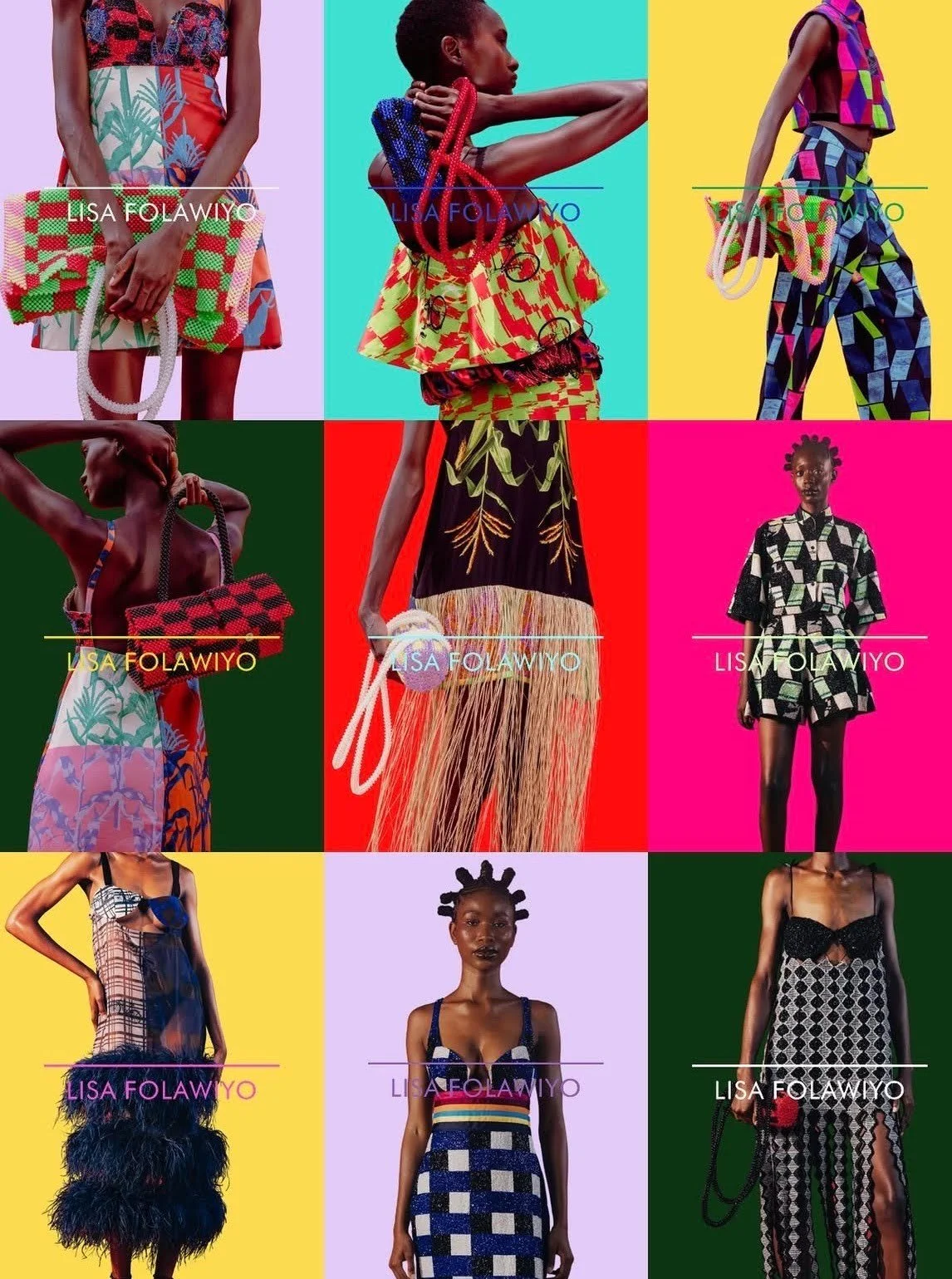
Intentional is the word to describe every piece of art that Lisa Folawiyo creates. It reflects in her brand, Lisa Folawiyo Studio. A brand that is dedicated to spending hours on a piece to transform it into a work of art. They hand-paint motifs, embellish fabrics, and generally transform fabrics from their original state into something more.
This insistence on intention is not just about aesthetics. Since founding her label in 2005 (originally as Jewel by Lisa), Folawiyo has built a practice defined by reworking textiles, particularly Ankara, through tailoring, embellishment, and surface manipulation.
That approach is rooted in Folawiyo’s own journey into fashion. Before becoming one of Nigeria’s most recognizable designers, she studied and briefly practiced law. After the birth of her daughter, she began experimenting with clothes from home because she had the desire to create the kind of clothes she wanted to wear. At that time, Ankara was largely viewed through a traditional lens. Folawiyo became interested in what would happen if the fabrics were treated differently through embellishment and tailoring.
Starting with limited resources and a small setup, she built what would eventually become Lisa Folawiyo Studio. From this origin story, we see that the brand’s current obsession with transformation can be traced back to its beginning of taking something familiar and making people see it differently.
But to understand the brand today, it is necessary to move beyond Ankara. Recent collections show leather, silk, and custom prints, all treated with the same philosophy of transformation. A motif can first be developed in Ankara, then hand-painted onto leather, and then embellished for hundreds of hours.
Hence, we can see that this brand dedicates itself to using various creative means to stand out. This approach positions the brand firmly on the luxury fashion line. Not just in pricing or positioning, but in its emphasis on craftsmanship as narrative. There are hours of embellishment, hand processes, and technical construction. Time becomes part of the clothes’ value. The clothes are designed to be read as much as they are worn.
And this is where the question of the audience comes in.
At a glance, the use of cultural elements like the Ankara references, adire influences, and motifs suggests a Nigerian grounding. But the treatment of these elements complicates that assumption. The garments are constructed as statements. Structured silhouettes, dense embellishment, and hybrid materials. So they function within the visibility economy.
Lisa Folawiyo’s designs photograph well. The pleats catch light, the embellishments create texture, and the silhouettes hold shape. Even the language used by the brand aligns with how clothing performs visually. These are fashion pieces that work quite well for editorials, campaigns, and curated digital spaces.
In this context, the wearer becomes only one part of the equation. The image it presents and the audience receiving it are important as well. This positioning reflects the change that has occurred in Nigerian fashion.
Over the past decade, platforms like Lagos Fashion Week have expanded the reach of local designers, connecting them to international buyers, media, and global consumers. Designers like Lisa Folawiyo now operate across multiple contexts, producing work that must resonate both within and beyond Nigeria.
But global visibility comes with its own demands. The pieces have to resonate with different audiences. Lisa Folawiyo’s response to this is precision. Her designs do not deviate in their Africanness but instead receive a level of detail and precision that is similar to top fashion houses in the global fashion space.
Lisa Folawiyo’s designs anticipate being looked at. Each piece is made as though they would be examined for craftsmanship. As if someone would walk up to the wearer to understand the piece's narrative.
So the focus therein is not necessarily only on who buys the piece and wears it, but who sees it and the tale that it tells them.
Does it tell a tale of a young girl who was in love with bicycles?
Or
Of a girl fascinated by the beauty and taste of maize and who looks forward to maize season yearly?
Whatever story you get from it, the fact remains that this African designer is designing to tell stories to anyone who can see it.
