The Intersection Between Music and Fashion: The Soundtrack at Lagos Fashion Week
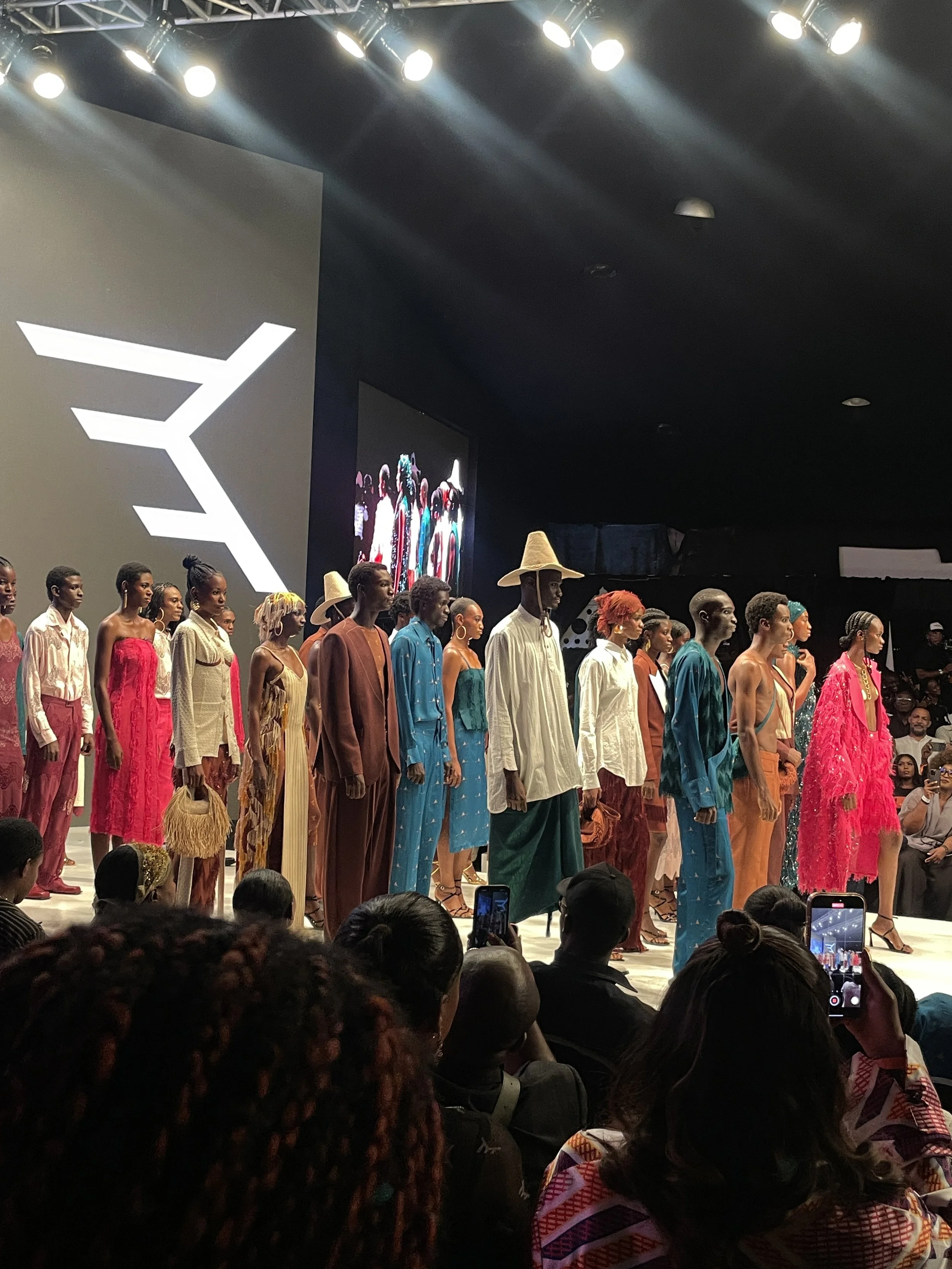
Lagos Fashion Week 2025 photographed by Precious Akveba
At Lagos Fashion Week, sound did more than just fill the silence. Every baseline, drum, and harmony helped shape the stories that were being told on the runway. As models strutted down the runway, the soundtracks helped create mood, emotion, and memory. It became a guide for the collection, saying what form and fabric couldn’t say on their own.
Personally, for every sound I paid attention to, it became a memory stuck in my head, and these soundtracks will, for a long while, continue to evoke the emotions they were meant to evoke.
For designers like Tia Adeola, music is not just accompaniment. It’s a choreography for feelings. When asked what she wants the audience to experience if they couldn’t see her clothes, she said, “One thing about music is that it kind of reflects your mood, and it can change how you feel, the same way I think clothes do. Right now, I’m working on my runway soundtrack for my show on the 9th, and I’ve been speaking to a Lagos-based orchestra. I’m like, ‘Hey, I’m opening my show with gowns that are rooted in culture. So I want to start with something really slow, really melancholic, that captivates the audience's attention, and can we build it up and start to go faster as we break out the sexier, more fun pieces?’ It just depends on the designs and the order in which they came out.”
Her approach captures how music helps shape the narrative. It’s storytelling through rhythm, much like fashion itself.
That sentiment echoed through Lagos Fashion Week. Tayo Okoya put it simply, “It’s not just about the clothes. From the music to the smell, it helps set the mood.”
Mood was everything during the Emmy Kasbit showcase, where the runway moved to “Solomon Vandy”, “Cream,” and “Tsuro YeMusango.” The soundtrack moved from tension to triumph, which is essentially what the collection is about. Emmy Kasbit’s SS26 collection was a balance of power and precision. It featured tailored suits and bursts of bold colors. Models walked to a soundtrack that felt cinematic, commanding, and purposeful.
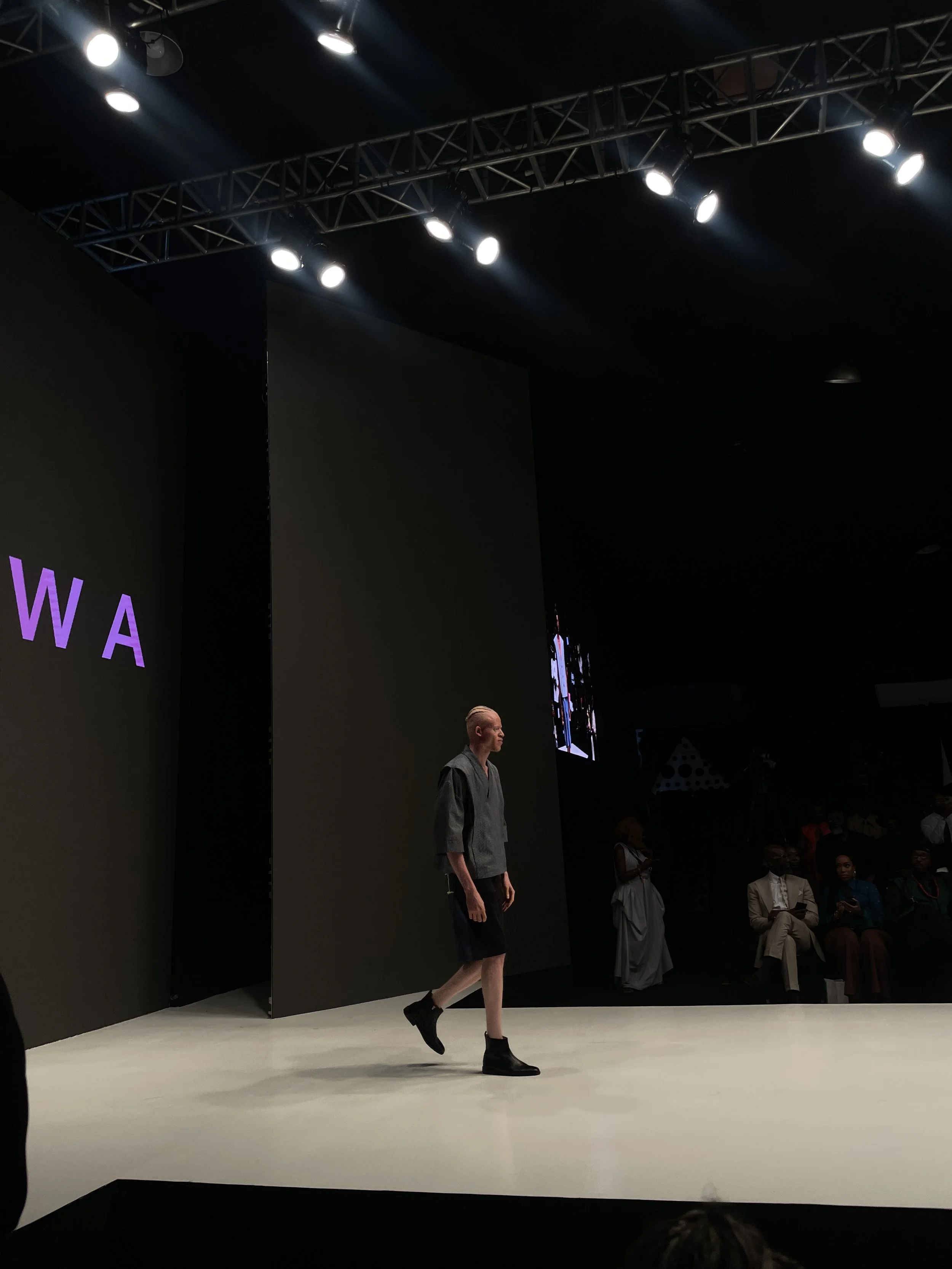
Model walking at Lagos Fashion Week 2025 for Hawa Paris photographed by Precious Akveba
Hawa Paris leaned into ‘rhythm’ as well. This collection featured clean silhouettes. The models walked to Mabebuza (Mdu aka TRP Remix), a track that combines restraint and pulse, very much like the pieces of this collection. The deep baseline reminded the room that minimalism can still move you.
With Hertunba, the mood shifted. Her regal, commanding pieces came alive to Ngine Ndaba and Sete (Nitefreak Remix). These songs carried spiritual weight and a certain vibe of sensuality. Her design spoke of grace and strength, and the music gave it a heartbeat. Together, they told the story of women who carry power.
Dimeji Ilori’s show, set to Ifa Olokun by Akinwumi Toyin, was deeply rooted in Yoruba spirituality. Each drumbeat echoed the designer’s homage to heritage. The collection featured bold fabrics and intricate detailing guided by ancestral rhythm. The music helped invoke the collection.
With Revival, Nyafu Riddim by Juls feat Worlasi helped frame a celebration of sustainability and individuality. The collection’s reconstructed pieces, which were crafted from textile waste, found life in this track. The track was a fusion of Afrobeat and an experimental sound. It was like a call for imagination.
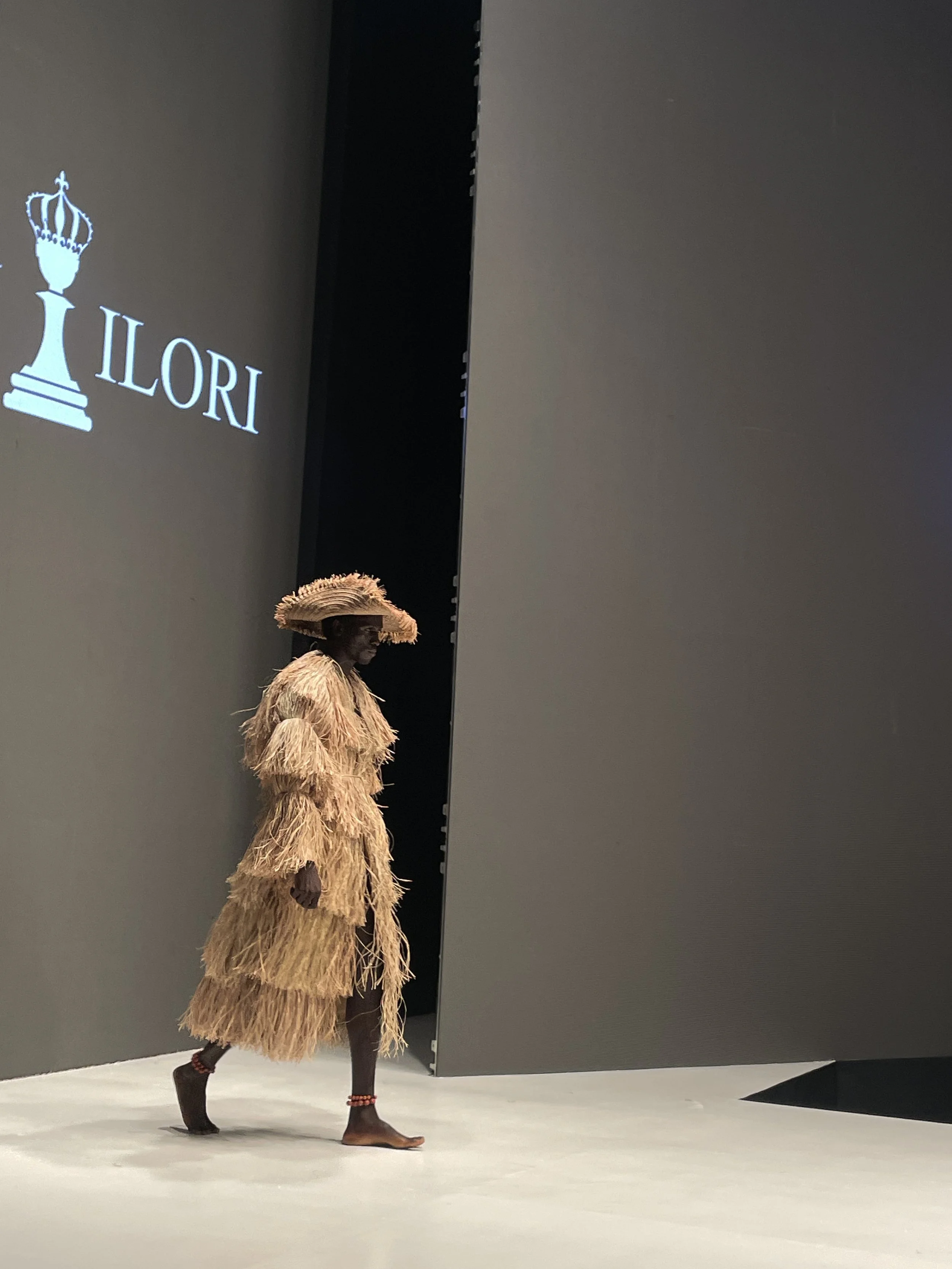
Model walking at Lagos Fashion Week 2025 for Dimeji Ilori photographed by Precious Akveba
And then Ajanee blurred the boundaries that existed between boundary and power. The designer’s reflection on the naked body as both truth and battleground resonated through the music. It was a story of undressing shame and reclaiming softness —and what better song than It Girl by Kah-Lo, Karma Fields & Associanu?
Lagos Fashion Week 2025 reminded us that fashion is not only to be seen, it’s also to be felt. The music guided emotions and helped give the collections context. Overall, Lagos Fashion Week 2025 combined sound and style to tell the world who we are as a people and how we move in the world.