The Wedding That Changed The Game: NeverGettingMarried
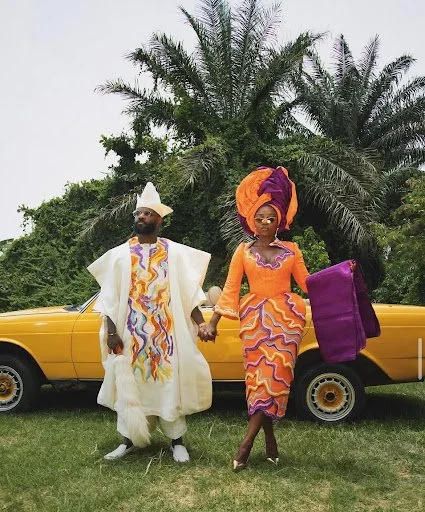
Fisayo and Afolabi’s wedding photoshoot
Image Source: Fisayo Longe on Instagram
For years, the founder of Kai Collective, Fisayo Longe, spoke openly about not wanting marriage, a position that resonated with many young women who had grown wary of the institution and everything it seemed to demand from them.
Then she fell in love.
When Longe got married in Lagos, nothing about it was low-key. The woman behind one of fashion’s most visually recognizable contemporary brands approached marriage the same way she approached design. She did it with dramatic flair and creative control. From the moment she got engaged, the message was already clear. This would not simply be a wedding. It would be an extension of the Kai Collective world.
Over the years, Kai Collective has built a strong visual identity rooted in bold prints, movement, color, and emotional storytelling. The brand’s now recognizable Gaia print became synonymous with the label itself, appearing across dresses that circulated widely online and helped position the brand within global contemporary fashion conversations. At the wedding, that visual language did not give way to tradition. Instead, it mixed with tradition to create something out of this world.
This was especially visible in Longe’s traditional wedding looks. In collaboration with Couture by Tabik, Kai Collective’s signature Gaia print was reimagined in aso-oke, merging contemporary fashion language with Yoruba ceremonial dressing. One of the standout pieces from the weekend, a hand-painted Kai Collective skirt, carried the same sense of visual boldness that defines the brand itself. Rather than stepping away from her work during one of the most personal moments of her life, Longe carried her creative identity directly into it.
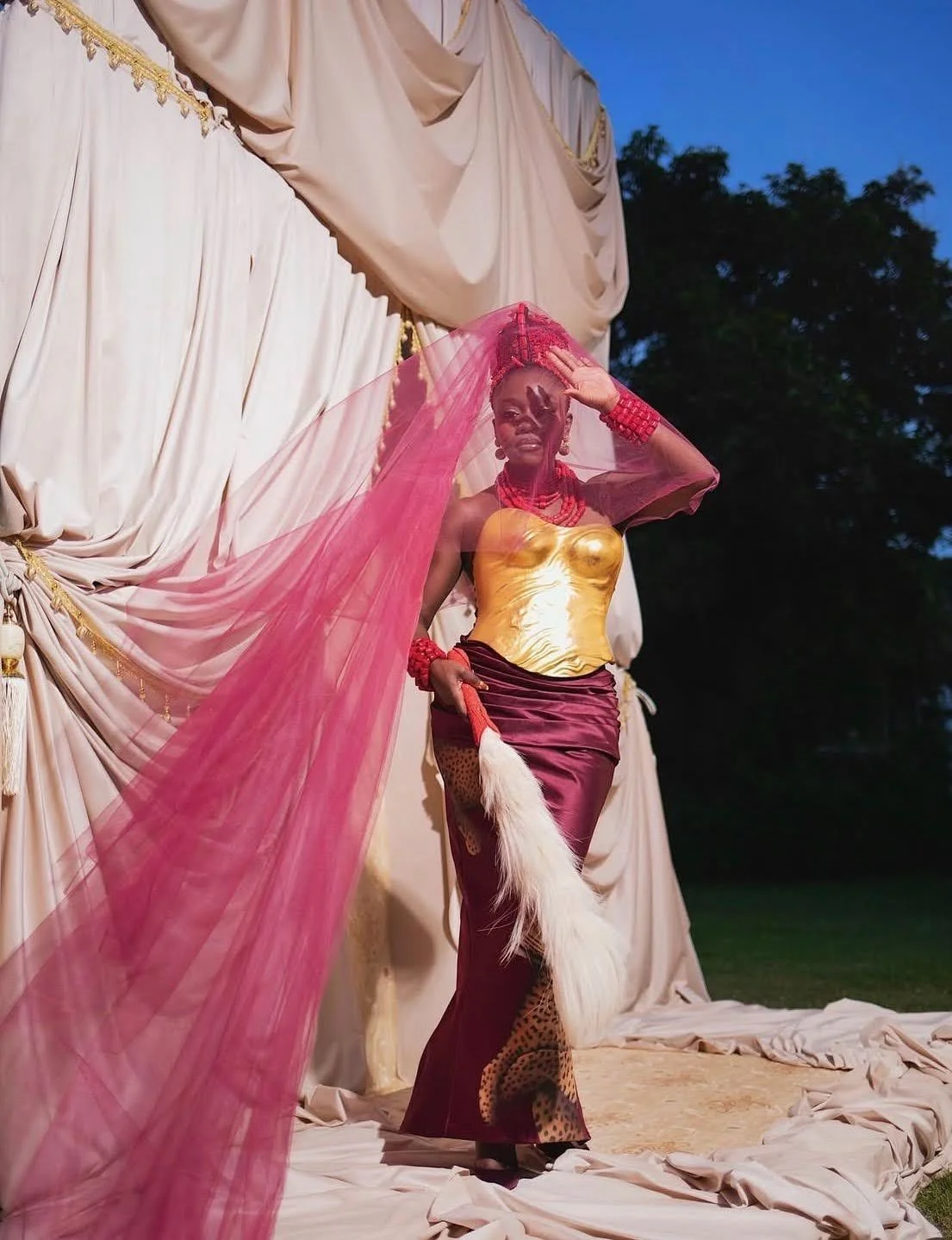
Fisayo Longe in her wedding attire
Image source: Fisayo Longer on Instagram
Even the pre-wedding images felt less like private documentation and more like a campaign rollout. Every image was carefully selected. Every outfit felt connected to a larger visual narrative. Marriage did not interrupt the Kai Collective universe; it expanded it. This was unlike anything the Nigerian fashion industry has seen in relation to weddings.
The traditional wedding itself became an immersive experience of that world. Friends and family arrived dressed in custom Kai Collective aso-ebi fabrics across various distinct styles. This transformed each guest into a participant within the creative direction of the event itself. Nigerian weddings have long functioned as spaces of fashion performance and community display, but this wedding pushed that idea further. Guests were not simply attending a ceremony. They were stepping into a fully constructed aesthetic environment.
What made the wedding resonate online was not simply its extravagance, but the coherence of its vision. Wealthy weddings are common within Lagos social culture, and designer aso-ebi is no longer unusual. Yet there was something unusually complete about the way this wedding merged branding, intimacy, and cultural expression into one experience. The textures, the color blocking, the silhouettes, and even the styling of guests all moved in conversation with the Kai Collective identity audiences had already become familiar with online.
The wedding also complicated familiar ideas about modern womanhood and marriage. For many ambitious women, particularly those who have built highly visible careers and identities, marriage is often a means of softening ambition, individuality, or independence.
Longe’s wedding helped show that it doesn’t have to be so.
Nothing about the celebration suggested disappearance into wifehood. If anything, marriage became another medium through which she expanded her artistic and creative identity. The transition from #NeverGettingMarried to becoming a bride did not feel like a contradiction so much as a form of authorship on new terms. Love is not the end of self-definition and identity, but it can exist within them.
That may be part of why the wedding traveled so widely online. People were not simply responding to beautiful clothes or lavish décor. They were responding to the beauty of the vision.
In the end, it was more than the fashion, though there was plenty of that. It was more than about creating a spectacle, though the wedding embraced spectacle fully. What we will remember is that Fisayo Longe had managed to do something increasingly rare within wedding culture: she entered marriage without dissolving into it.
Instead, she turned it into an art direction.