What Preserving Fabric Traditions Looks Like in Modern African Fashion Brands
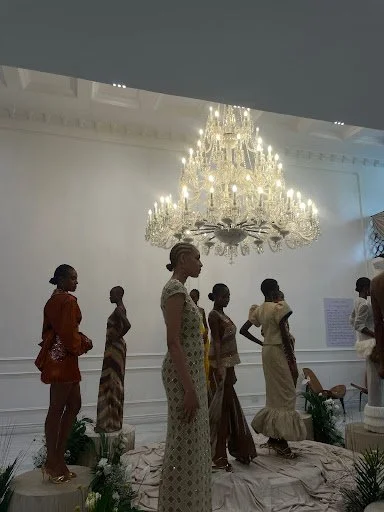
Kilentar SS26 Showcase photographed by Precious Akpevba
Fabric has always been more than just material in Africa. It’s our language, identity, and memory keeper. Every thread, pattern, and dye tells a story about where we’ve been and where we are going. But as African fashion goes global, one question arises: What does preserving fabric traditions look like in today’s African fashion scene?
At Lagos Fashion Week, the panel on “The Evolution of Fabric Making in Nigeria: Preservation, Revival, and Reinvention” gathered three women at the forefront of this conversation. Florentina Agu of Hertunba, Michelle Adepoju of Kilentar, and Ifedayo Nupo of Moye Africa all sat to speak on this topic.
Each of their brands is a window into how textiles are not only being protected but also being reimagined for the modern era.
For Florentina Agu, preservation begins with relevance. “Preserving fabric looks like keeping it relevant,” she said. “Brands can’t preserve it alone. Customers need to do their part also.” Hertunba, which is known for its bold reinterpretations of local textiles, treats preservation not as nostalgia but as continuity. They keep the essence alive while allowing it to evolve. Her approach is deeply personal and rooted in generational influence. “My fashion has always been inspired by how my grandmother dressed,” she explained. “ The background of being close to my grandmother means so much. It means I can connect with women from all ages. I especially love making clothes for older women.”
That emotional bridge between past and present, grandmother and granddaughter, runs through much of African fashion today. Florentina’s archive of vintage pieces from her grandmother’s boxes isn’t just inspiration, it’s a living library that she continues to consult. For her, fabric traditions are about embracing history while daring to experiment. “African fabric is so deep,” she added. “We’ve been able to keep it fresh. Hertunba has absolutely nothing we can’t do with the textiles we have because we’re not afraid to make mistakes.”
This willingness to innovate while holding onto heritage is what ties Hertunba to brands like Kilentar. Michelle Adepoju, Kilentar’s founder, sees fabric as both process and identity. “It’s our prints and the process behind them, the indigos, natural dyes, and colors,” she said. “It’s how we bring local textiles and make them distinct.”
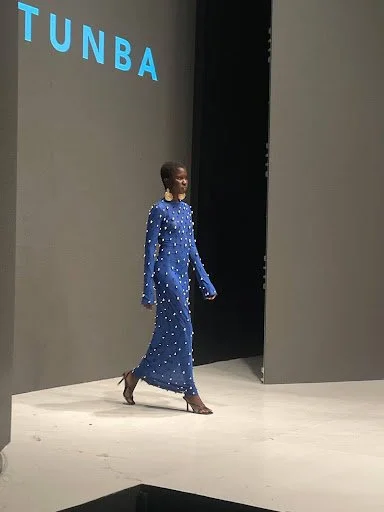
Model walking for Hertunba at Lagos Fashion Week 2025 photographed by Precious Akpevba
Michelle’s design perspective is shaped by a cross-continental lens between the UK and Nigeria. “It’s a strength,” she reflected. “My mom used to wear Ondo Aso Oke, so I’ve been collecting vintage Aso Oke from Ondo.” These Aso Oke that she obtains are then used to make something fresh and modern. “The UK background gives me a fresh perspective, while the African background gives me that heritage foundation.” She continued.
This coming together of Western influence and African heritage has become one of the defining features of modern African fashion. It allows designers to reinterpret traditional fabrics for modern styles while maintaining their cultural depth. The result is clothing that feels both rooted and global.
At Moye Africa, that balance manifests as a blend of revival and reinvention. “The love of what we do at our core is our driving force,” said Ifedayo Nupo. “We’re bringing stories back through revival, and we’re making it more exciting and modern through reinvention.”
Yet, preserving fabric traditions is not without challenges. Sourcing materials locally often comes with logistical and infrastructural barriers. “For Aso Oke, there’s no stress sourcing it here,” Ifedayo said. “But batik is different. We have to find clean fabric, send it to Abeokuta for artists to hand-draw the artworks, and then to Oshogbo for finishing. Consistently finding the same fabric texture is a problem. We need deadstock fabrics, ones that have existed for decades, to turn them into batik. Getting enough to meet demand is also an issue.”
For these designers, preservation requires collaboration across the entire fashion ecosystem. This means from the governments to the consumers. “The government needs to provide infrastructure,” Ifedayo urged. “Designers need proper facilities to make their own fabrics. Customers can support by buying from local designers.”
Michelle of Kilentar echoed this, emphasizing that preservation can’t exist without patience and understanding. “We need investments,” she said. “Customers need to be patient. Don’t price it down. The process of making it alone is way above luxury fashion.”
And for Floretina of Hertunba, one of the biggest threats remains insecurity. “Government support and security are key,” she said. “Insecurity is a major detriment to sourcing fabric.”
What’s clear is that preserving African fabric traditions isn’t about sticking to the past; it’s about carrying it forward. It’s the act of weaving history into something wearable, relevant, and futuristic. Across Moye, Kilentar, and Hertunba, preservation looks like women reinterpreting legacy through design.
In their hands, aso-oke, batik, and hand-dyed cotton are living canvases. Each of their works is proof that Africa’s fashion story is still being written.