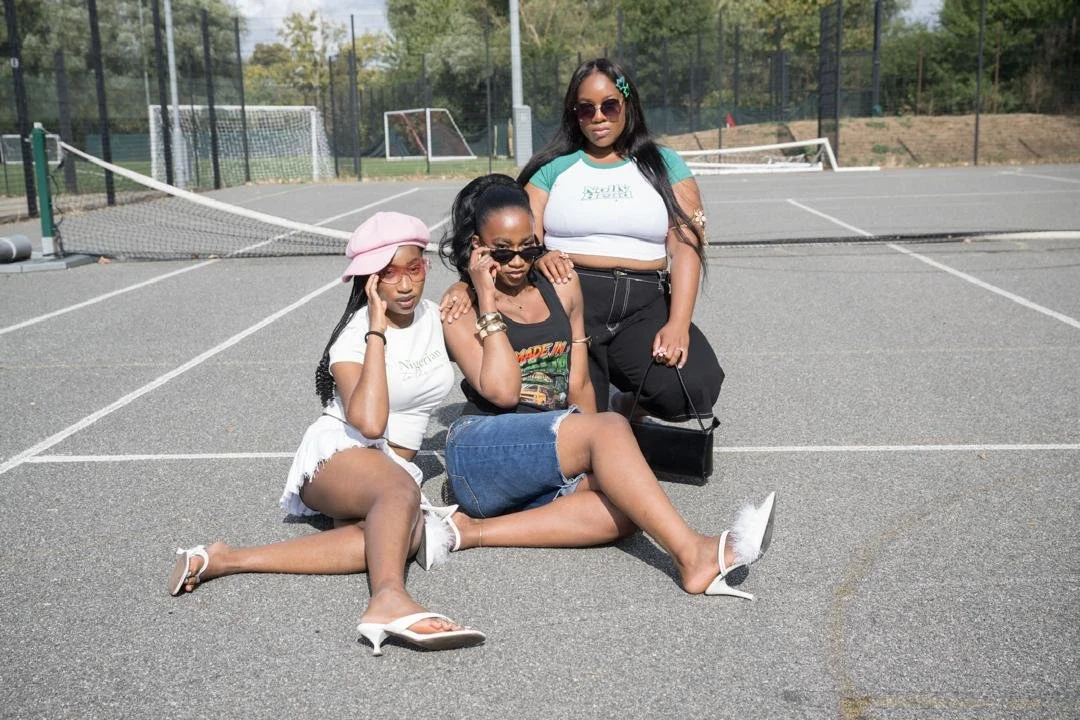
Image courtesy of Àanú Signature
For Àanú Signature, fashion has never been just about what we wear. The brand’s second drop of its Futuristically Nigerian collection takes the idea of Nigerian identity and places it at the centre of the clothes. It asks us what it truly means to see ourselves as Nigerians before we see ourselves through the tribes, languages and regional identities that often divide us.
This collection is focused on examining one of the forces that could determine it: national unity. Drawing from Nigerian pop culture, politics, art and everyday life, the collection features pieces inspired by everything from Afrobeats and Nollywood to Nigerian currency and the country’s political landscape.
For Àanú’s founder, Tolu Idowu, the idea began with the comments section of one of her social media posts. As a content creator, she once made a video discussing “Africanism” and the tribal divisions that continue to exist among Africans, including Nigerians. The response surprised her. Rather than simply generating a conversation about identity, the comments quickly became tribalistic themselves.
It left her with a question: what would it look like to create something that celebrated Nigerian culture beyond individual tribes?
“That was essentially what inspired the collection,” she says. “How can I do something that celebrates Nigerian culture beyond our tribes?”
The answer became a collection dedicated to the things Nigerians share. One piece references Afrobeats, another draws from Nollywood. Others look at national landmarks, currency and contemporary Nigerian politics. Together, they create a portrait of Nigeria that does not depend on a single ethnic identity. But nationalism is only one half of the conversation; the collection is also political.
Fashion as a Conversation
With Nigeria’s next election approaching, Tolu believes her generation has a particular responsibility to question the tribal divisions inherited from previous generations. If parents continue to identify themselves primarily through ethnic lines and their children repeat the same patterns, she argues, little changes.
“Our generation has a key role,” she says. “If our parents are saying, ‘I’m Yoruba, I’m Igbo,’ and it comes to our generation and we’re saying the same thing, I think it’s a bit problematic.”
She also points to the way politicians have historically used tribal identity as a tool for political mobilisation. “With the election coming up, I think that it just kind of aligns to do this collection now,” she explains.
For Àanú, celebrating national unity therefore becomes a form of political activism. The two ideas are not separate. If tribalism can be used to divide Nigerians politically, then encouraging Nigerians to recognise what they share can also become a political statement. That idea is particularly visible in two pieces.
The first is Tinubu, although the name is deliberately spelled “Tea Nubu.” The design depicts Nigerian President Bola Ahmed Tinubu drinking tea and reading a newspaper, creating a deliberately comical image of political indifference. The newspaper references flooding and the long-running concerns around Lagos’ drainage and flood-management systems. Rather than presenting political criticism as a conventional political statement, Àanú turns it into an image that can be worn.
Then there is the Made in Naija vest, which takes pride in Nigerian identity more directly. The piece incorporates imagery associated with Lagos and Abuja, including the city skylines and Zuma Rock, bringing two of Nigeria’s most recognisable cities into the same design. The message is simply “wherever you come from, there is something shared in being Nigerian”.
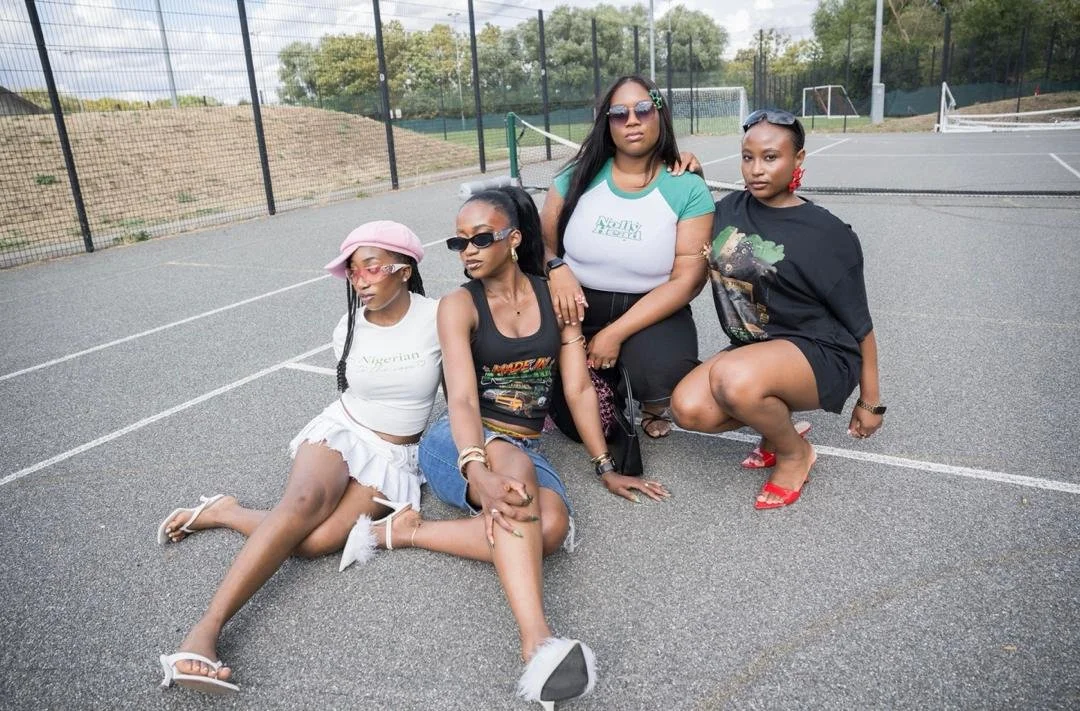
Image courtesy of Àanú Signature
Beyond the Clothes
For the designer, the collection is also an argument for fashion itself.She wants people to question the idea that Nigerian fashion should exist primarily for aesthetics.
“I think the conversation I want them to have, firstly, is that fashion can do much more than aesthetics,” she says. “Nigerian fashion also should play a key role in tackling the injustice in the political system.”
She points to Nigeria’s long history of artists using their work to confront power, citing Fela Kuti as one of her biggest inspirations. His music demonstrated how art could become a vehicle for political criticism without losing its cultural relevance. Fashion, she believes, can occupy a similar space.
Part of its power is its reach. Nigerians readily engage with entertainment and fashion, sometimes more enthusiastically than with conventional political discourse. The designer points to the intense public conversations that can surround entertainment, celebrities and pop culture, compared with the difficulty of generating the same level of engagement around political issues. That presents an opportunity for us.
“It doesn’t have to be so serious,” she says. “It doesn’t have to feel like a political debate, but it can be a thing where we intertwine one thing with the other to even speak on it briefly, since we have a lot of people’s attention in that sector.”
She does not, however, believe every designer must become a political commentator.
“I think yes and no,” she says when asked whether designers have a responsibility to engage with social and political issues. Artists, she believes, should retain the freedom to decide what they want their work to say. But having a platform creates an opportunity that she believes should not be ignored. “Because you don’t have to doesn’t mean you shouldn’t.”
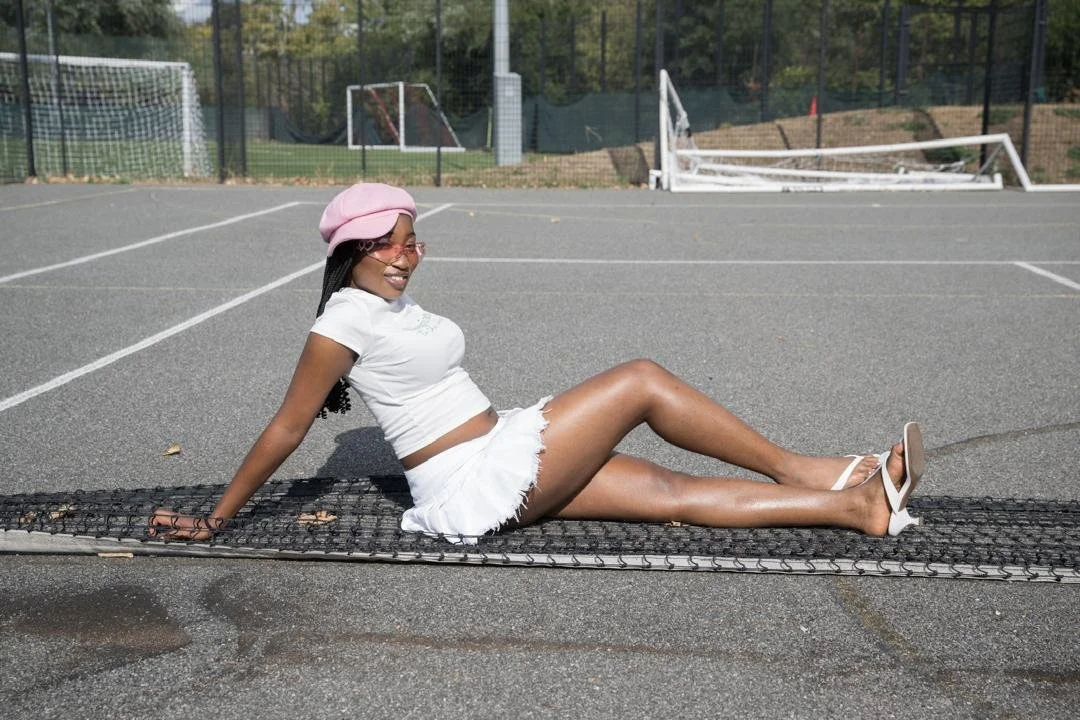
Image courtesy of Àanú Signature
A Personal History of Division
The collection’s politics are not theoretical for Àanú’s founder. Her interest in tribalism began much earlier.
In secondary school, she wanted to learn Igbo, partly because Yoruba was already spoken at home and she wanted to learn another Nigerian language. Her mother questioned why she wanted to learn it.
At school, she also witnessed the divisions that could emerge between Yoruba and Igbo students. Arguments between individual students could quickly become arguments about entire ethnic groups, with stereotypes being attached to people based on where they came from.
“Even though we are all Nigerians, we genuinely see ourselves differently,” she says. “And that’s one of the things that is kind of holding the country back because how can we move together if we don’t even agree?” The collection is her attempt to explore what might exist beyond those differences.
Tolu also acknowledges that Nigeria does not have one shared language. But she believes language is only one way of understanding culture.
“There are many other languages we share in culture and art that make us one,” she says.
From Couture Ambitions to T-shirts
Interestingly, the collection was not what Àanú originally planned to make. The brand’s first intended collection was significantly more couture-focused, exploring the beauty of Lagos through custom-developed fabrics and intricate production techniques. But as production progressed, repeated errors began to cost the young brand money.
The experience exposed what she describes as fundamental problems within Nigeria’s fashion production system.
“There is no scalable system in the Nigerian fashion chain,” she says. “You kind of have to fight with artisans. You have to argue.”
The cost of local production also became a difficult reality. In some cases, she found herself spending more to produce garments in Nigeria than she would have spent producing them in China, despite her desire to support the local economy. Eventually, she paused the brand for six months.
The solution came in the form of an idea she had initially resisted.
“I had kind of put it off like, ‘I did not become a fashion designer to make T-shirts,’” she admits.
But the pause gave her time to rethink the idea. If T-shirts were a more realistic starting point, she asked herself, how could she use them without sacrificing the creativity that drew her to fashion in the first place?The answer became the collection.
Rather than treating the T-shirt as a limitation, she used it as a canvas for ideas. Political satire, national symbols, pop culture and questions of identity could all exist on a relatively simple garment.
Still, she was worried. When she first saw the early samples, she wondered whether the collection was too simple for the Nigerian fashion market.
“Nigerians don’t like simple,” she recalls thinking. “They want bling bling and all up in your face.”
Would people buy it?
Would they understand the message?
Would it feel boring?
Ultimately, she decided she had to trust the idea. “Even if this doesn’t work, still putting it out there will inform me on what works.”
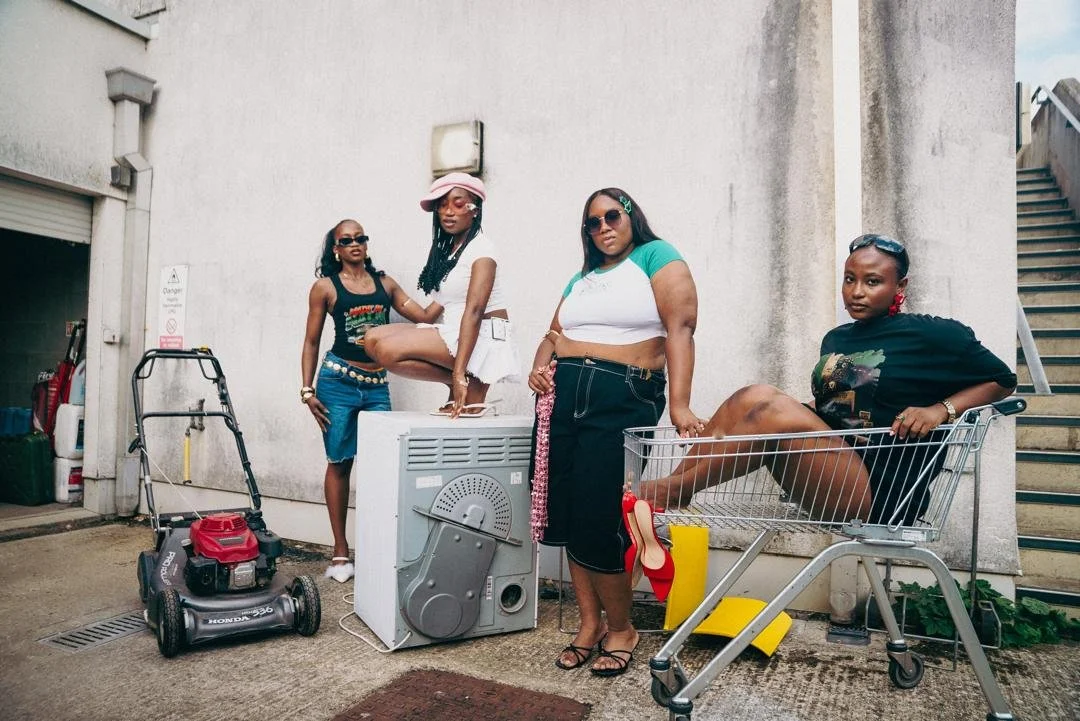
Image courtesy of Àanú Signature
The Piece That Says The Most
If she had to choose one piece that best represents the collection, however, it would not be one of its T-shirts. It would be the Wazo dress. The dress uses the design of the ₦50 note as a print across the fabric.
For the designer, the currency represents one of the collection’s clearest symbols of national unity: something Nigerians share regardless of their tribe or hometown. But the Wazo also serves another purpose.
Most of the collection is made up of T-shirts, and the dress demonstrates that Àanú is not positioning itself as a brand that only makes graphic pieces.
“The Wazo dress shows people that the brand is here to do more than just selling T-shirts,” she says. “That we have amazing dress designs coming as well.”
It is a small preview of where she wants Àanú to go next.
Building More Than a Brand
If the collection has changed anything for its founder, it is her understanding of what it means to build a fashion company in Nigeria. She began with the ambition of making clothes. Now, she wants Àanú to contribute to the wider fashion system.
“I’ve realised that I have a duty to just not start a fashion brand, but to also actually contribute to the scalability of Nigerian fashion industry and the Nigerian fashion system,” she says.
That ambition is already influencing what comes next. Àanú has applied for grant funding to help build some of the scalable systems she believes are missing from the local fashion ecosystem. Meanwhile, the brand is preparing for its next collection, Èkó Baddie, which was originally intended to be its debut. Production is expected to begin in September, with a launch planned ahead of the following spring/summer season.
But for now, this collection marks an important statement about what Àanú wants its clothes to do.
A year from now, the designer hopes people will remember that the brand made T-shirts that were about more than T-shirts.
“I want them to say that for the first time, a Nigerian fashion designer sold a T-shirt, but what they sold to us was more than a T-shirt,” she says.
That may ultimately be the collection’s most important proposition. In a country where conversations about politics can quickly become conversations about tribes, Àanú is asking Nigerians to look at themselves differently. To see the culture, art, music, landmarks and experiences that exist beyond ethnic boundaries. And to consider whether something as ordinary as getting dressed can become an invitation to think about the country underneath the clothes. For Àanú Signature, the answer is yes. Fashion can be beautiful, commercially viable, and culturally relevant.
But sometimes, it can simply ask us to pay attention.