Fashion as Experience: What a Private Viewing at Tilayo’s Showroom Makes You Feel
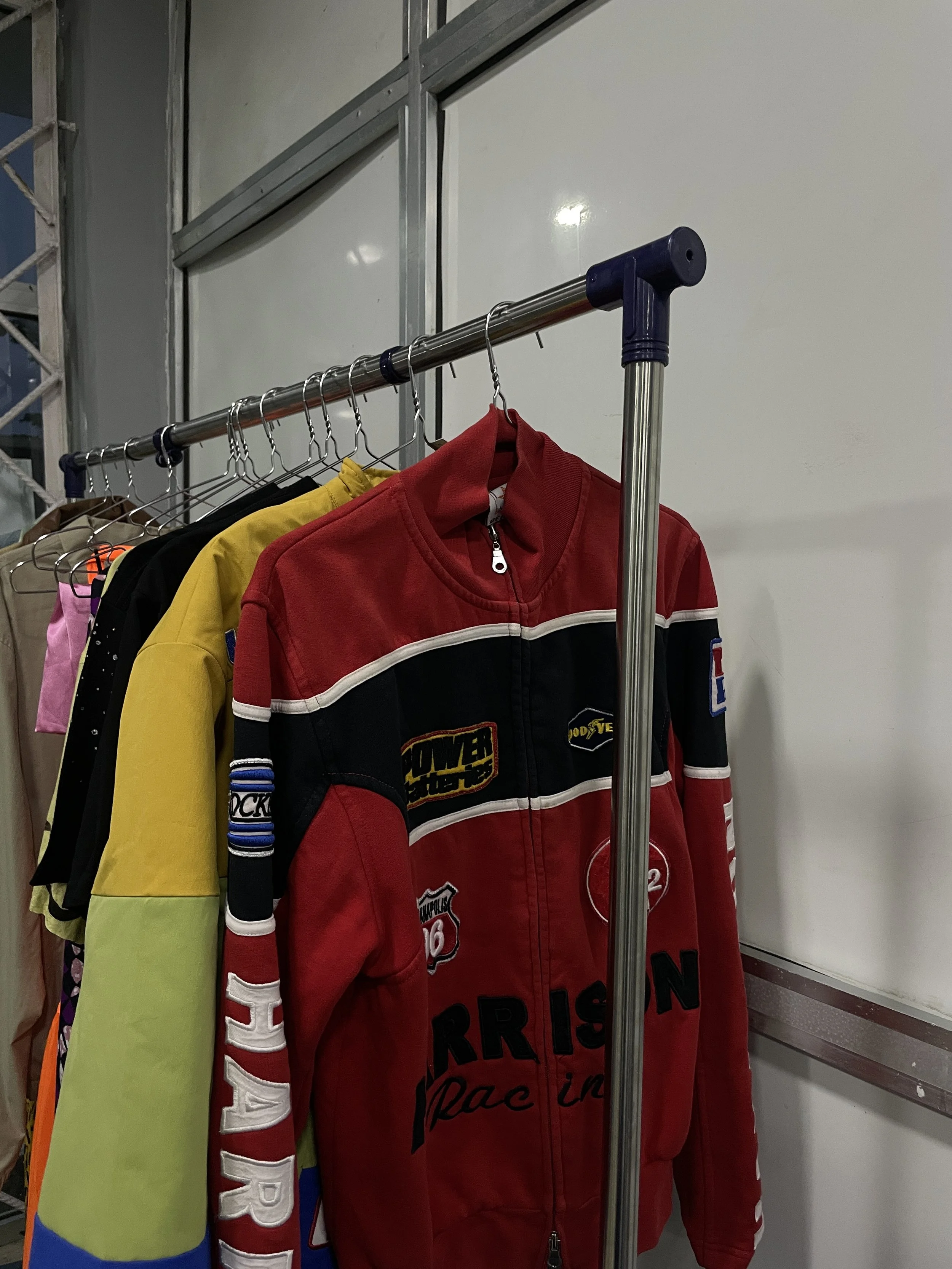
Rack at The Tilayo Showroom photographed by Akpevba Precious
Private viewing is all about sensation. It’s one thing to understand a designer’s vision, and it’s another to stand in it.
The experience begins immediately when you step into the space. Warm lighting shines over racks of carefully arranged pieces, music humming in the background. It’s a curated space designed to stimulate your fashion senses.
This setting slows you down. You’re not rushing from rack to rack. You take your time to explore. Conversations happen randomly and authentically. Laughter rises and falls naturally. It is as though the room itself is alive, transformed into a space where fashion becomes sensory.
The first instinct is to touch. Fingers slide along hangers. Guests lift the garment slightly, feeling its weight before holding it against their body. Just so they know how it would feel before deciding about how it might look on them.
At Tilayo’s showroom, where both her pieces and curated global brands are available to rent, it’s all about experiencing fashion. Renting changes your relationship with clothing. You’re not committing to ownership; you’re committing to experience. Hence, guests look at each piece with curiosity rather than calculation.
What stands out most is how people talk about the clothes.
“I love how this feels,” someone says softly, almost surprised.
Another voice responds, “It would photograph so well under flash.”
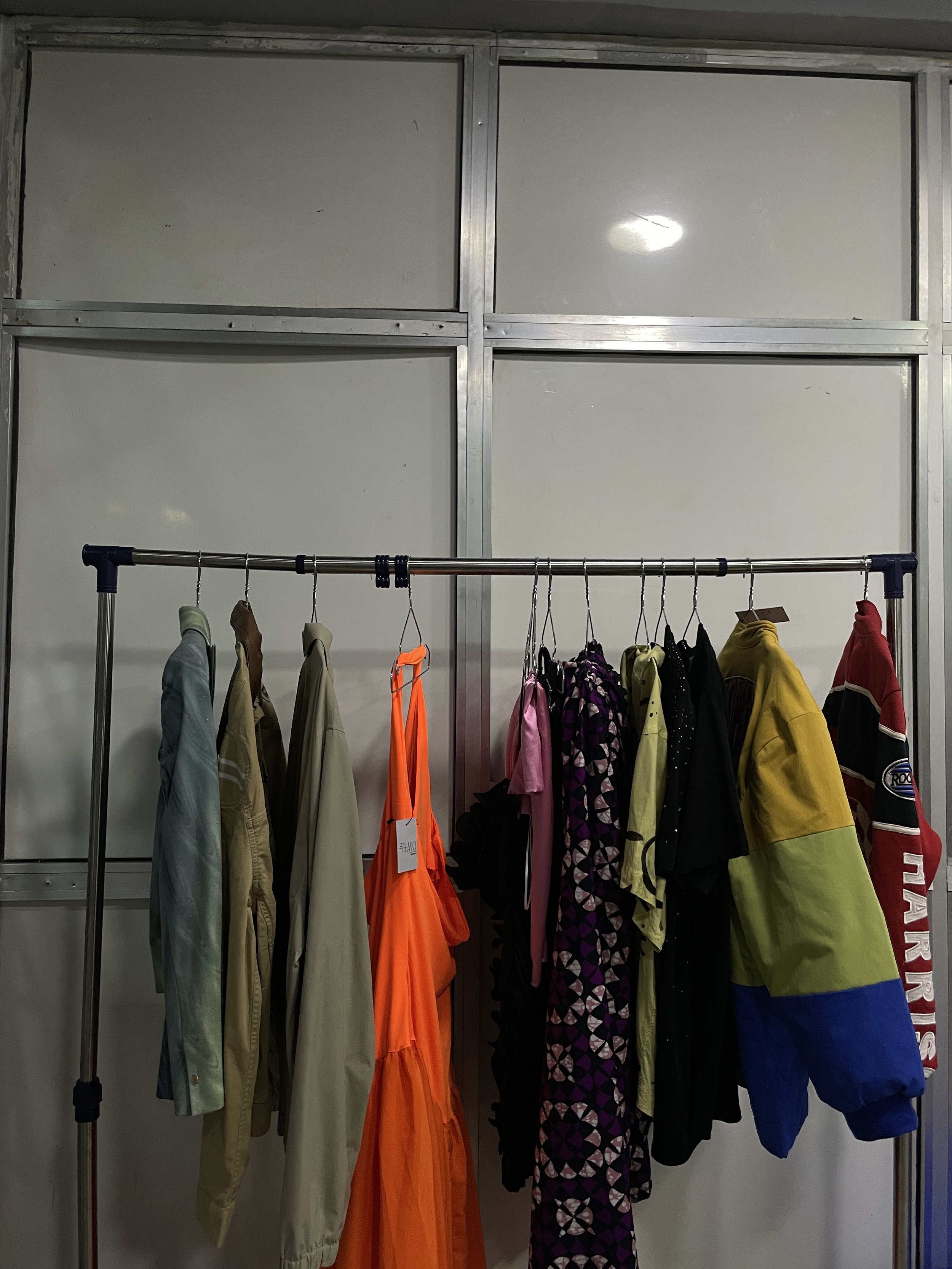
Rack at The Tilayo Showroom photographed by Akpevba Precious
Nearby, two friends debate over a shoe they like and who should get to experience it first. Someone else admits they’ve always wanted to try a daring outfit but never had the chance, so one of the pieces is perfect for them. It’s a way to experiment without committing.
In larger fashion settings, there can be pressure to look “unimpressed”. Everyone is looking at outfits without necessarily becoming immersed in them. But in a showroom, immersion occurs without any prompting. Guests hold garments up to the light and tilt their heads thoughtfully. They ask questions, and they speak freely.
Overall, you become aware of what you’re seeing, feeling, and hearing. This then prompts you to open your imagination.
Even time feels different.
Without a runway clock determining the time spent on each look, there is no rush to move on. Guests return to pieces multiple times. A jacket first admired from afar is later tried on. A bikini-style piece that seemed bold at first glance becomes wearable after a second look.
This space allows fashion to reveal its emotional core. It is not just about aesthetics; it is about identity. About who you are willing to be in front of others, perhaps your true self.
There is also no longer a barrier between the designer and the wearer. There’s no stage separating the creator from the audience. Everyone shares the same space.
And in this shared space, there’s excitement without frenzy. The mood is sexy, cool, and undeniably young, not in age alone, but in energy. It carries the optimism of people who are still experimenting with identity, still testing boundaries, still building their visual language.
By the end of the viewing, the racks no longer look untouched. Hangers are slightly spaced apart. Shoes have been lifted and returned. Jackets have been tried on and shrugged off. The room holds evidence of interaction. It feels lived in.
And that is the power of experiencing fashion this way.