From Fades to Braids: How African Hairstyles Are Defying Gender Rules

Handsome Stylish African Man with Dreads photographed by Wirestock
Across Africa, hairstyles have always had a significant impact on culture. Hair has always been more than just fashion, as each strand tells a story or conveys a message. Historically, braids were used to map escape routes and conceal seeds and rice for sustenance, transforming hair into a vital tool of survival. In most African countries, hairstyles often denote a person's marital status, social class, or age within the community.

Man Showing Braided Hairstyle photographed by Clem Onojeghuo/Unsplash
Certain African hairstyles were traditionally associated with specific genders, with some seen as more feminine or masculine. In the past, boys often wore their hair in braids or in an Afro style, while girls plaited their hair into styles such as Koroba, Shuku, and Bantu knots, among others. These hairstyles are deeply rooted in African heritage and hold significant cultural meaning. Some cultures have rules governing hairstyles based on gender. For instance, in the Yoruba, widows often go on a low-cut as part of traditional practices.
However, in recent years, there has been a shift in hair culture, as evidenced by the rise of unisex African hairstyles, where traditional gender rules have been redefined through creativity and self-expression. The era of “braids are for women and low cuts are for men” is fading. African youths are now changing this notion, from fades to braids like cornrows, kiko, locs, and Bantu knots. These hairstyles, initially intended for women, are now being confidently worn by everyone, demonstrating that styles are not exclusive to one gender.
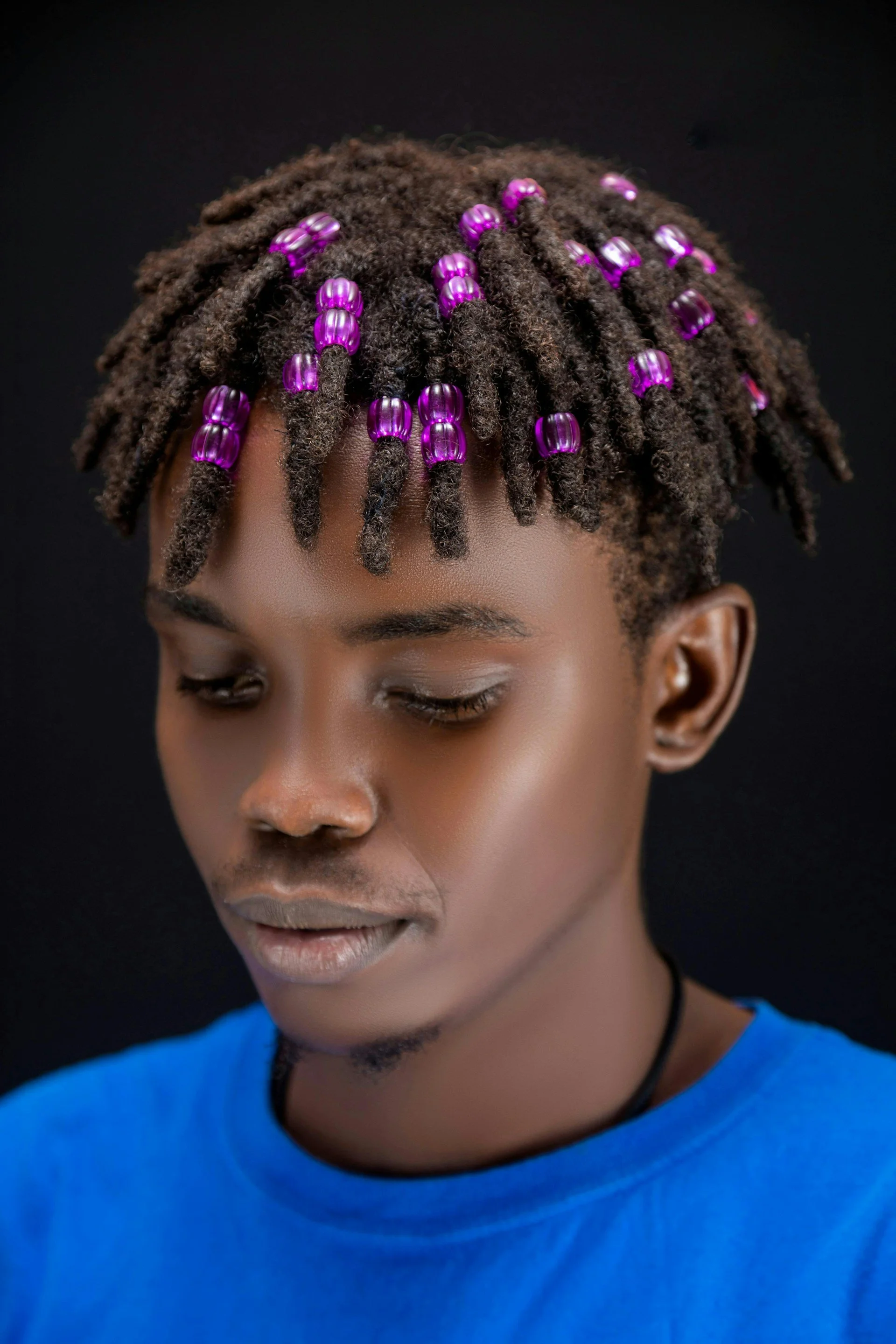
African Man in Dreadlocks and Purple Beads photograded by Face of the Internet/Unsplash
In the streets of Lagos, Accra, and many other African cities, it’s common to see ladies rocking bold fades with patterned sides. Boys are also spotted with box braids, Bantu knots, and various thread styles. Fashion lovers, influencers, and even celebrities are fusing both masculine and feminine hairstyles. These are not just the regular cornrows of the past; most blend Western styles with African hairstyles and artistry.
Fashion influencer Emeka is among the individuals leading this trend. He is a standout figure in African hairstyling. While many African hairstyles are often reserved for women, he has taken his time to redefine this rule. Through his social media presence, he’s not only creating head-turning hairstyles but also challenging how African society views gender. Emeka works with his hairstylist to create captivating African hairstyles. These are not just the regular ones, as they stir up reactions on social media. From artistic cornrows, such as love-heart cornrows, to Bantu knots, these styles feature designs, shapes, and patterns that transform hairstyles into art.
One of his recent hairstyles is the Kiko hairstyle, traditionally worn by Yoruba women. It is achieved with black rubber strings, creating intricate patterns, and, to be honest, it's known as one of the most painful hairstyles to wear. With every post, Emeka is doing more than hair; he’s challenging traditional masculinity in Africa and expressing culture.
African hairstyles are no longer confined to culture or gender. They are becoming symbols of personality and power. This change isn’t just about fashion, it’s about freedom. It’s about youths expressing themselves freely beyond social expectations, and this is a push for change in the African Fashion industry.
Whether it’s a man confidently wearing a Bantu knot like Emeka or a woman rocking a low-cut, it’s proof that gender doesn't follow hair rules. The message is clear: braids and African hairstyles are not limited by gender. We can all express African culture through hair, regardless of gender.