The Hidden Labour of African Couture
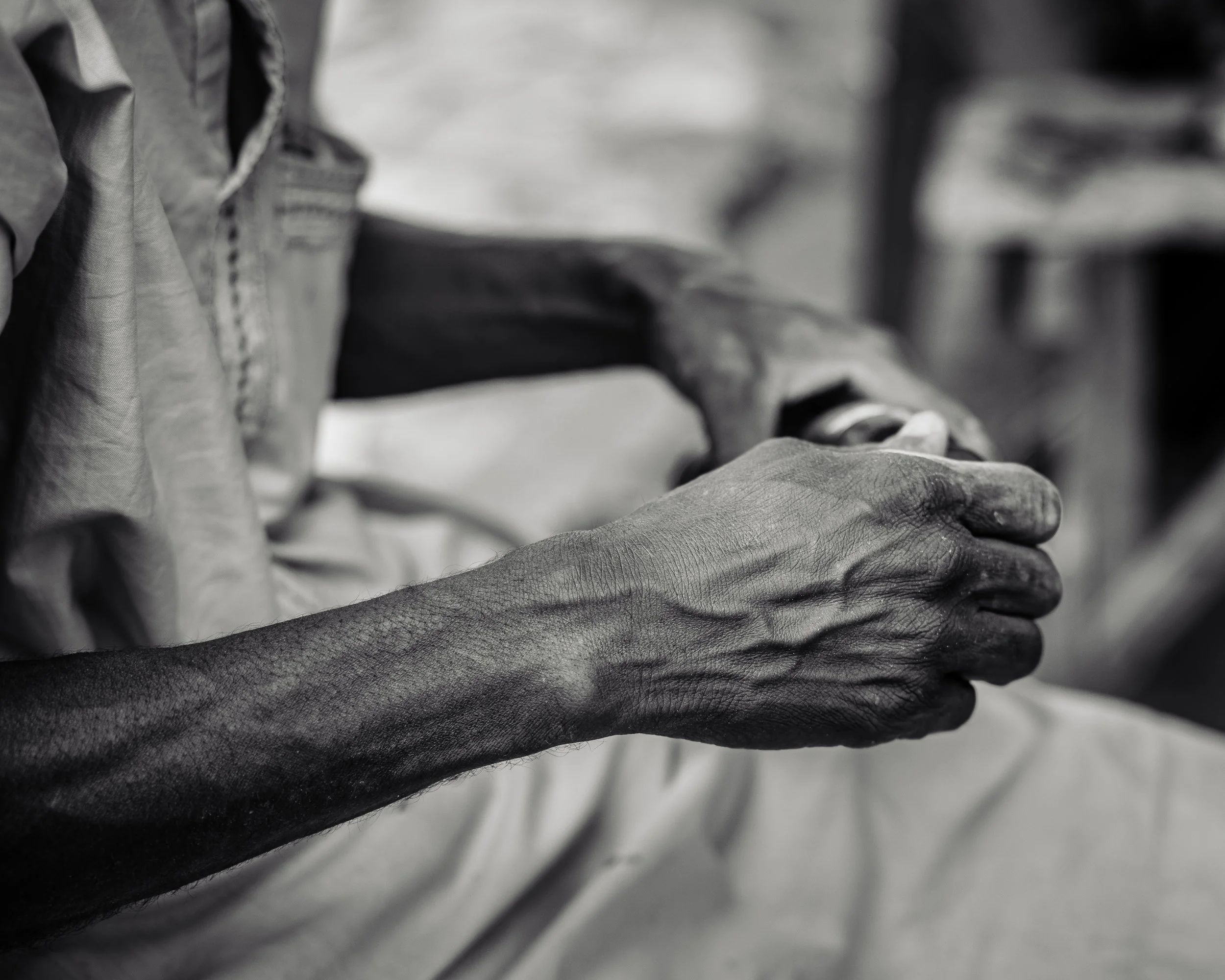
‘A shoemaker’ photographed by Azeezah Oyeleke
You know that outfit?
The one with a beaded bodice that glimmers and catches light at every turn. The one that results in headlines which celebrates the designer and goes on about how many hours it took to decorate every single surface of the outfit with beads and embroidery. Well, those outfits have special hands behind them.
There are beaders, embroiderers, and tailors who give African couture its soul. I mean, those outfits wouldn’t be as splendid as they are without the artistry performed on them.
Now, it’s almost certain you can name designers who thrive on creating those kinds of masterpieces, but the artisans who transform the garment?
You probably haven’t heard of them.
African couture has always been rooted in craft. In countries like Nigeria, Ghana, Senegal, and Côte d’Ivoire, excelling in the fashion world depends on how well you have honed your technique over the years. Beaders who bead from dawn till dusk, dyers who coax colour from indigo pots, and embroiderers whose fingers are like magic. Their work forms the foundation of luxury fashion, yet the spotlight is rarely on them.
When designers send intricate, hand-detailed pieces down the runway, the artisans’ devotion is part of what makes those garments remarkable. But while their craftsmanship defines the aesthetic of African luxury, their contributions are often reduced to footnotes, and sometimes they’re erased.
Now, this doesn’t mean that designers don’t put in the work themselves. But there are always supporting characters that help transform the piece. The invisibility that the supporting characters face exposes a gap in how fashion values creativity.
There are so many artisans who work in informal conditions. They don’t get credit, they don’t get paid well, and they aren't protected by labor laws. Despite their role in creating an industry that continues to grow internationally, they are barely recognized as co-creators.
This isn’t an issue unique to Africa. The fashion industry as a whole has long struggled to acknowledge workers. However, this issue hits more in Africa because these artisans are essentially part of what makes the piece African. If a generation of beaders or dyers disappears, so do the stories that we try to tell. Without visibility or fair compensation, these skills risk vanishing into thin air.
So what must we push for?
There's a need for designers to begin publicly crediting their artisan team, spotlighting them in their campaigns and behind-the-scenes documentaries. Also, a great step is collaboration between designers and artisans, where they get to work together in the spotlight rather than anonymously.
Recognition also comes with economic benefits. Artisans gain visibility and bargaining power, which translates into sustainable livelihoods. Plus, we create an industry where consumers are connected not just to a brand but to a tribe of creators. Also, with visibility comes the humanization of fashion. Visibility gives dignity to creative labour, something we’ve all been pushing for. But also, it ensures that the people who create can continue to create.
African couture has built its name on patient artistry, precision, and storytelling. As the continent’s fashion industry grows more global, its strength will depend not just on visionary designers but on the artisans who help make those visions tangible.
To truly celebrate African fashion is to honour both the designer who dreams and the hands that help bring that dream to life.