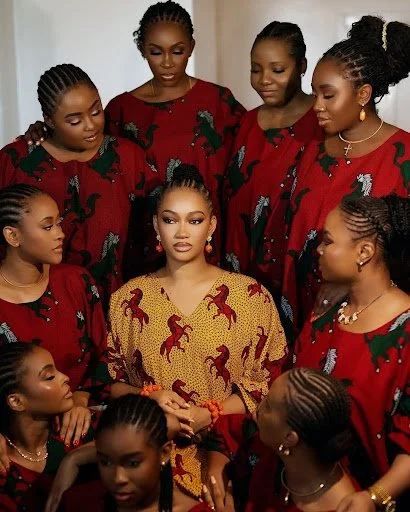
An Igbo bride and her bridesmaids, photographed by Photo Klassik
In a scene filled with lace-up airtight corsets, frontal wigs, and stoned materials, some traditional accuracy is making a comeback. In the Nigerian wedding scene, change is consistent. Every year, there is a new style or, dare I say, wedding trend. Usually, it’s almost impossible to see two similar weddings, especially from differing tribes, but for a period, you couldn’t tell the difference.
However, this constant change and evolution have led many to move further away from historically accurate traditional weddings toward more modern weddings. From hairdos, dress styles, and fabrics, weddings have embraced modernity so much that we have strayed from our culture.
But what is this culture?
A Historically Accurate Nigerian Wedding
Traditional weddings depend heavily on the bride's tribe. So an Igbo bride’s outfit should differ from an Ijaw bride’s.
But if there is one thing that the majority, if not all, Nigerian brides have in common, it's the stunning fabrics and heavily-beaded hairstyles or intricately done braids. During a specific period, these hairstyles were replaced with frontal wigs in different textures, such as bouncy, bone straight, and body wave.
Some people even decorated these wigs with beads to make them more traditional, but at the end of the day, nothing beats the original. Traditional hairstyles like shuku, koroba, and patewo were nowhere to be found during this period.
Another style that went missing during this would be the wrapper-and-blouse combo. More brides were interested in sewing dresses that were snatched and bewith snatching. Although this is not a bad thing, it was traditionally incorrect.
Traditional outfits made from materials such as Aṣọ-òkè, George, Akwaocha, and An’ger were scarce. Some of these outfits were író and Buba, a George wrapper, or a simple two-piece made from any traditional fabric, consisting of a bubble skirt and tube top.
All these outfits were modernised, and those that weren’t were used only during prewedding photoshoots. This further reinforced the idea that Nigerian culture was used solely for aesthetics, even by its own people.
The Return Of Accuracy
Recently, however, there’s been a refreshing change. Brides and grooms alike are beginning to lean back into proper tradition, not out of nostalgia, but as a statement of pride. Across social media, we’re seeing a resurgence of traditional hairstyles, coral accessories, and accurate bridal wear.
This return isn’t just about fashion; it’s about identity. Many couples are now intentional about representing their tribes accurately — from the fabric to the ornaments, the makeup, and even the ceremonial rituals. Yoruba brides are once again donning the Iro and Buba and traditional beads; Igbo brides are returning to coral headpieces and layered wrappers; Edo and Itsekiri brides are embracing coral crowns and body adornments.
This revival also signals a broader cultural shift, one in which African fashion no longer seeks to imitate Western aesthetics but instead finds strength in authenticity. Designers are taking note, too. Many now incorporate traditional fabrics, styling, and beading techniques into their modern designs, merging old and new in ways that honour both.
In a world where Western fashion trumps traditional fashion, this return to historical accuracy feels timely. It reminds us that our traditions are not outdated; they are timeless.
Conclusion
The return of historically accurate fashion in traditional weddings is more than a trend — it’s a cultural reawakening. It’s a reminder that while evolution is inevitable, authenticity should never be lost in the process.
As brides wear fabrics once woven by their ancestors and hairstyles once worn by queens, they’re not just making a fashion statement; they’re telling a story—one of heritage, pride, and timeless beauty.
Because in the end, true elegance is not in reinvention but in remembrance.