How Erasing Indigenous Styles Erases Identities
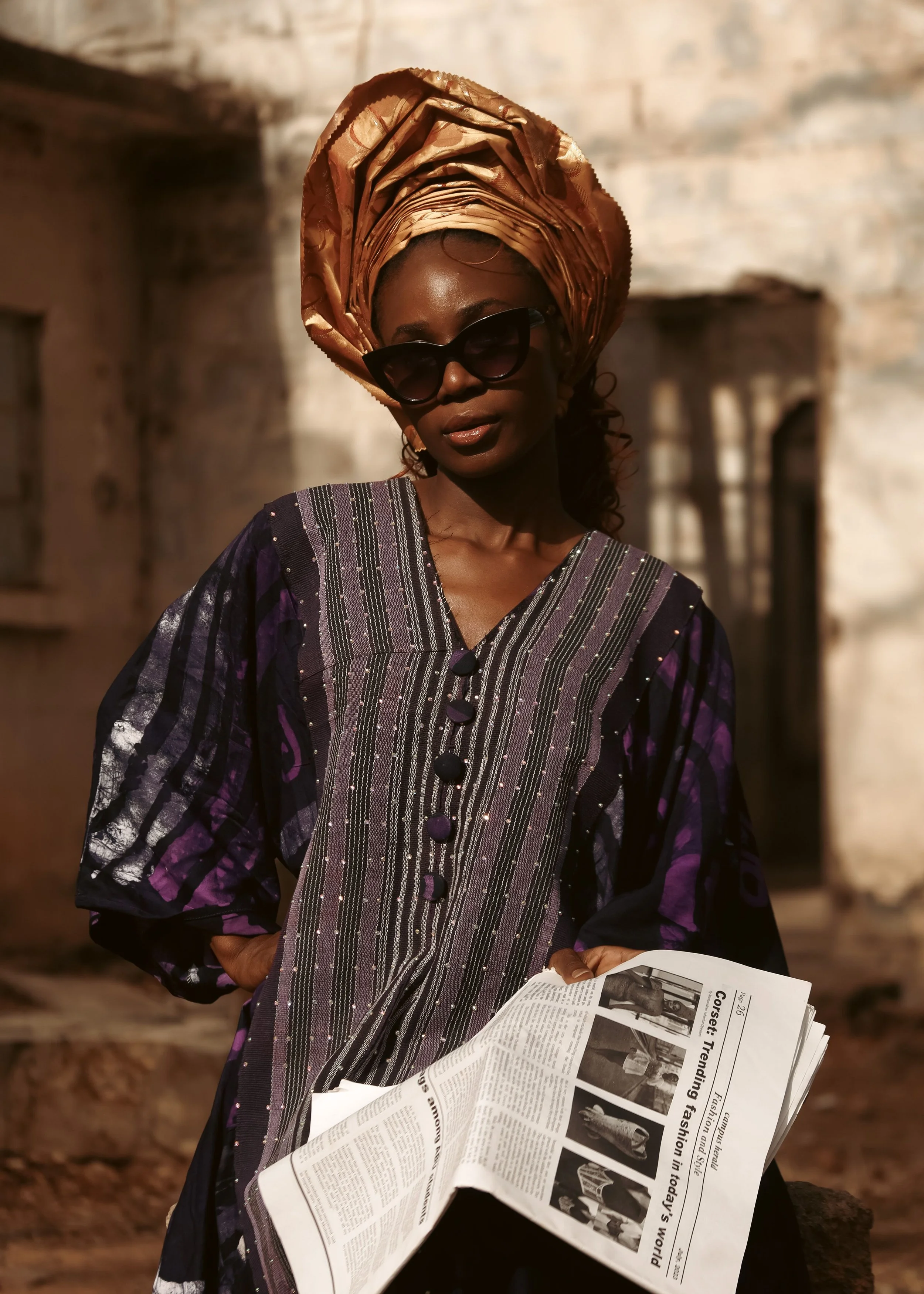
Woman holding a newspaper and wearinga gele photographed by LekePOV
Before colonialism, clothing across Africa was never simply about covering the body. What people wore could communicate their ethnic identity, social position, age, marital status, occupation, spirituality, wealth, and place within a community. Fabrics, colours, beads, hairstyles, body markings, wrappers, headpieces and other forms of adornment carried meanings that were understood within particular cultures.
Then colonialism arrived, and clothing became part of a much larger project of cultural transformation.
Across the continent, European colonial powers introduced their own ideas about what was considered civilised, respectable, modest, beautiful and appropriate. Indigenous clothing and forms of bodily expression were often described through a European lens as primitive, indecent, backward or uncivilised. What Africans wore became another way colonial authorities, missionaries, and institutions could control African identities.
The consequences went beyond fashion.
In many African societies, traditional clothing was closely connected to identity. A particular wrapper, beadwork, hairstyle, or textile could tell someone where a person came from or what stage of life they were in. Clothing could also carry spiritual and historical significance, with certain garments reserved for ceremonies, leadership, marriage, or religious practices.
Colonialism disrupted these systems by introducing European standards of appearance and respectability.
Missionaries played an important role in this transformation. Missionaries often condemned indigenous dress that exposed parts of the body or differed from European ideas of modesty. Converts were encouraged, and sometimes pressured, to adopt European-style clothing as evidence of their new Christian identity. Covering the body in a particular way became associated with morality, while indigenous forms of dress could be treated as evidence of backwardness.
This created a dangerous connection between appearance and worth.
To be considered educated, respectable or “civilised,” Africans increasingly had to navigate expectations shaped by European standards. Clothing became one visible sign of whether someone had supposedly progressed beyond their indigenous identity.
This did not mean Africans simply abandoned their cultures. Across the continent, people adapted, resisted, and reinterpreted what colonialism introduced. Indigenous styles survived, sometimes quietly and sometimes openly. African communities continued wearing traditional clothing for ceremonies, weddings, festivals and religious occasions, even as European clothing became increasingly common in schools, churches, workplaces and colonial institutions.
But the hierarchy had already been established.
European clothing was positioned as modern, while indigenous clothing was often pushed into the category of tradition. One represented progress, wealth, and attracted praise; the other was something to be preserved for special occasions.
That distinction continues to influence African fashion today.
Many Africans grow up learning that certain forms of dress are appropriate for professional spaces, while others belong at home, at cultural celebrations, or during traditional ceremonies. The problem is not that African fashion exists alongside Western fashion. Cultural exchange is natural, and Africans have always adapted clothing to changing circumstances. The problem arises when one style is treated as inherently more respectable or sophisticated than another.
The effects are particularly visible in conversations about African bodies.
Colonial ideas of modesty and beauty did not disappear when colonial governments left. They became embedded in institutions, social expectations and personal perceptions. People often judged the African body by standards never created with African cultures in mind. Hair, skin, body shape, clothing and adornment could all become sites where people were encouraged to move closer to European ideals.
This is why reclaiming indigenous fashion is about more than wearing traditional clothes.
It is also about recovering the meanings attached to them.
A wrapper is not simply fabric. Beads are not simply accessories. A head tie is not merely a styling choice. A hairstyle can carry history. A textile can preserve stories. Embroidery, weaving, dyeing, and craftsmanship can connect generations to one another.
When these things disappear, communities can lose more than a fashion tradition. They can lose parts of the visual language through which their histories were communicated.
This is particularly important for younger Africans living in a globalised fashion industry. Western fashion is not inherently the enemy, nor does embracing global fashion mean rejecting African identity. The question is whether Africans can choose what they wear without believing that one cultural aesthetic makes them more modern, intelligent, professional, or worthy than another.
African fashion today offers an opportunity to challenge that hierarchy.
Designers, journalists, stylists and consumers are increasingly placing indigenous textiles, styles, techniques and references at the centre of contemporary fashion. They are not necessarily recreating the past exactly as it was. Instead, they are showing that tradition can evolve without disappearing.
Identity does not exist only in language, food, music, or history books. It also exists in what people put on their bodies.
When a culture is told that its clothing is shameful, primitive, or inappropriate, it is being told something about the culture itself. And when people eventually stop wearing, making or understanding those forms of dress, a piece of that cultural memory can disappear with them.
Erasing indigenous styles, therefore, is not simply about changing fashion.
It is about changing the visual language through which people recognise themselves.
Reclaiming those styles is not about returning to a frozen past. It is about making room for Africans to define modernity on their own terms, while carrying the cultural memory of the people who came before them.