Influencers, Celebrities, and the Changing Face of Runway Shows
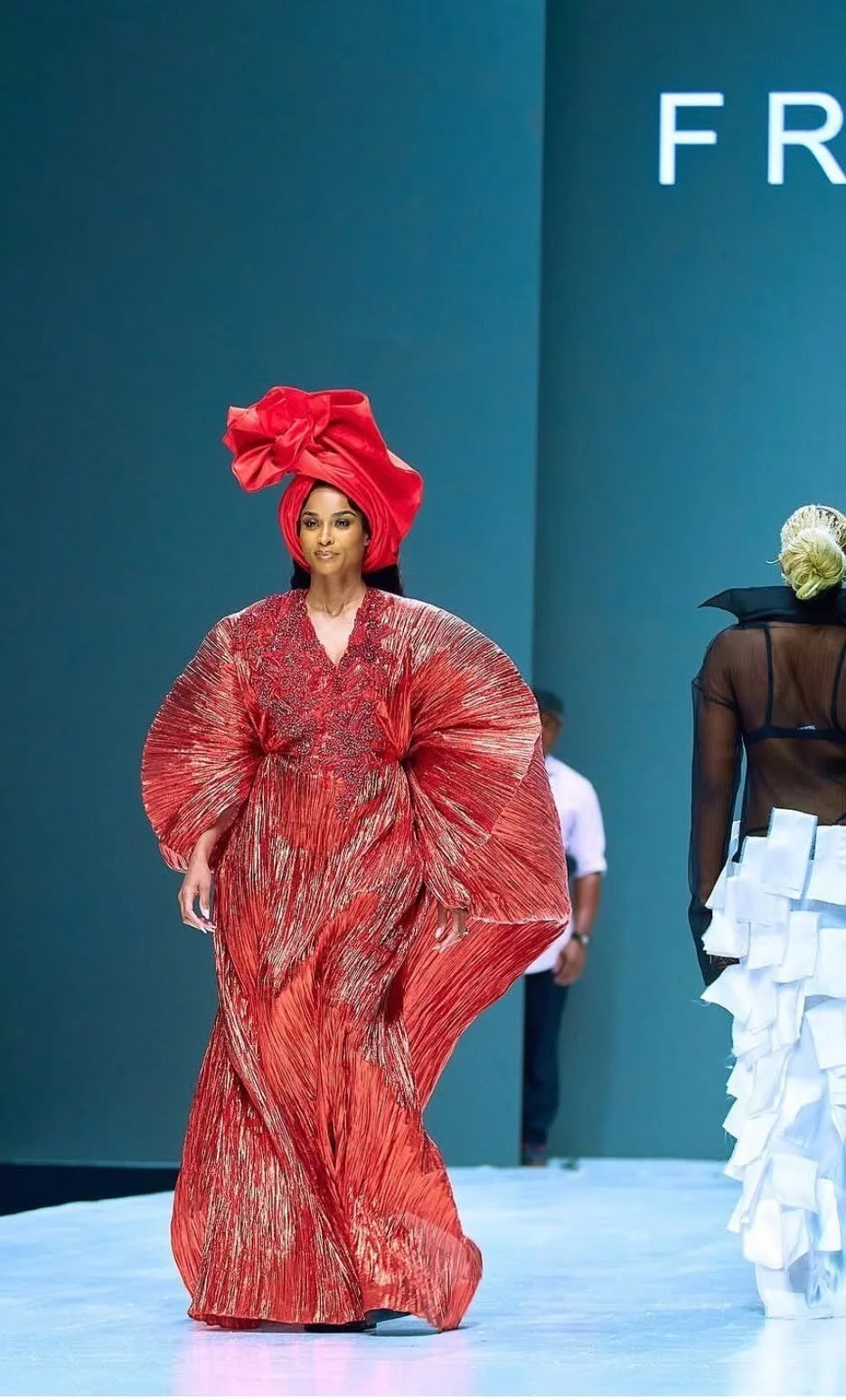
Ciara at the 2025 Lagos Fashion Week Runway for Fruche
Have you ever watched a model casting?
Or ever seen clips of one?
One of the most rigorous parts of modeling is how long castings take. Models wait for hours, sometimes days, only to be told they are not what a brand is looking for. It’s exhausting, but the purpose of that long process is simple: brands want models who meet their vision and can effectively present their clothes on the runway.
At least that’s what the process used to be all about.
So why, then, do we constantly see influencers and celebrities taking the same spaces?
And more importantly what has that change done to the runway?
The answer isn’t as simple as saying that influencers and celebrities don’t belong on the runway. Fashion shows have changed and runways are no longer attended only by buyers, editors and insiders. Today, they’re also social media events. Every look is photographed and every appearance has become content. So these brands are competing for attention just as much as they’re presenting a collection.
In that sort of environment, visibility is very valuable. By using a celebrity, these brands can reach audiences they’ve never explored. An influencer can also help them generate engagement before, during, and after the show. So from a marketing perspective, this is a great decision.
But modeling and marketing are not the same thing. Modeling is a craft. It’s not just about putting a good-looking person in an outfit. It’s about storytelling through movement, expression, and presence. Models spend years learning posture, pacing, garment movement, and how to embody a designer’s work without overshadowing it. The best runway models know how to make clothes come alive and keep attention on the collection.
This is why professional models are important. When a model steps on the runway, they function as a vessel for the designer's vision. Influencers and celebrities, on the other hand, arrive with identities that the audience already knows. Sometimes that can enhance a show and other times, it can completely dominate it.
Take Ciara’s appearance for Fruché at Lagos Fashion Week 2025. It went widespread on the internet and created a lot of conversation. From a visibility standpoint, it was a success. But what did people remember most? The collection or Ciara?
To be fair, fashion has always relied on famous faces to attract attention and signal cultural relevance. However, social media has increased the value of visibility which has resulted in brands making audience reach and engagement factors in casting decisions. So the use of famous faces feels more pronounced than before.
Also some brands cast musicians, artists, activists, and community members because their presence contributes to the story being told.
So the problem isn’t necessarily about non-models appearing on the runway. The problem is when visibility becomes the main focus.
Because then the craft begins to suffer. We see influencers or celebrities on the runway and they look unprepared, uncomfortable, or disconnected. The presentation then feels awkward and instead of enhancing the story, the person wearing the clothes becomes a distraction for it.
So, should we really complain every time a brand uses celebrities and influencers?
Honestly, I don’t think so.
But brands should make sure that whoever they put on the runway, be it an influencer, a celebrity, or otherwise, can actually contribute to the presentation. They should enhance the story being told, not weaken it. If influencers and celebrities are going to be treated as models, then they should take the craft seriously enough to learn it. Because when the work isn’t put in, it reduces everything professional models have spent years perfecting.