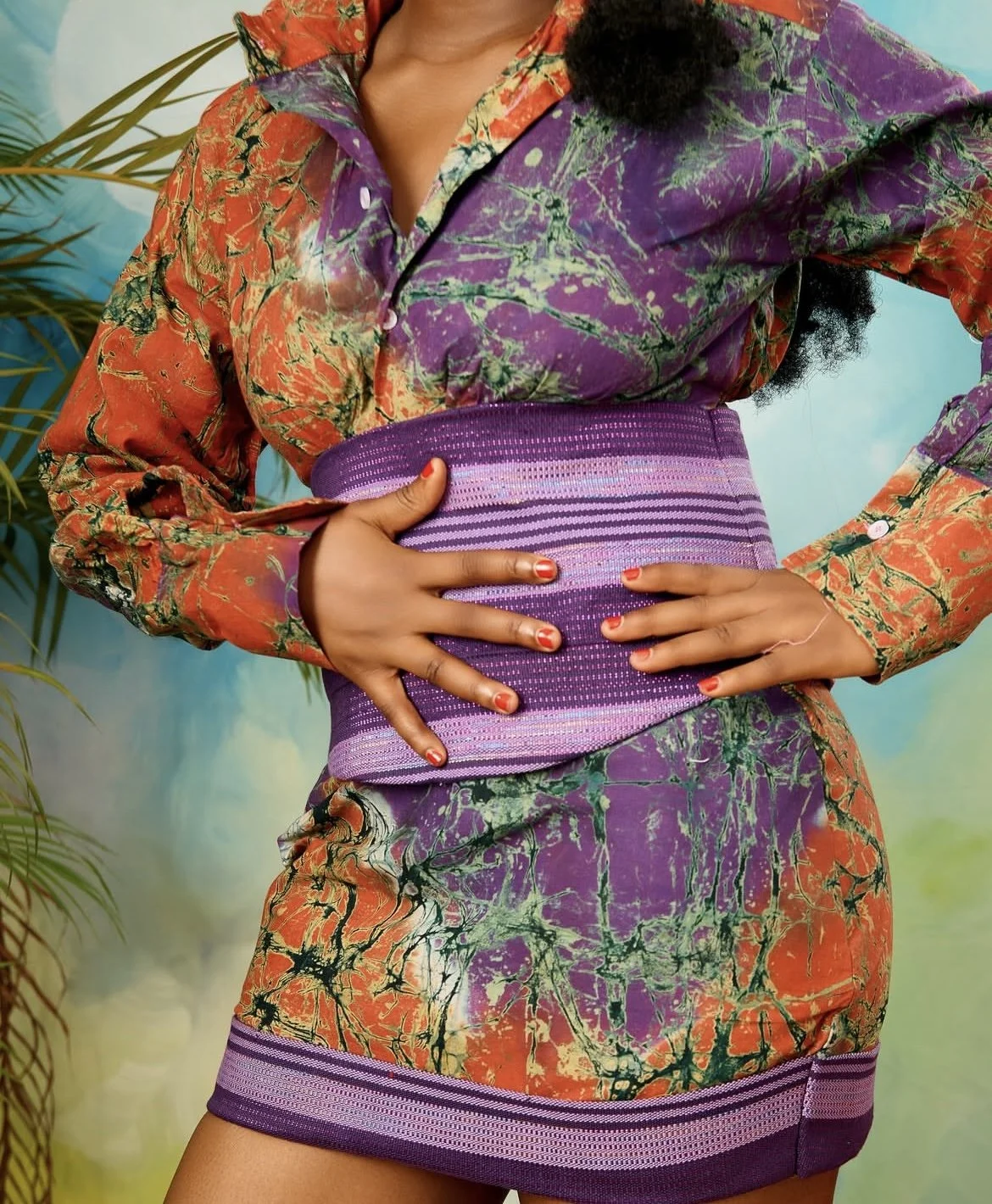
Model adorned in NiWa
Image source @wear.niwa on Instagram
The first thing you notice about NiWá, the Lagos-based fashion brand, is its unapologetic love of color. At the center of it all is its founder, Toluwani Oluwashina, a woman who, by her own admission, didn’t set out to conquer fashion but to carve a space for self-expression.
“I hadn’t really planned on starting NiWá,” she admits, in an interview with Ekinken. It was after a personal turning point, a breakup that left a gap in her life and an urge to fill it with creativity that she returned to fashion school, finally giving shape to a lifelong passion for clothes.” I remember realizing that I really loved clothes and wanted to do something with my passion for them. So at that time, I hadn't decided I wanted to start my brand. I just knew I wanted to go back to fashion school, and I went back to fashion school,” she says. “I don't enjoy the sewing process, but I love the process of figuring out fabric, you know, going to the market, picking out colors, designing styles, adding my own touch to the style.”
What she calls her “exact moment of clarity” was a slow realization that her love for fashion could become a vehicle for something bigger. A brand that celebrates boldness, individuality, and the joy of dressing.
A Love Letter to Color and Play
Toluwani’s philosophy is simple: clothes are meant to be playful, expressive, and personal. Her collections lean heavily into color, patterns, and unexpected silhouettes. “I rarely pick muted fabrics. If I’m going to design, I want it to be fun, eye-catching, memorable,” she explains.
The brand is for girls who like to be a little bit unconventional, but who also really like African fabric and like to have fun with their clothes.
She was never trying to fill a perceived gap in Nigerian fashion; rather, she wanted to add something to the spectrum. “The gap I was trying to fill was a gap for people that really like colors and a little bit of unconventional dressing,” she says. It was not a gap she noticed as a consumer, but it was all about creativity. “I used to consume a lot of fashion content, and I was okay with everything that I was seeing. The only thing I just wanted to do for my immediate people around me and people that I could reach as quickly as possible was to just add a little bit of a little burst of colors to their outfits and their wardrobes,” she continues.
Her early collections reflected this philosophy. Bold prints, asymmetrical hems, and playful cuts created pieces that were visually stunning and emotionally resonant. Each piece was designed with a thought in mind: how will someone feel wearing this? “I want people to feel satisfied, happy, and cool,” she says. “When someone wears my clothes, I want them to feel happy and cool. I want them to feel like when they go out, people will look at them and say oh that's a nice outfit.”
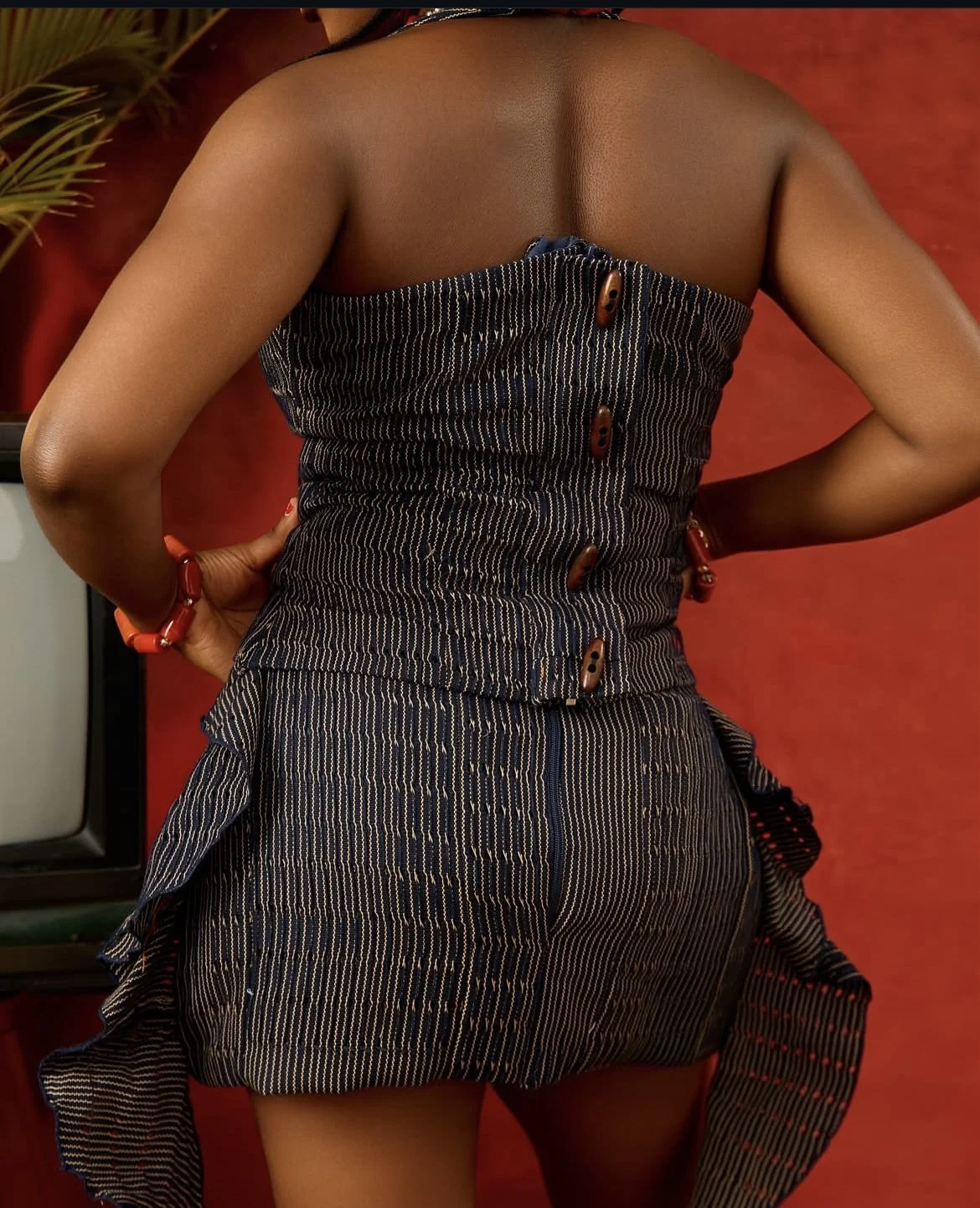
Model adorned in NiWa
Image source @wear.niwa on Instagram
The Fears Behind the Brand
Starting a fashion brand in Lagos is not for the faint of heart. Toluwani’s biggest hurdles weren’t just creative. They were financial, logistical, and emotional. “Money has always been the hardest part,” she admits. “Funding a small business is tricky. You have ideas, you produce, and sometimes the market doesn’t respond the way you expect.”
Self-doubt was another constant companion. She recalls moments when she hesitated to release designs, worried they wouldn’t resonate, or that engagement would be underwhelming. “It’s daunting to put something out there and not know how it will be received,” she says. But she’s learned an important lesson: “someone, somewhere, will connect with what you’re creating, even if you can’t always see them.”
Interestingly, no one tried to talk her out of starting NiWá. Friends and family were supportive, and she is, by her own admission, stubborn. “I would have done it anyway,” she laughs. “Even if everyone told me not to, I would’ve gone for it.”
NiWá as a Statement
Beyond the clothes, NiWá represents self-expression. It’s about embracing individuality, celebrating culture, and giving people agency over how they present themselves.
When a customer places a custom order, Toluwani encourages them to add their own spin. “I want people to express themselves. Fashion isn’t just about wearing something. It’s about showing the world who you are,” she explains.
This philosophy extends to the brand’s materials and production choices. NiWá sources locally whenever possible, collaborating with artisans to ensure both quality and authenticity. “Working locally makes it easier to correct mistakes, communicate ideas, and support the people creating these fabrics,” she says. Cotton and adire are her fabrics of choice, not just for their durability, but for their cultural resonance and ability to carry the vibrancy she loves.
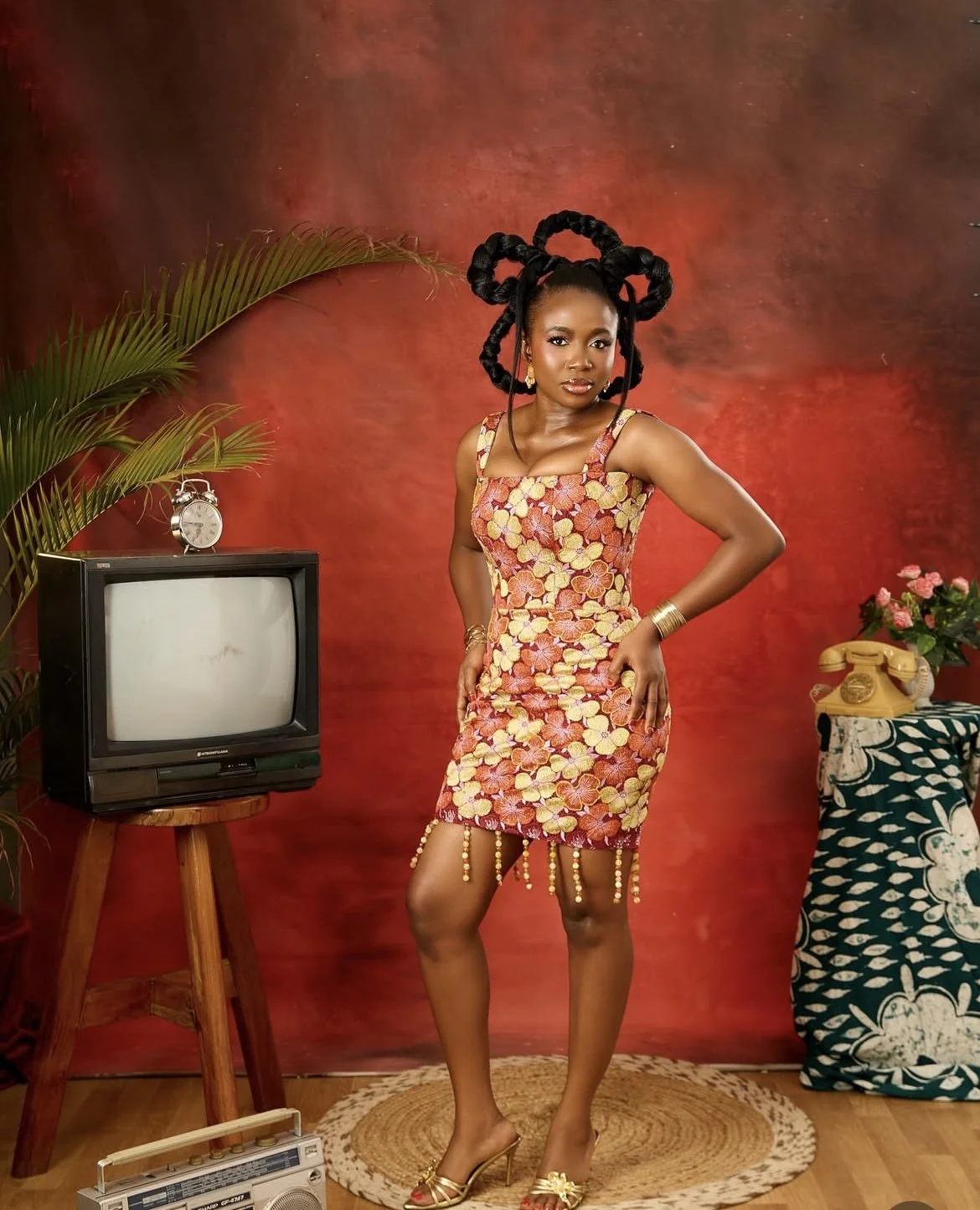
Model adorned in NiWa
Image source @wear.niwa on Instagram
Lessons from the Frontlines
Running a fashion business, Toluwani has discovered, is a constant negotiation between creative freedom and commercial reality. She tells a story about a bulk order from abroad that almost broke her financially. The client wanted six custom pants at a price so low. In the end, the client didn’t want the pants anymore, and she had to struggle to refund.
Mistakes, she says, have been her greatest teachers. Early on, she bought fabric in bulk based on instinct rather than demand, only to find customers gravitated to entirely different pieces. That experience led her to transition to a made-to-order model, allowing her to respond to real demand, minimize waste, and maintain quality. “You can’t predict what people will buy,” she says. “What you think will be popular isn’t always what sells. Slow fashion has been my way of adapting.”
Balancing Art and Commerce
NiWá’s collections balance the artistic with the accessible. Her most recent work is split into two streams: one for creative expression, the other for commercial viability. The first allowed her to explore bold, experimental designs; the second catered to everyday styling and wearability. She hopes to merge these approaches in future collections, creating pieces that can function both as statement art and casual attire.
Success Redefined
When NiWá first started, she equated success with visibility, sales, and hype. Today, she measures it differently. “Success is seeing someone wear something from NiWá and love it,” she says. “It’s repeat customers, referrals, people coming back because they trust you and your vision.” Money is part of the equation, but it’s not the measure of her brand. For NiWá, it’s the connection, the satisfaction, and the joy her pieces bring.
She’s also learned the pitfalls of comparing herself to other brands, a trap that many entrepreneurs fall into. “I try not to stalk other founders online,” she says. “It can make you doubt yourself. What is for me is for me. I go at my own pace.”
Lessons in Color, Courage, and Conviction
From the start, NiWá has been about more than selling clothes. It’s about shaping a culture of expression, experimentation, and self-representation. Toluwani’s journey illustrates the reality behind the glamour. There are long hours, low sales periods, financial juggling, and emotional strain. But it also shows the resilience required to build a brand that reflects personal values. Mistakes are inevitable, but they teach, guide, and inform future choices.
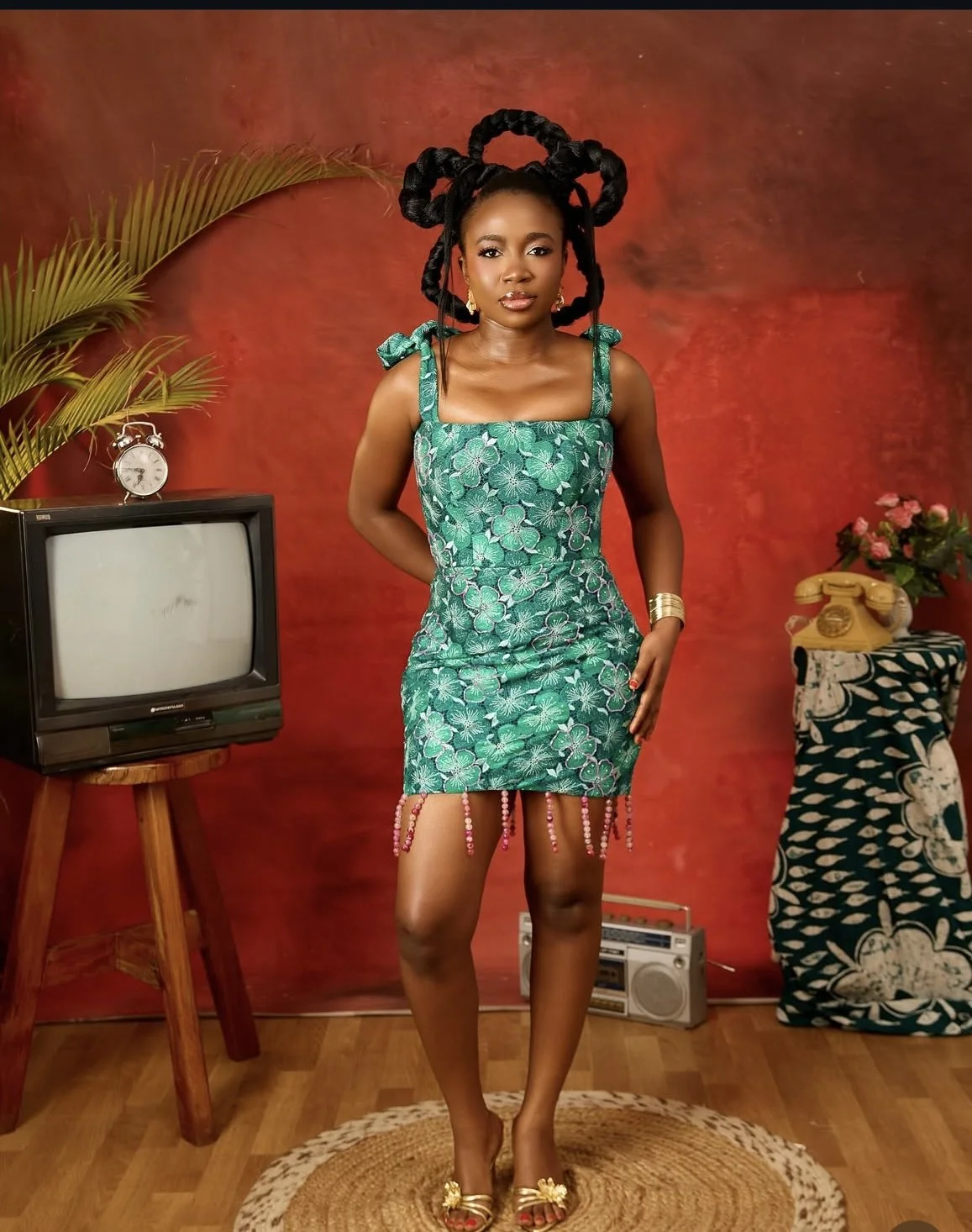
Model adorned in NiWa
Image source @wear.niwa on Instagram
The Woman Behind the Brand
Toluwani’s designs mirror her personality: fearless, colorful, and unafraid to take risks. She designs for someone who wants fun, versatility, and vibrancy in their wardrobe. Essentially, a person unafraid to stand out. Her clothes are canvases for self-expression, celebrating individuality without compromising on style or quality.
It’s clear that NiWá is about curating experiences, moments, and confidence for clients. Each stitch, color choice, and pattern is deliberate, informed by a belief that fashion is a language. One that can tell stories, uplift spirits, and amplify identity.
Looking Ahead
Toluwani is pragmatic about the future. She dreams of expanding her reach, refining storytelling in her collections, and continuing to source and collaborate locally. She’s mindful of balancing affordability with quality, experimentation with wearability, and growth with authenticity.
“The next collection will be a blend of art and everyday wear,” she says. In a world where fashion is often a race to scale and compete, NiWá is a reminder that clothes are not just commodities, but vehicles of joy, confidence, and expression. Her journey embodies the messy, thrilling, and deeply personal nature of building a fashion brand that is as much about heart as it is about style.
As she continues to experiment with colors, fabrics, and concepts, she is shaping how we experience fashion. And she’s doing it on her own bold terms.