The Unspoken Language of Maasai Beadwork: How Every Bead Tells a Story of Culture, Rank, and Community
More than Just an Accessory
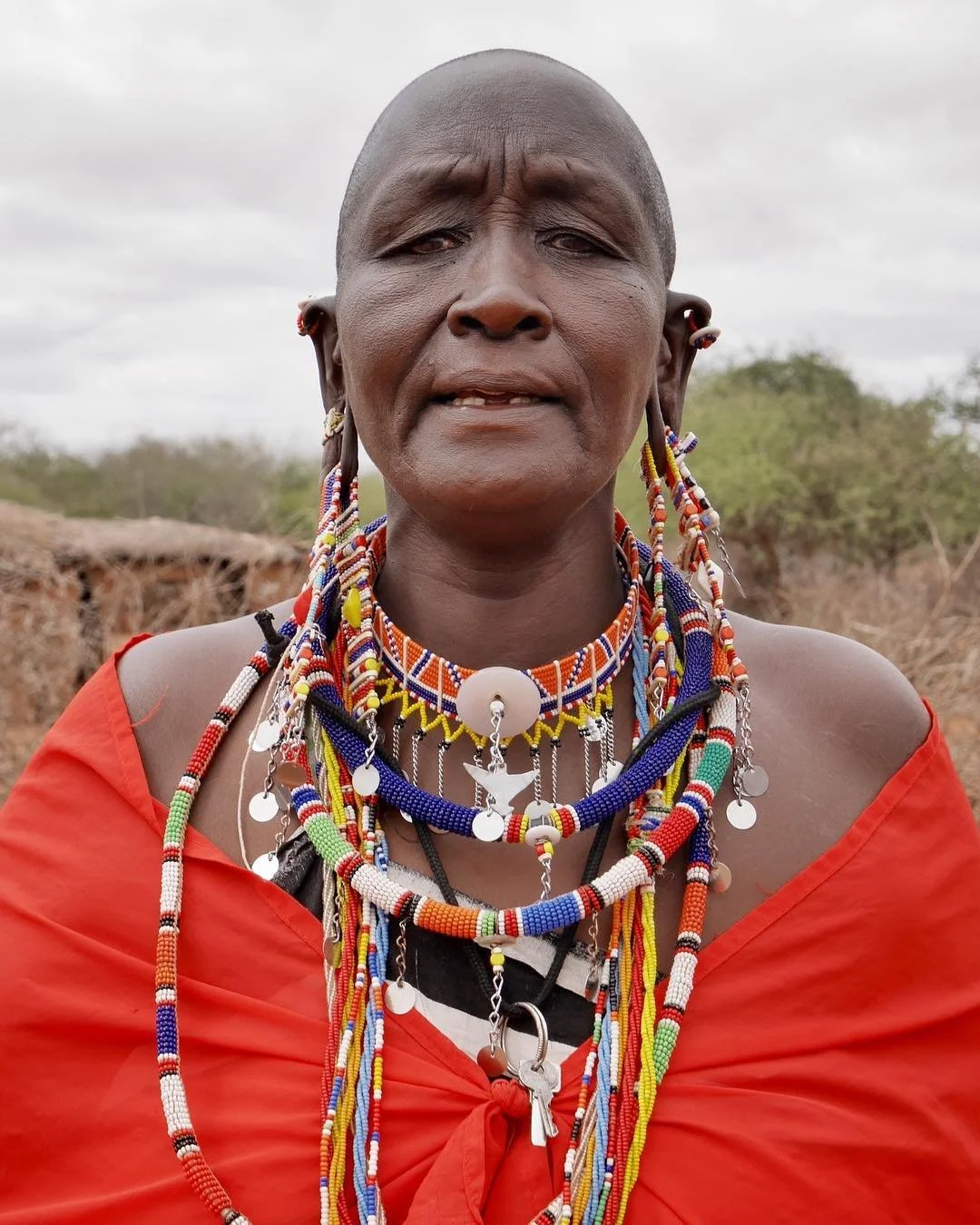
Maasai Woman Rocking Maasai Beadwork photographed by Tracie Anglodizon
In the global fashion landscape, Maasai beadwork is often celebrated for its vibrant colors, intricate patterns, and undeniable beauty. From bustling tourist markets to international runways, these hand-crafted pieces are a celebrated symbol of East African culture. Yet, to perceive this art form as merely a fashion statement is to miss its most profound purpose. Beyond the aesthetic appeal lies a complex and sophisticated visual language—a living history woven into every bead.
But then, little, not much is said in the unspoken language of the beadwork? There is a powerful symbolism behind each color, for fashion enthusiasts, the curiosity to explore the historical significance of the craftsmanship, and, most importantly, reveal how a single piece of jewelry can communicate a person's marital status, social rank, and place within their community arises. Each bead, pattern, and motif is not just decoration; it is a word in a powerful, ancient story.
A Rich History Woven in Beads
The art of Maasai beadwork is a tradition with a history as deep as the culture itself, with archeological evidence suggesting bead-making practices date back to the 7th century. While initially crafted from natural materials like clay, bone, wood, and seeds, the art form evolved dramatically in the 19th century with the arrival of glass beads through European trade routes. These new, vibrant beads were highly coveted and quickly became a significant source of wealth and a staple of Maasai identity.
Today, this mastery is a tradition primarily passed down through generations of skilled women artisans. They meticulously string beads onto fine wire or string to create captivating designs. Yet, the creation of a beaded masterpiece is often a community effort, with men often contributing by forging the metal framework that supports the intricate beadwork. This collaborative process ensures that the traditions, symbols, and values of the Maasai people are upheld and passed on.
Decoding the Colors: A Key to Understanding
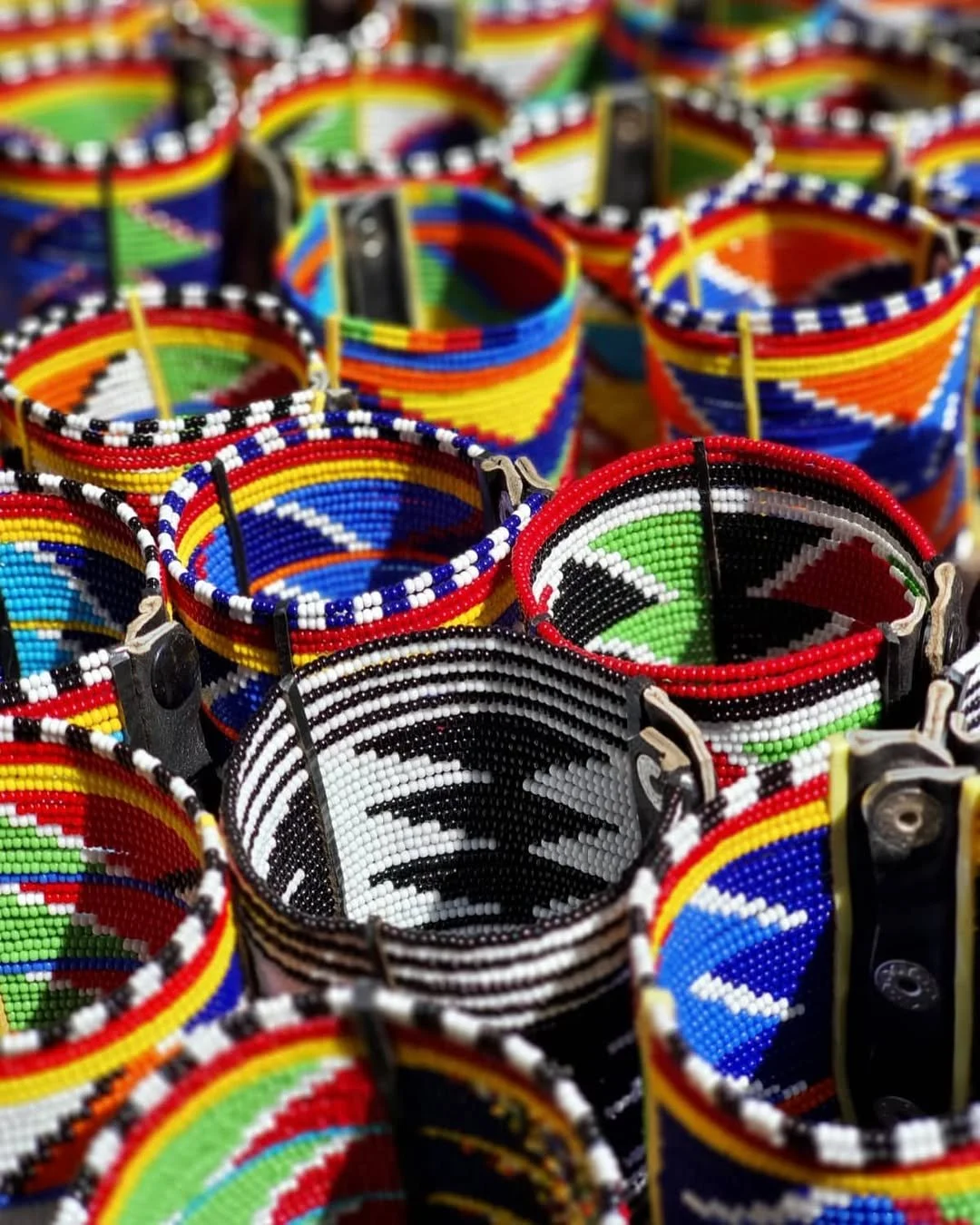
Maasai Colors, One Bead at Time.
Photograph sourced from The Kenyan Crafts Company on Instagram
To understand Maasai beadwork is to first learn its colorful vocabulary. There are seven major colors, each with a deep, unwavering symbolic meaning, directly tied to the Maasai way of life.
Red
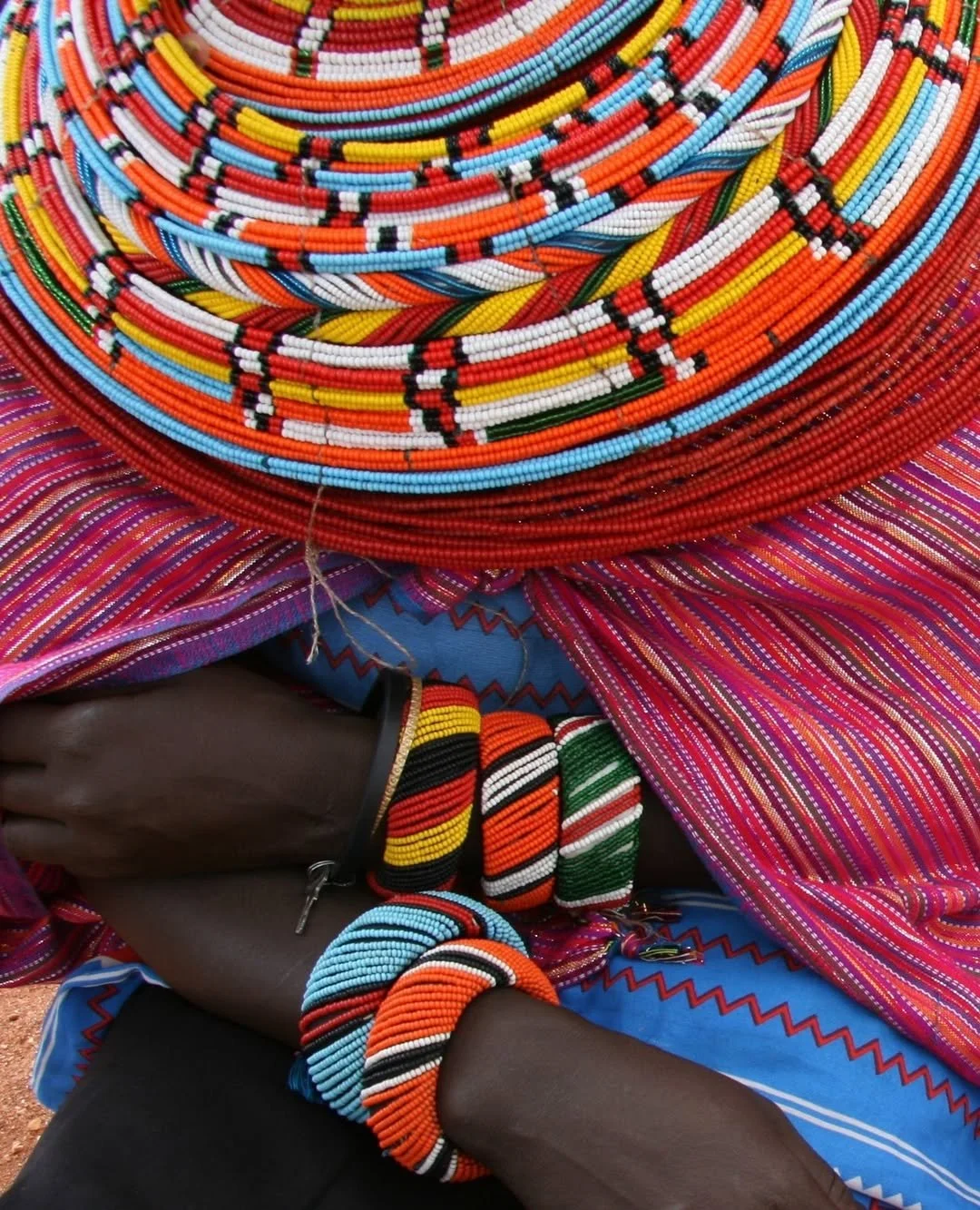
Photograph sourced from Beadswork Kenya Instagram.
The most prominent color, red, symbolizes bravery, unity, and blood. It is associated with the Maasai ethnic group and is especially favored by the Morans (warriors), who wear red shukas to signify kinship, vitality, and life.
White
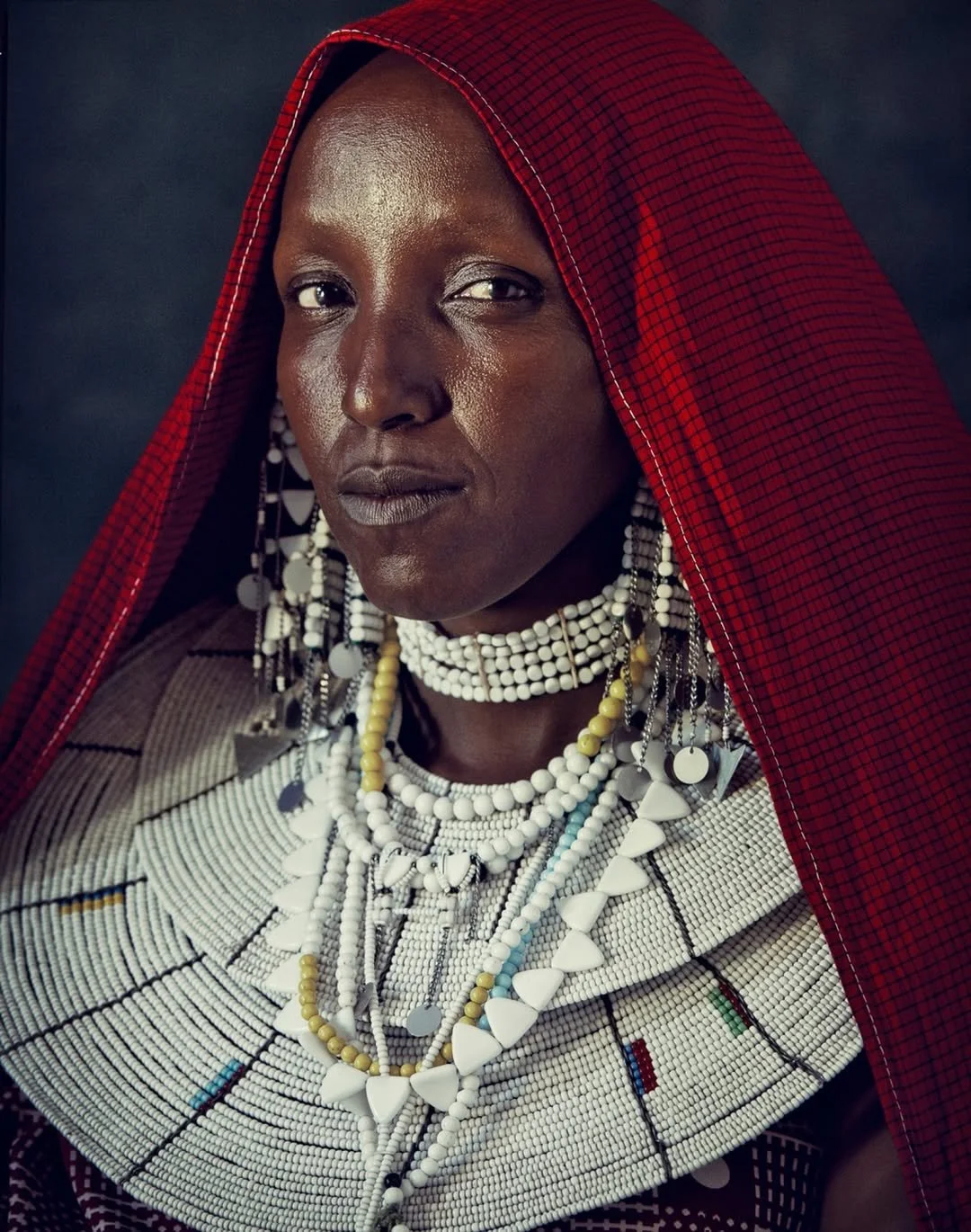
Semi-Nomadic Maasai Woman Adorning White Maasai Beadwork photographed by Jimmy Nelson
This color is a sign of blessing, peace, and health. It is also associated with cows' milk, a staple food and sacred element of the tribe. In some rituals, white chalk is used on the body for protection, further linking it to purity and well-being.
Black
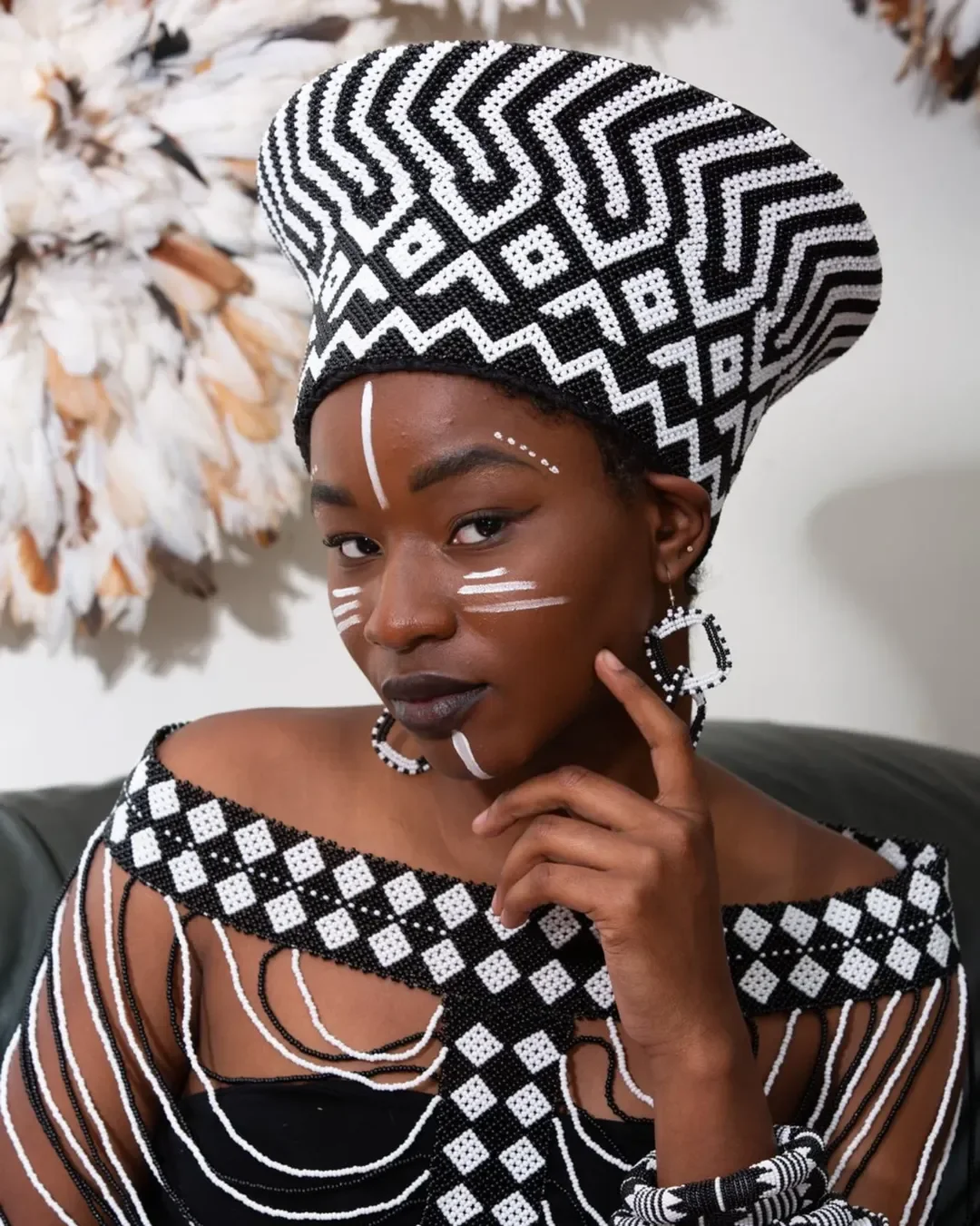
Handmade Maasai Beaded Black and White Off-the-Shoulder Body Adornment photographed by Luangisa African Gallery
A holy and sacred color, black is a sign of sanctity. Newly circumcised boys wear black cloth for protection from their God, Engai, who is referred to as the "Black God." In jewelry, dark blue beads are often categorized as black and are used to mark the sanctity of a married couple’s bond.
Blue
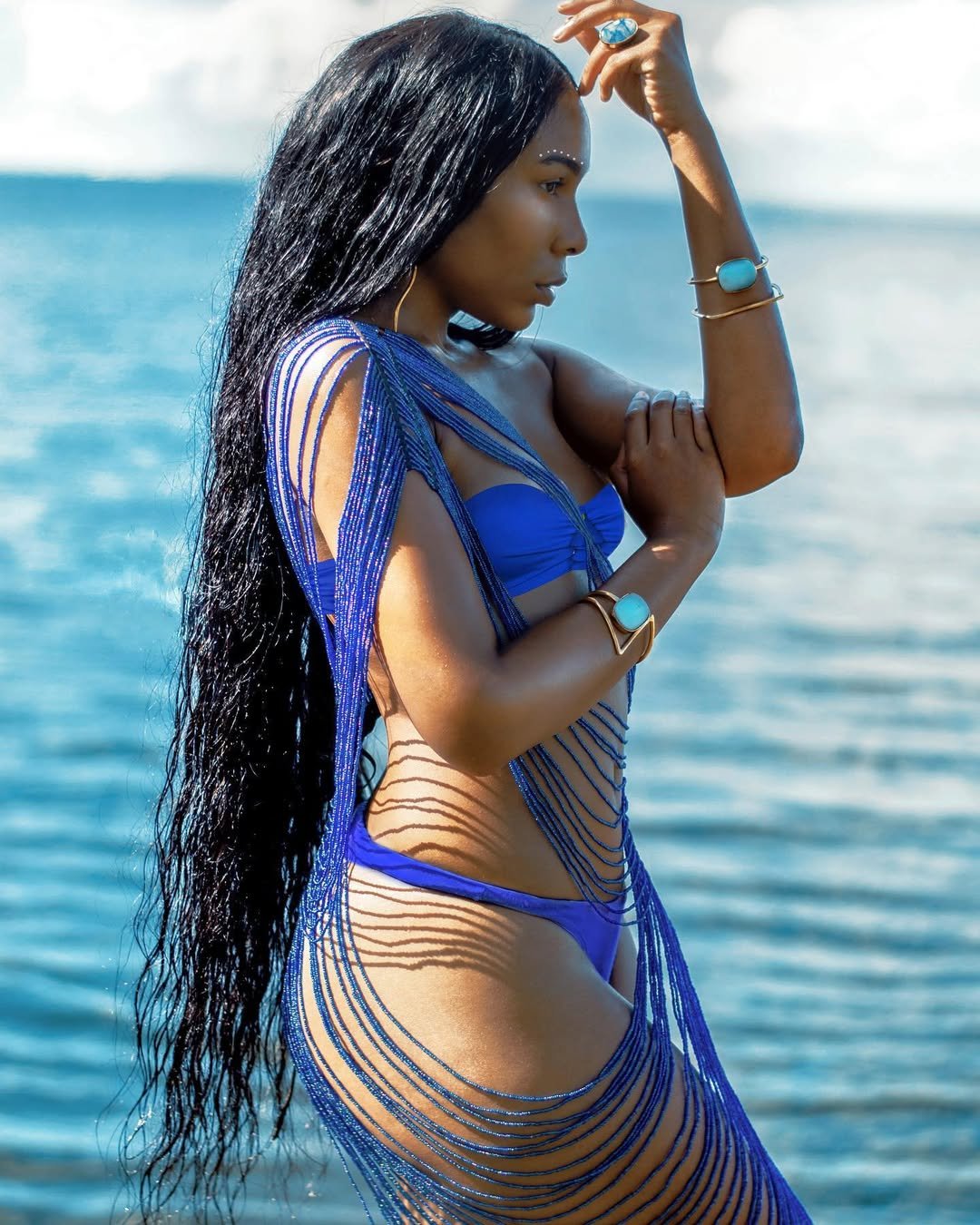
Dordessy (International Supermodel) draped in Blue Maasai Beads
Photograph sourced from Odaomo Instagram
Representing energy and the sky, blue symbolizes life and renewal. The Maasai people rely on the sky for rain, which provides water for people and their cattle, making this color a testament to nature's powerful life force.
Green

Beautiful Green Disc Earrings Made From Maasai Glass Beads. Photo by Luangisa African Gallery.
This color represents pastures and the land. The health of the cattle and, by extension, the tribe, is directly tied to the abundance of green grass. Therefore, green is a powerful symbol of health, prosperity, and the land itself.
Orange & Yellow
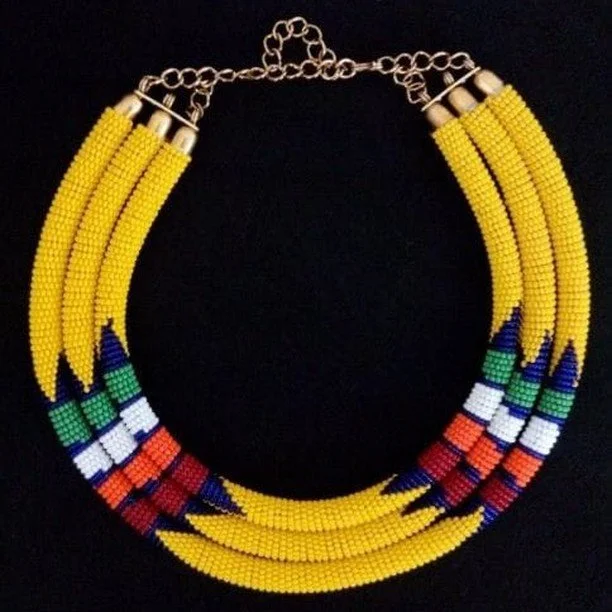
Yellow 3-in-one Beaded Maasai Necklace photographed by Tafrija Africa
Both colors symbolize the sun and hospitality. Orange is often found on the calabash, a vessel used to serve drinks to visitors, while yellow is the color of animal skin used as a mattress or seat. Together, they represent the warmth, generosity, and welcoming spirit of the Maasai people.
The Visual Narrative: Patterns as a Status Symbol
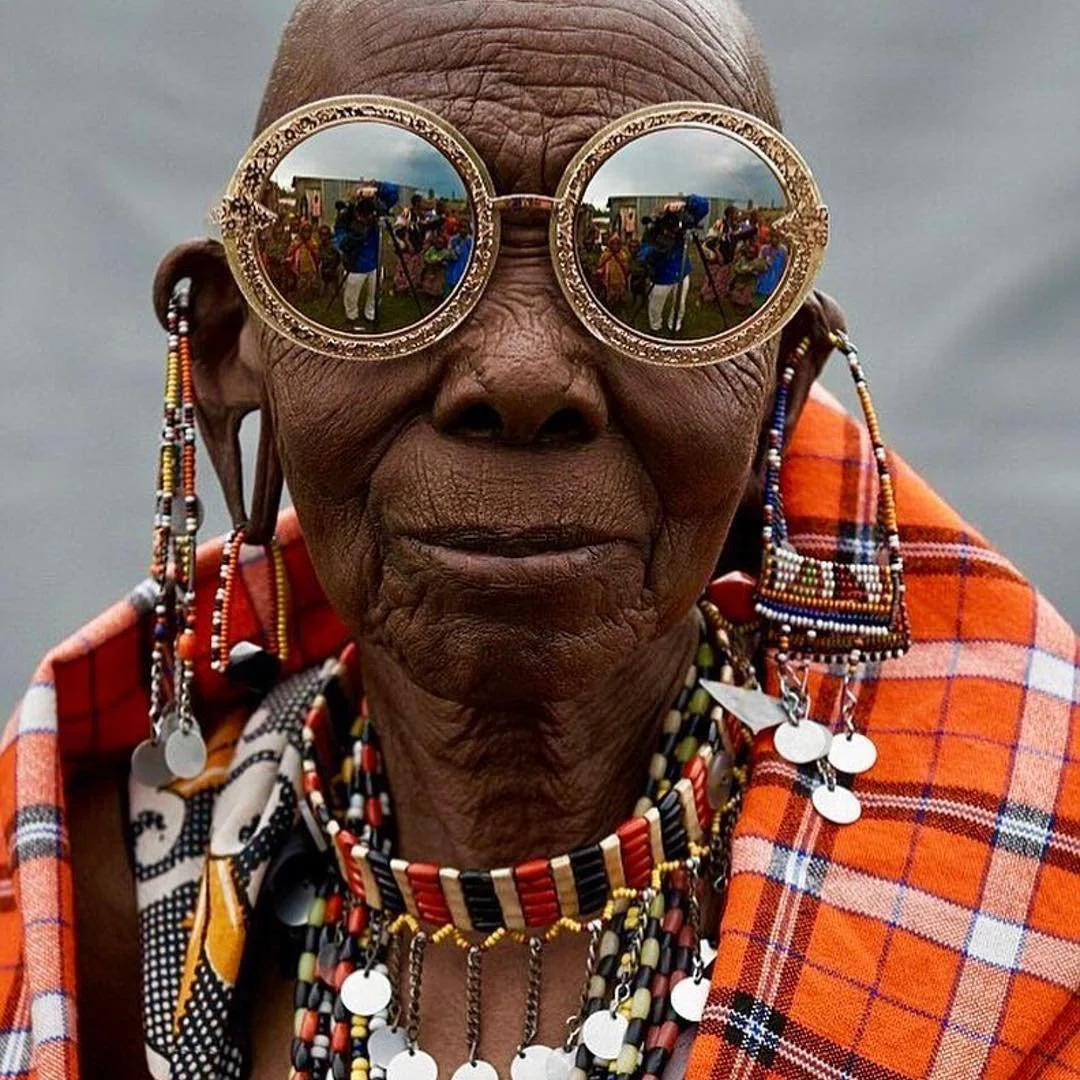
Maasai Woman Colorfully Styled in Maasai Beadwork
Photograph sourced from Maasai Jewelry on Instagram
Beyond the colors, the patterns and specific pieces of jewelry form a more intricate language that communicates a person's life story and social standing. The beadwork is not just a form of artistic expression; it is a powerful non-verbal way of communicating vital information to the community.
For women, in particular, beadwork serves as a clear indicator of marital status and social rank. Unmarried Maasai girls typically wear simpler, single-strand necklaces. The iconic "Esiteti," a flat, circular beaded ornament worn on the forehead, is also a key piece worn by girls to signify their readiness and eligibility for marriage. As they transition into womanhood and marriage, the jewelry becomes more complex. Married women wear multiple strands of colorful beads, with the number of strands and the intricacy of the patterns serving as a visual reflection of their social position and status within the community.
Specific patterns and motifs, passed down through generations, also carry deep meaning. Geometric shapes, often inspired by nature and daily life, tell particular tales and convey specific messages that the tribe understands. The craftsmanship, the choice of colors, and the sheer volume of beadwork on a person can reveal their social rank and personal journey within the community.
A Testament to a Living Culture
Ultimately, Maasai beadwork is a living testament to a culture that has preserved its identity and traditions in the face of change. It is a vital part of significant life events, from birth ceremonies that use beadwork to protect newborns to coming-of-age rituals and funerals, where it guides the spirits of the deceased.
When we view a piece of Maasai beadwork, we are not just seeing a beautiful item; we are seeing a piece of a story. We are seeing a glimpse into a world where every color, every bead, and every pattern holds a profound purpose—a world where art is not separated from life but is, in fact, the very language of it. The beadwork is the heritage, the history, and the indomitable spirit of a people, all meticulously woven together and worn with pride for the world to see and, now, to understand.