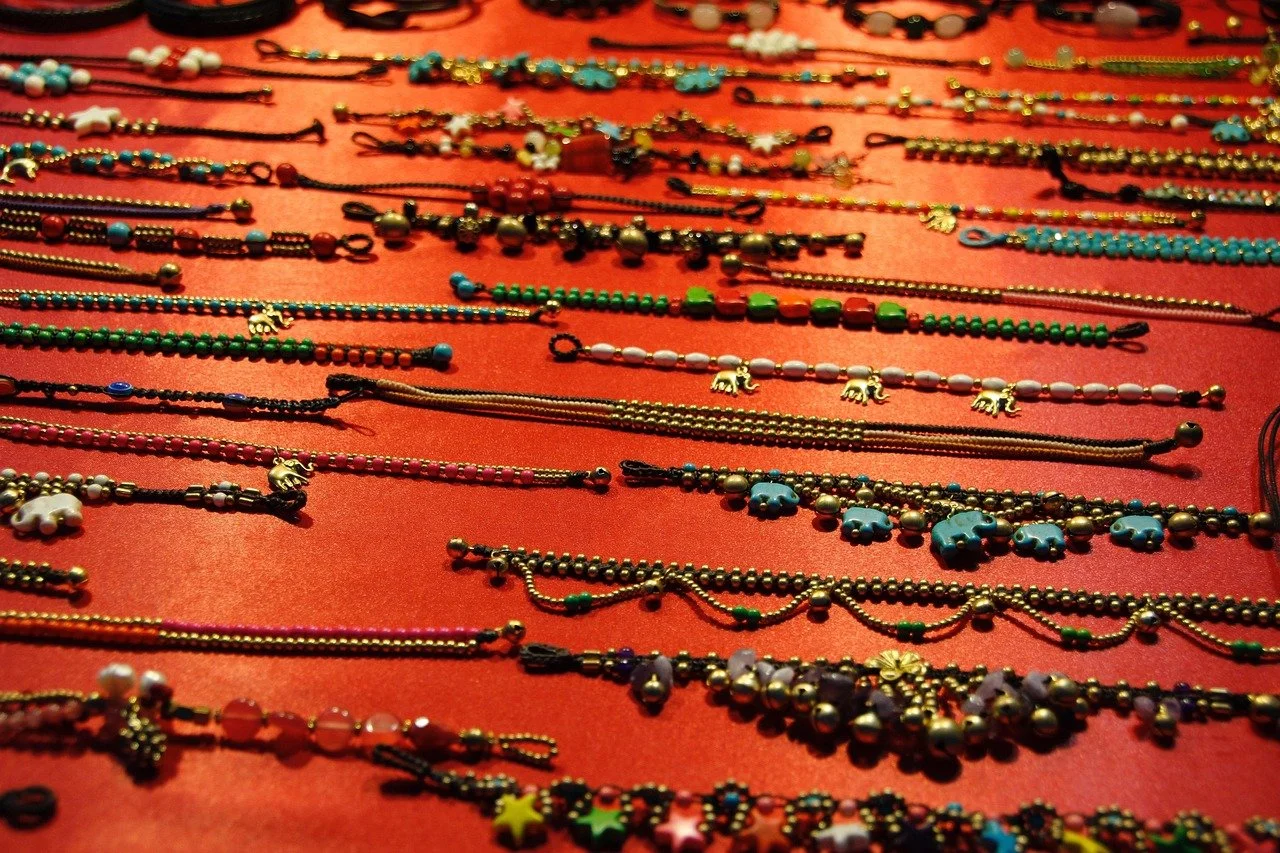
Various anklets photographed by Peggy and Marco Lachmann-Anke
Before writing this piece, anklets were simply gorgeous jewelry that adorned the leg.
But after doing significant research, I have found that there’s a story around the ankle. The anklet tells different stories, each with heavy meaning. It could be a tale of spiritual protection or one of status. Sometimes the story is easy to read, and other times it requires more effort to understand.
So what is the story that anklets tell in Africa?
The Cleveland Museum possesses anklets from Liberia from before 1927. These copper alloy anklets were used to signify a woman’s married status. They were attached to the woman for life, and the only time they were removed was in death. The owner of these heavily weighted anklets could not do any domestic or farm work, so it was essentially a sign of privilege as a member of the elite class.
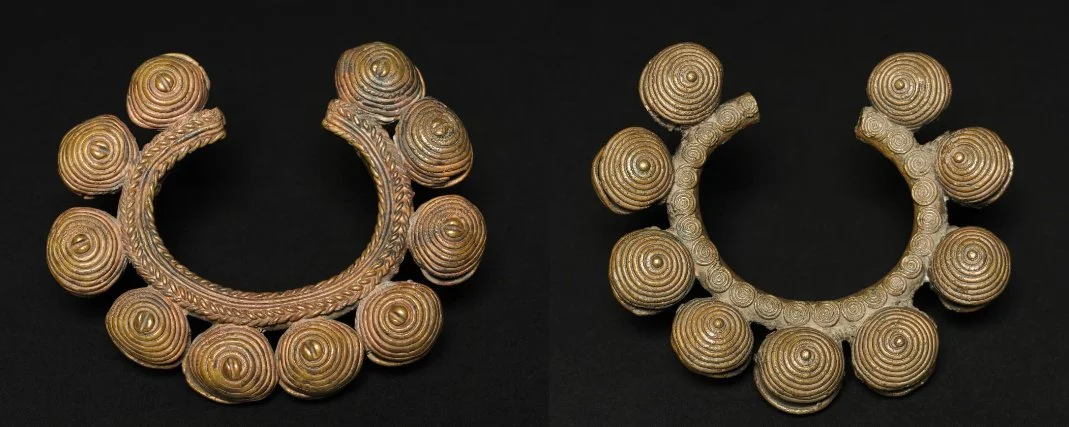
Anklets from Liberia currently residing at the Cleveland Museum
In 1947, the British Museum has anklets from Igbo land made of brass or solid ivory in their possession. These anklets were part of a woman’s dowry. They were essentially a symbol of high status. The anklets, called ogba, were worn in pairs by the women of wealthy families. Now, every anklet was considered prestigious based on the costly material it was made of. A woman who wore ogba had a high social status.
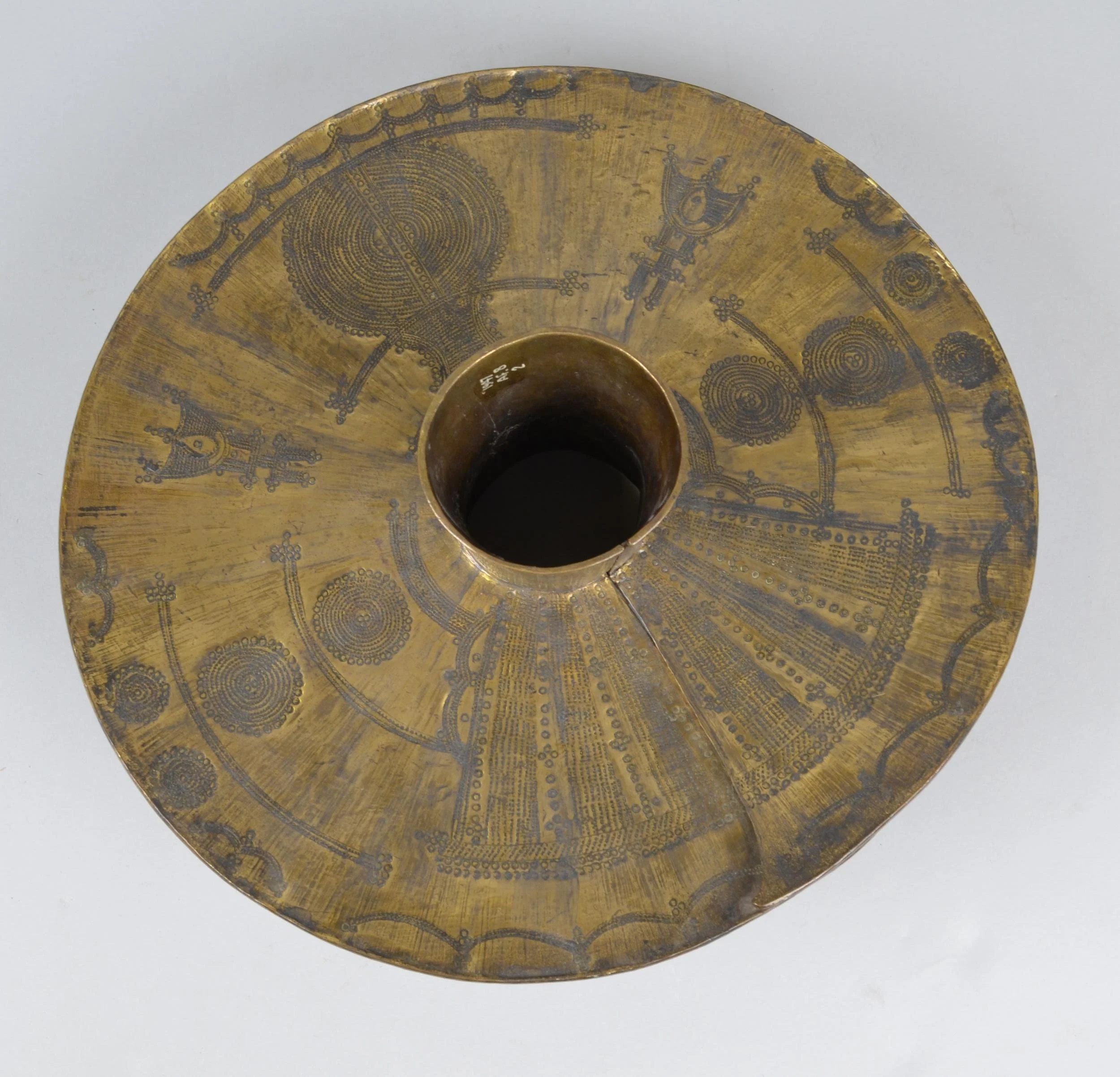
Anklets currently residing at The Trustees of the British Museum.a
In some Yoruba communities, chiefs wore anklets as insignia. Some of the worshippers of dirties also wore anklets as insignia of their deity.
Among the Krobo tribe people of Ghana, beaded anklets known as Krobo hold significant social and spiritual value. By the number of strands, colors, and the specific bead types, you could find out about the wearer’s age, marital status, and wealth.
In the Maasai community of East Africa, anklets are used to show a social standing, age, and achievements. These anklets are made from leather, beads, and metal. It shows a connection to the land and the community’s rich cultural heritage.
Anklets in Uganda serve as talismans. They’re especially given during marriage to protect the wearer from evil spirits.
So what do anklets mean in our society today?
Some people still wear anklets with their meanings, but many see them simply as fashion pieces that can be worn with any outfit.
However, there’s a tension in discussions about anklets and their wearers that transcends time. It is one that we unfortunately still have to address.
There’s this belief that anklets are a sign of promiscuity and immorality. How can something so integral to African culture be looked at in such a negative light?
It’s important that we see anklets and see their history. If possible, we should look at them as a personal statement that uplifts our heritage. We should also embrace our culture by wearing it and owning it. If that is not possible, we should look at its African wearers as people who continue to tell the African story.
While anklets dominate the modern fashion space, we must remember that it’s our own story that they tell.