Nigerian Traditional Wedding Attire: A Dazzling Display of Cultural Pride
Have this imaginative perception of a Nigerian wedding, if you haven’t attended one yet. Imagine an atmosphere with the air vibrating with Fuji beats, the scent of jollof rice wafts through, and the crowd erupts in cheers as the couple steps out. But let’s be real, it’s the colorful, eye-catching attire that steals the show. Nigerian traditional wedding outfits aren’t just clothes; they’re a bold proclamation of heritage, tribal pride, and a love letter to centuries of craftsmanship.
Nigeria, with over 250 ethnic groups, turns weddings into cultural runways where history meets heart. From the coral beads of the Edo to the towering Gélè of the Yoruba, each attire represents its identity.
The Cultural Heartbeat of Nigerian Wedding Attire
In Nigeria, fashion is about telling the world where you come from, which goes beyond merely looking good. Weddings are the ultimate stage, where every outfit becomes a Nigerian’s social résumé, a nod to ancestors, and a flex of cultural pride. These fabrics are deliberate choices, woven with deep intentional meaning.
For instance, Edo brides are adorned with coral beads to signify royalty, and Hausa brides wear intricate Henna to showcase ancestral blessings. The Yorùbá’s Aṣọ Òkè and the Igbo’s Ìsìagu both spell out the bride’s ancestral belongingness. Each ethnic group brings its own flavor while sharing its unapologetic Nigerian-ness.
This diversity is Nigeria’s superpower, as every tribe’s attire has a unique fingerprint, and together they paint a masterpiece of national identity.
The Iconic Wedding Attire of the ethnic tribes
The Ibibio
The Ibibio of Akwa Ibom bring the drama to their weddings, starting with the couple’s attire. Brides wear the double-layered George Ndọt iba wrapper, paired with Ìtộng Òfòng, a styled blouse, and Ọfọñg íbuọ, a head tie, fleshed out to stand out. In most cases, brides choose to sew the Ndọt iba as gowns, showcasing versatility and a unique perspective on fabric design.
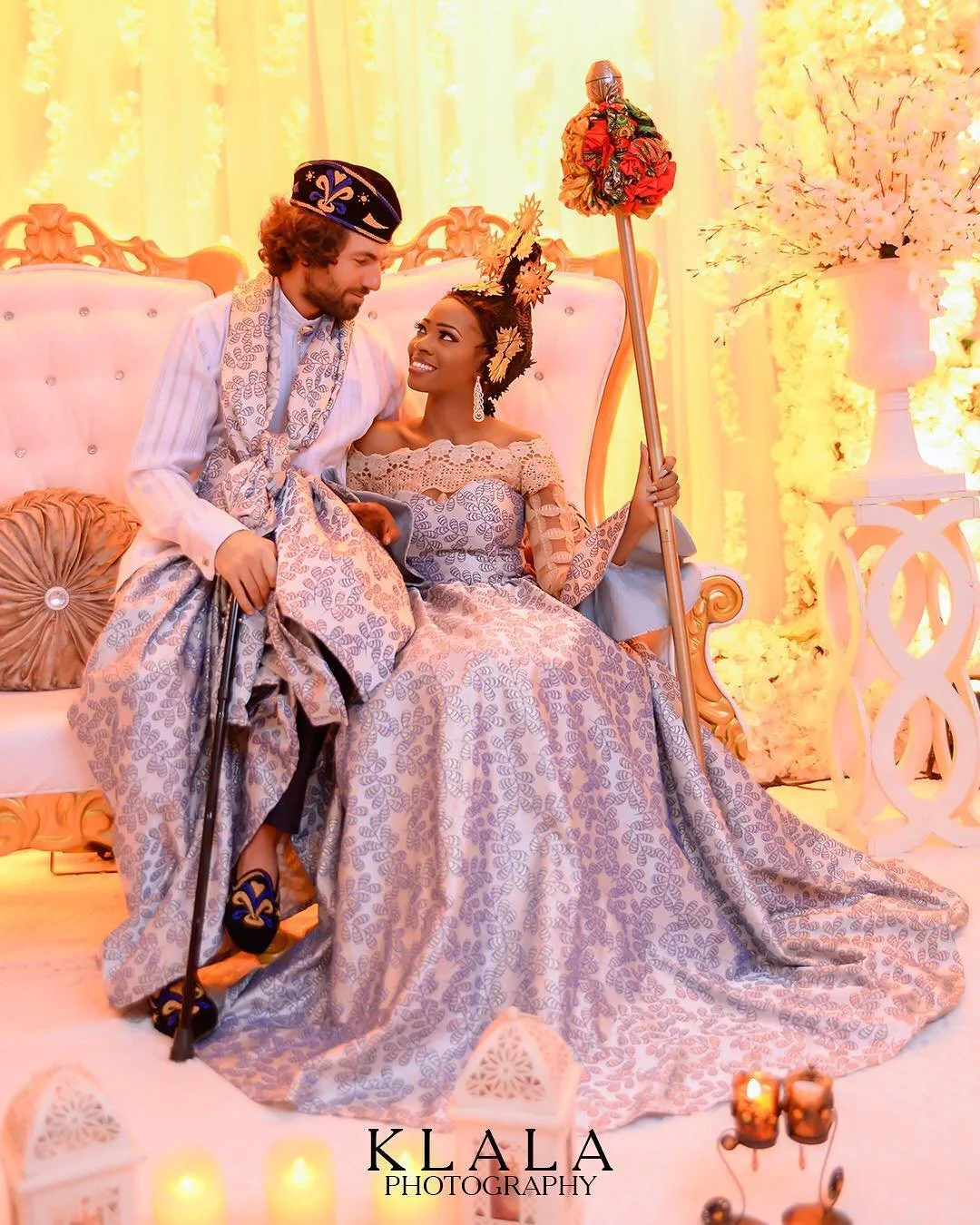
Couple in Ibibio traditional wedding attire photographed by KLALA PHOTOGRAPHY
The look is not complete without the Ème ńkwa itọñ, the symbolic coral and glass beads worn around the neck, waist, and ankles. The colors are usually in vibrant gold, blue, or green. Other accessories include a colorful, themed, feathered hand fan, a stoned clutch, and an umbrella to showcase their culturally rooted elegance beside their groom.
The groom ties a usobo wrapper around their waist, wearing a knee-length lace shirt with Ekpe-inspired patterns, tying them to cultural societies. The groom accessorized with traditional hats, canes, and beads. Ibibio attire is bold and festive, turning the couple into a walking celebration of their national heritage as they walked under the fancy umbrellas to the center stage.
The Edos
In Benin City, Edo weddings are a regal affair because no other group uses the color red as lavishly as the Edo during weddings. The color red in Edo signifies cultural prestige, royalty, energy, and strength. Brides in their traditional red wrapper, tied at the chest, are adorned in ewu-ivie, the coral-beaded cape blouse that loops over their necks, wrists, and waists, symbolizing wealth, royalty, and spiritual protection.
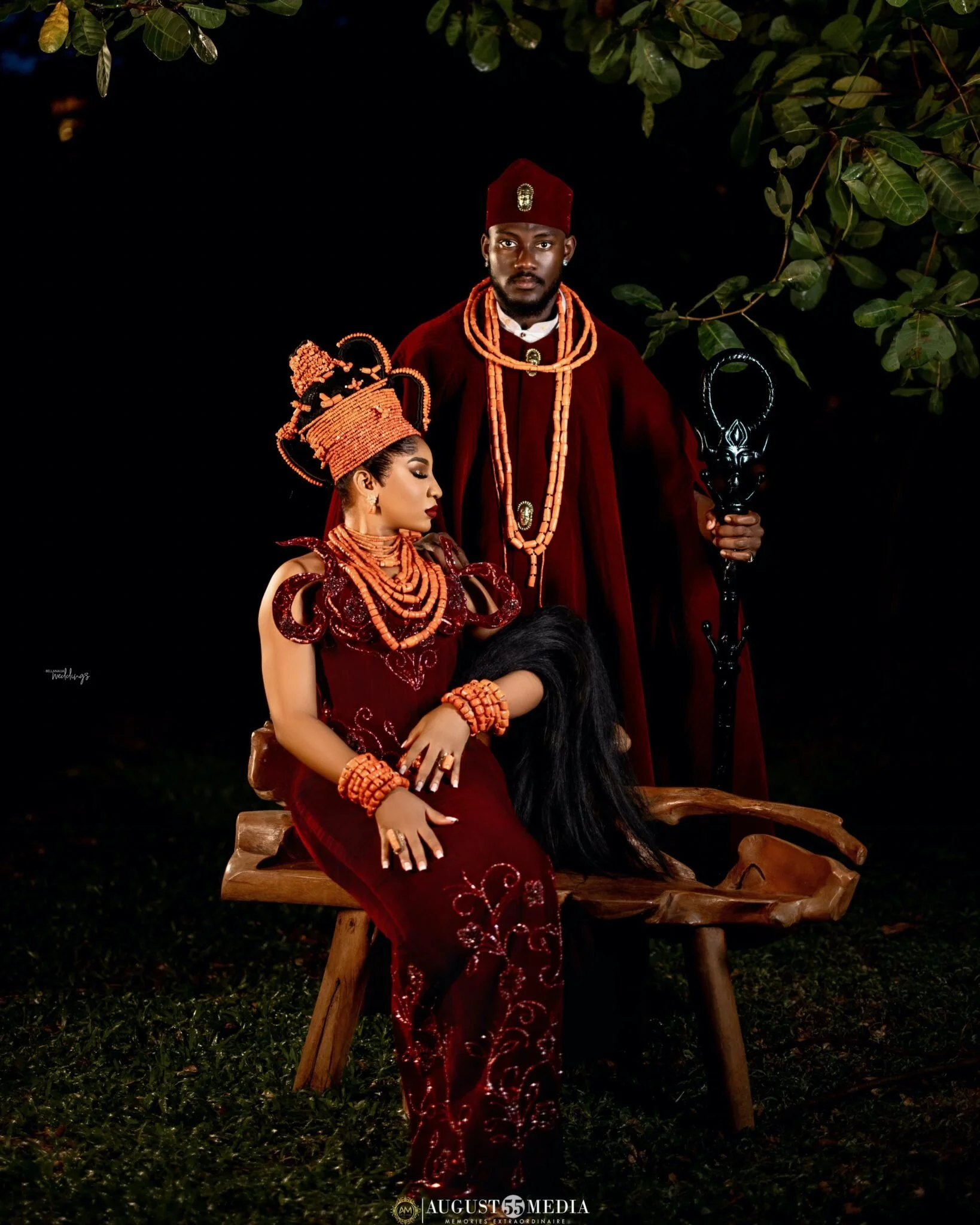
An Edo inspired wedding photoshoot photographed by August 55 Media and sourced from Bella Naija
The okuku, an elaborate, heavily beaded hairstyle adorned with gold ornaments, sits like a throne on the bride’s head, tied to ancestral reverence. The bride is adorned with multiple strands of beads for the neck, arms, and ankles.
Next to the regally styled bride is the groom, who matches this bridal splendor with Ẹwu Iwu, a beaded knee-length tunic that reflects his elegant lineage and status in the Benin Kingdom. The Benin Groom wears a more elaborate, coral-embroidered udeguogho, unlike other groups. The Edo groom wears an Òdòdó, a traditional cap, and carries a walking staff to symbolize his authority.
The Edo attire worn by the couple is styled to transform them into living emblems of Benin’s storied kingdom, exuding timeless elegance.
The Yorùbás
There’s no mistaking a Yorùbá wedding. Every Yorùbá wedding, whether big or small, is renowned for its elegance, grace, boldness, creativity, and much more. The moment you step in and just look at the guest, Gélè, and Agbàdà, you’ll know it’s happening. Even in the current era of fashion, the traditional look remains a standout in all its glory.
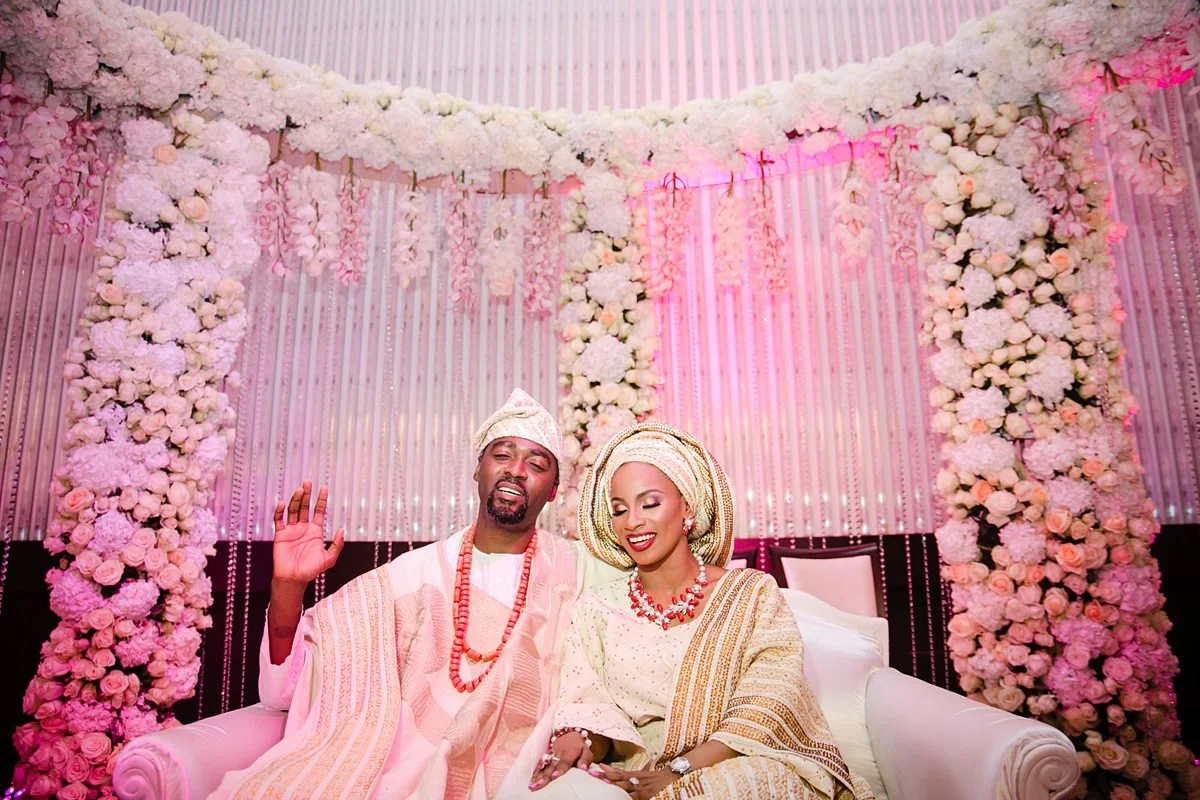
Yorùbá couple in traditional wedding attire photographed by Wani Olatunde Photography
The bride’s outfit often features Aṣọ Òkè, a handwoven cotton fabric with silk and sometimes metallic threads that shimmer in the light. She dazzles in an Ìrò (a wrapper or wrap skirt) and buba (a fitted blouse), both in bold, royal colors, with a matching gele (headwrap). Draped over one shoulder is her Ìpelè (shawl or shoulder stash), adding an extra layer of grace. Coral beads, gold, or silver jewelry around her neck, wrists, and ears complete the look.
The groom stands out in his rich and intricately embroidered, wide-sleeve, flowing Agbàdà, over Ṣòkòtò (trousers) of the same fabric, topped with a fila (cap). He accessorizes with beads that sometimes match his bride, around his neck and wrists, and a walking stick, which is an essential part of the attire.
Yorùbá couples don’t just wear Aṣọ Òkè, they embody it, turning every step into a royal procession that screams,” We are proudly Yorùbá.”
The Igbos
If there’s one thing Igbo weddings never lack, it’s their fashion style, in the best possible way. The brides glow in their George wrappers over embroidered blouses, paired with lots of coral beads that signify wealth and fertility. Some brides even wear multiple wrappers layered over each other, creating a rich, flowing look that moves with every step. To complete the regal vibe, red beads are often styled into the hair or worn as a crown, giving the bride that unmistakable royal aura.
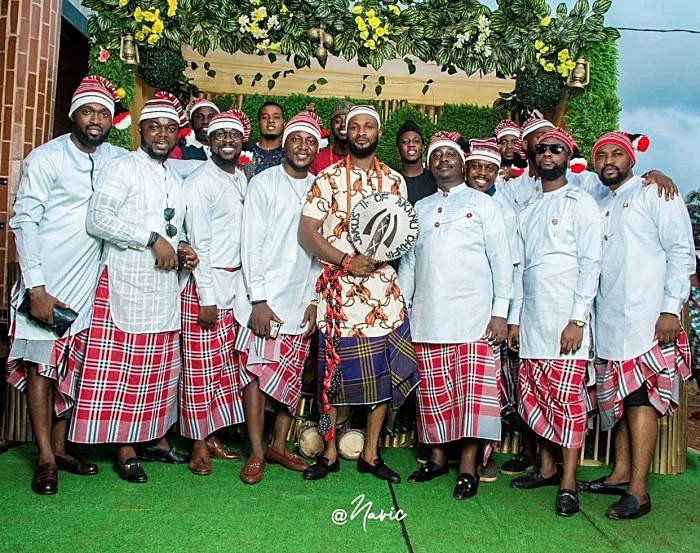
Groom (middle) and Groomsmen at an Igbo traditional wedding photographed by Naric Weddings
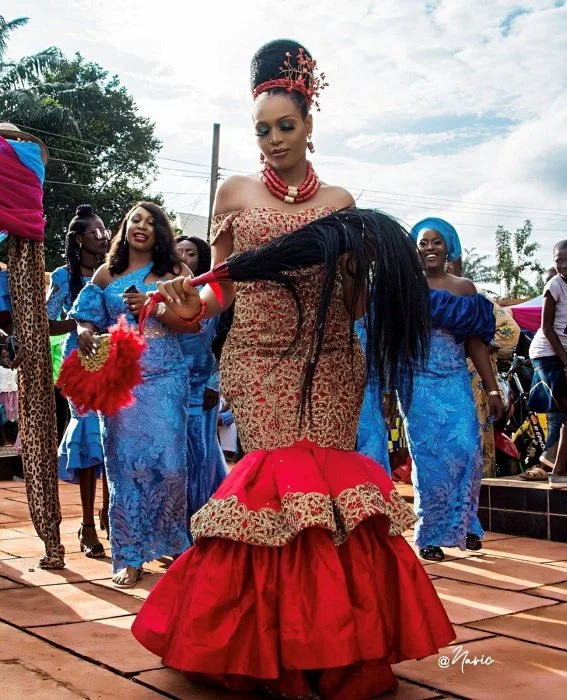
Bride and Bridesmaids at an Igbo traditional wedding photographed by Naric Weddings
The grooms match the vibe in their Ịsị Agu, a lion-head patterned dress-shirt or tunic that’s instantly recognizable across Nigeria. It’s paired with the same wrapper as their brides, usually wrapped around the waist. And of course, the famous red cap, Okpu agụ, adorned with feathers, is not left out.
Together, Igbo couples walk into their wedding like chiefs and queens, making every photo a poster of tradition.
The Hausas
Brides are adorned in richly embroidered fabrics, such as asar, brocade, lace, or silk, often in bright, eye-catching colors. Their hair is usually neatly styled, then covered with a Gélè-like head tie or a beautifully embroidered veil. The major highlight, aside from the bride, is the Henna art, called Nallê. The bride’s hands and feet are decorated with breathtaking designs using the Henna, which symbolize love, fertility, and so much more.
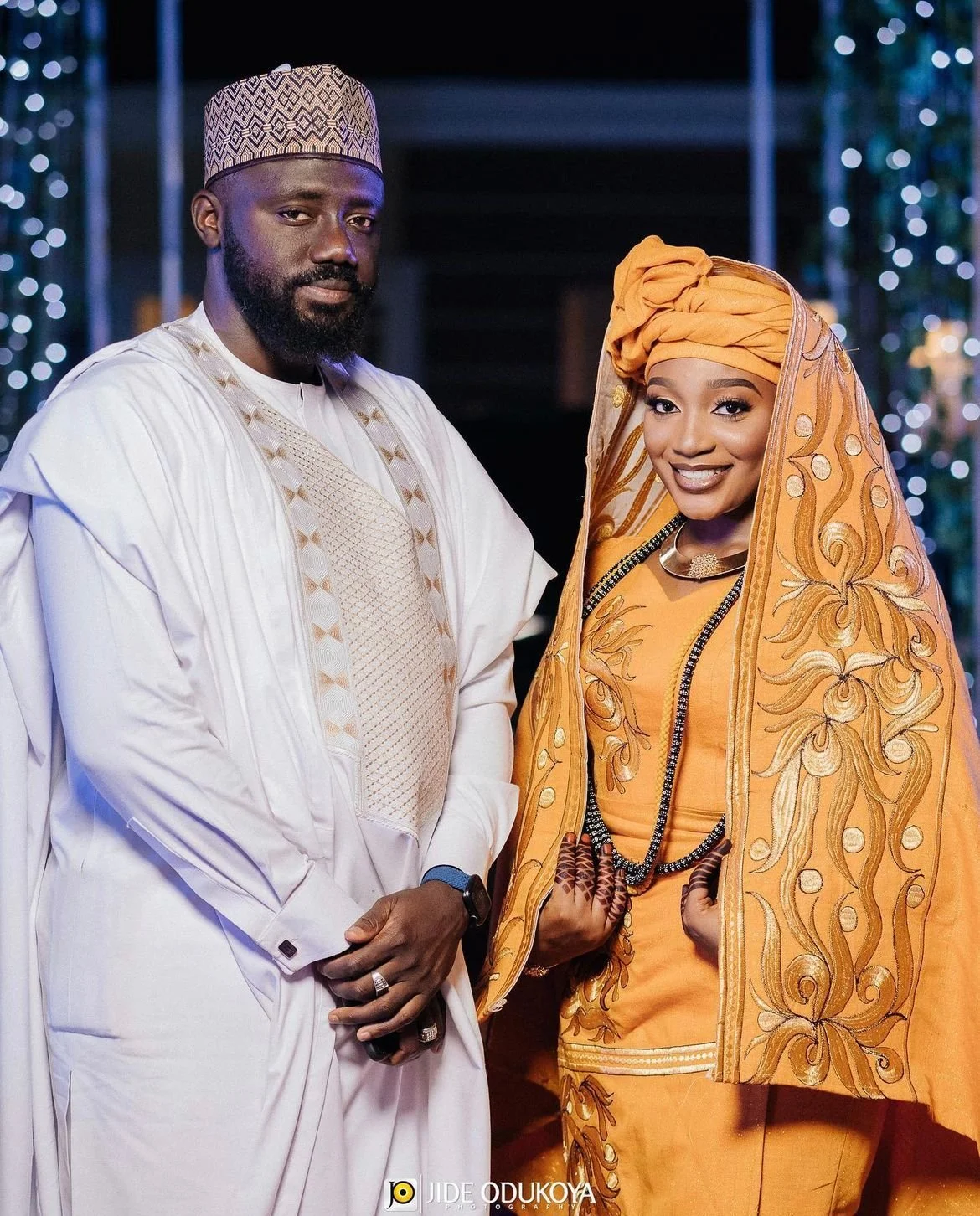
Hausa couple in traditional wedding attire, photographed by Jide Odukoya Photography (JOP)
The groom complements this elegance in their traditional Bàbbán Rìgá(a grand flowing robe) worn over a long-sleeved Kaftan. The outfit is usually paired with a fitted embroidered cap (Hula), which completes the regal look. Together, the Hausa couple presents a picture of dignity, refinement, and cultural pride.
The Tiv
Tiv weddings are known for their striking black-and-white striped attire called A’nger. For brides, this fabric is often tailored into elegant wraps, skirts, or dresses, paired with matching headpieces. Many brides also blend the traditional fabric with lace or satin to create a modern, stylish bridal outfit. Coral beads or silver jewelry are added to highlight the ensemble, giving the bride a graceful yet bold look.
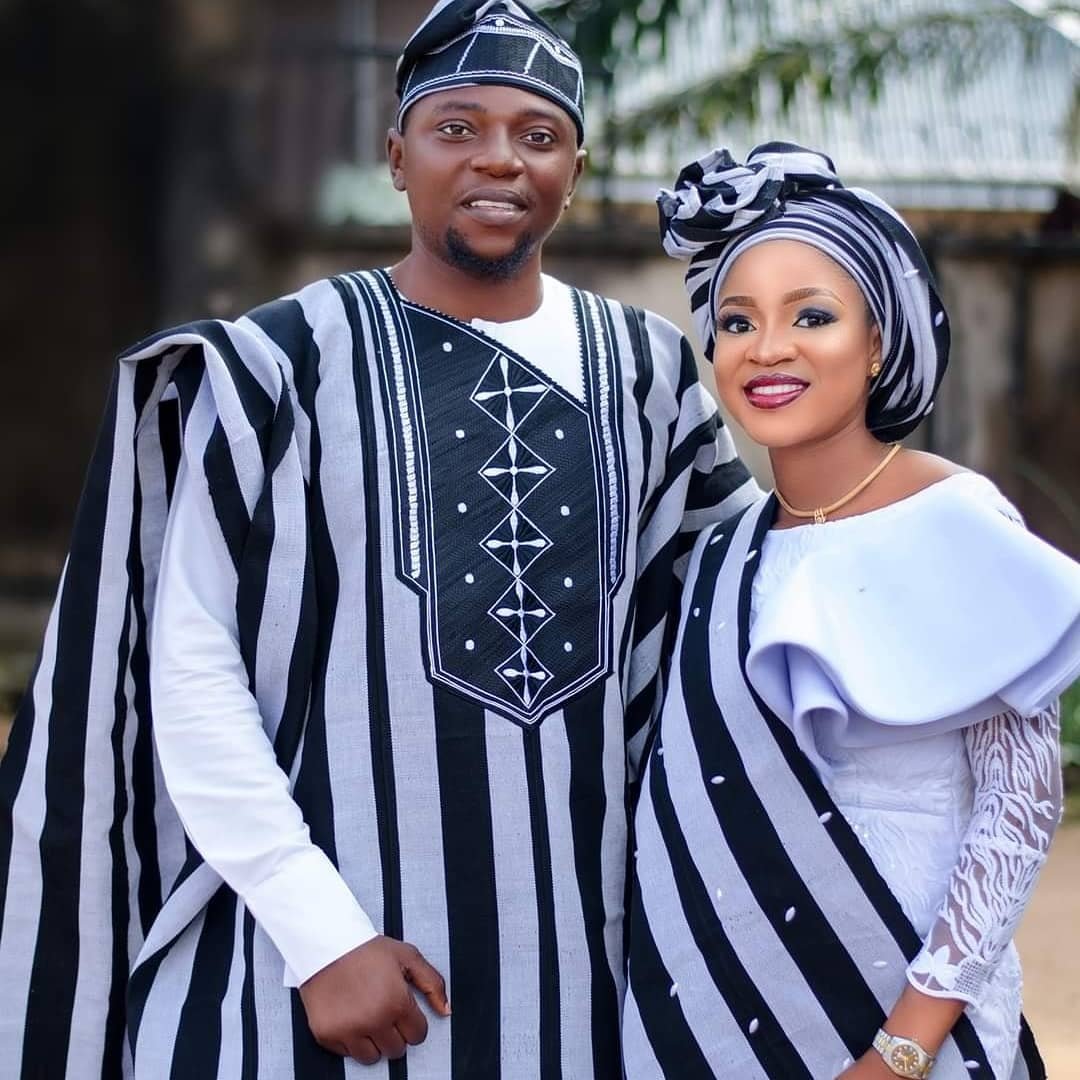
A Tiv couple in traditional wedding attire photographed by MOMO AFRICA
The groom complements her in a flowing agbada or tunic made from the same black-and-white Tiv fabric, sometimes layered with plain white or colored outfits underneath. His cap is also adorned with the signature stripes. Overall, their attire is eye-catching, even in black and white.
The Efik
Efik weddings from Cross River State are nothing short of royal. The bride wears the Ọfọñ Ukọt An̄wan̄, a beautifully tailored wrapper and blouse, or gown, typically made from luxurious fabrics such as lace, satin, or velvet. To complete the regal look, the bride is adorned with layers of coral beads, a sparkling crown, and sometimes a hand fan or staff. Her hair is styled into intricate buns or adorned with accessories, giving her the aura of a true queen.
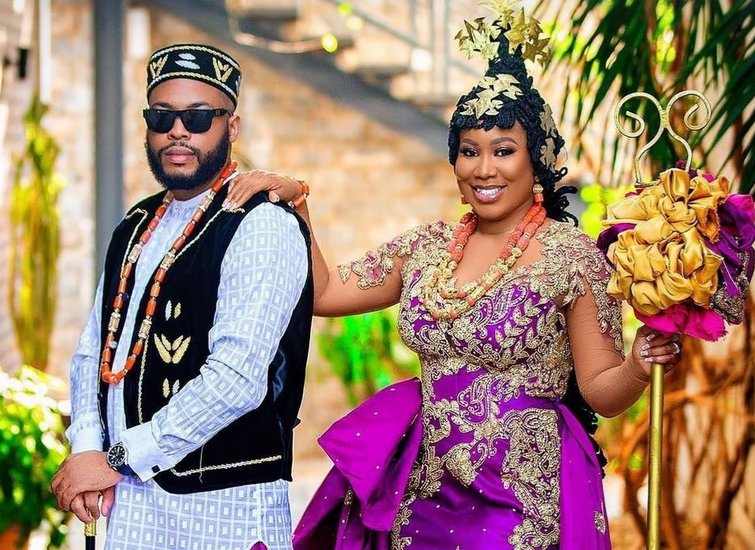
An Efik couple in traditional wedding attire photographed by Ajaypictures
The groom complements her in the Ụsobọ, a wrapper tied around the waist, paired with a white long-sleeved shirt or tunic. He also wears coral beads, a walking stick, and sometimes a hat, all of which signify status and pride. Together, the Efik couple looks like royalty, graceful, dignified, and absolutely unforgettable.
Conclusion
What makes Nigerian traditional weddings truly remarkable is how each ethnic group preserves its unique traditions while allowing space for creativity and modern flair. The attire comes together to create a look that is as culturally rich and fashionable as it is joyful. No matter the tribe, one thing remains constant: the couple shines like royalty, surrounded by family, heritage, and love.