Where Are Africa’s Fashion Archives?
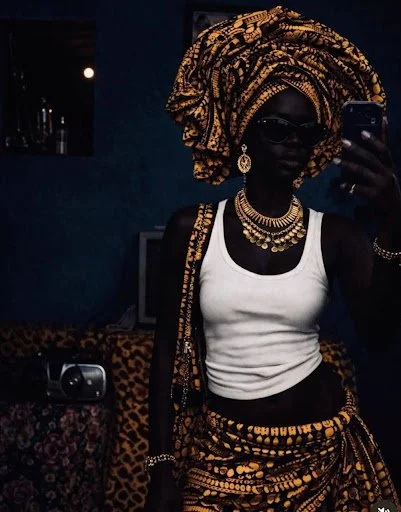
Woman adorned in printed fabrics photographed by Fola Adeleke
When you think of Fashion archives, the first place your mind goes is the big Western houses. Fashion houses like Dior, Chanel, and Gucci have meticulously cataloged collections, carefully preserved sketches, and decades of runway photographs. They have their legacy and identity preserved.
But when you ask the question “Where are our fashion archives?” in Africa, there isn’t a straightforward answer to this question.
Africa’s fashion story is being written, often in real time and sometimes without any documentation. Many of the continent’s most iconic styles live mostly in memories. The 1970s era of Nigerian Àșo-Òkè tailoring, the rise of South Africa’s township streetwear, and the handmade craftsmanship of Ghanaian Kente are mainly documented in family albums and oral stories.
The African archives, in a way, exist though not always in the formal, institutional way the fashion world defines archives. Not because there’s a lack of fashion history here to make it possible. It’s because African fashion hasn’t always had the space or resources to record itself.
We had to struggle with colonialism. Instead of being given the space to record, colonial systems dismissed our indigenous fashion as something unworthy. They looked at it like we were in a costume.
The post-independence period was marked by survival and identity-building.
Now there are so many incredible bursts of creativity, and we are so focused on what’s next and not what has been.
It’s important that our designers are focused on building records. Some of them are. We have Lisa Folawiyo, who has done such an incredible job with Ankara and embellishment. Thebe Magugu's collections reference South Africa’s socio-political past. They’re helping us tell stories of how our fashion will be remembered.
There’s also a growing wave of initiatives that are trying to document African fashion more intentionally. An example of such a project is the African Fashion Research Institute (AFRI) in South Africa.
AFRI was founded in 2019 with a core aim of documenting, interrogating, and sharing African fashion narratives on Africa’s terms. They’re purposely focused on filling gaps in the archives.
Archiving, in the African sense, might always continue to look different from the Western model. It may not mean endless rows of preserved garments or temperature-controlled storage. It may be digital, in the form of fashion films, lookbooks, or even Instagram feeds, that do a great job of capturing the pulse of a generation.
African designers are also trying to create archives as they continue to grow. Every collection they put out, every runway that showcases their pieces, and every photoshoot that they put out is essentially history in motion. Because if we don’t build our own archives, someone else will. We know time and time again how it goes when someone else tells our story. So it’s important that we build our archives ourselves.
We know our history, we can tell it too. But we need to ensure that our memories are tangible. Something that says this is how we started and how far we’ve come.
It’s really intriguing when Western celebrities get to wear pieces from the archives. It’s like a ghost from the past, right in our faces. That’s something I want for Africa. It doesn’t necessarily need to look like Western archives, but we do need one. We can start from today to create Africa’s fashion archives.