Fashion as a Stepping Stone to Greatness
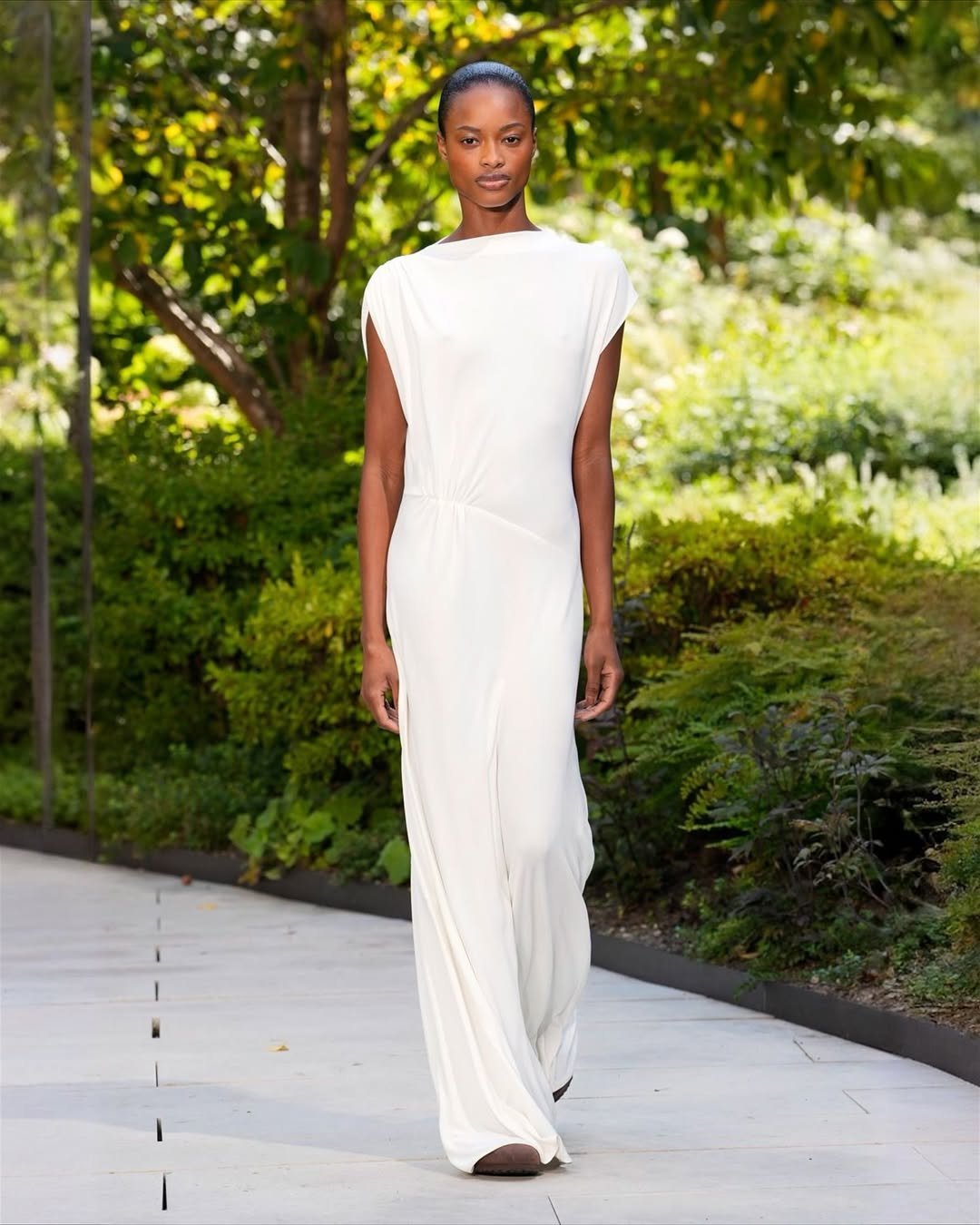
Mayowa Nicholas walking for TWP Clothing. Photograph sourced from Mayowa Nicholas on Instagram
For many Africans, fashion isn’t just about aesthetics or trends; it’s a launchpad for transformation. Across the continent, the industry has become a powerful vehicle for visibility, opportunity, and empowerment. From designers like Thebe Magugu and Imane Ayissi, who have redefined global couture, to models like Anok Yai and Mayowa Nicholas, who have graced international runways, fashion has opened doors that once seemed out of reach.
But beyond glamour and acclaim, fashion in Africa tells a deeper story, one of ambition, resilience, and self-discovery.
From Craft to Career
For decades, tailoring, beadwork, and textile design were seen as vocational pursuits and skills passed down through generations rather than prestigious professions. Today, those same crafts form the backbone of a million-dollar industry that is helping young Africans shape new futures.
Designers are no longer just dressmakers; they are storytellers, cultural ambassadors, and entrepreneurs. They use their work to reinterpret African heritage for modern audiences; for example, Tubo makes a dress for Ciara. Thebe Magugu’s fusion of South African identity with contemporary silhouettes, Kenneth Ize's use of Aṣọ òkè to create modern designs, or Imane Ayissi’s use of African fabrics in haute couture are proof that local artistry can command global respect.
In many African cities, fashion schools, incubators, and collectives are springing up, equipping young creatives with the tools to turn passion into profession.
Models Turned Moguls and Mentors
The modeling world has also evolved into a springboard for greatness. Anok Yai, a South Sudanese-American model who made history as the second Black woman to open a Prada show, represents more than beauty; she embodies visibility. Her rise symbolizes the breaking of barriers for African models in a Eurocentric industry.
Similarly, Mayowa Nicholas, Adut Akech, and others are using their platforms to highlight African talent and redefine global beauty standards. Many of these models are now branching into philanthropy, business, and advocacy, proving that fashion is only the beginning.
To date, many African models have risen to prominence in the world of high fashion by posting catwalk videos of themselves. Modeling agencies have turned regular people into fashion icons and big-time models for luxury houses.
Modeling agencies occasionally scout for models through open casting and social media. Giving many aspiring models a chance to not only fulfill their dreams, but also change their lives.
Their success stories inspire countless young Africans to dream bigger, to see modeling not as an endpoint, but as a springboard to influence, impact, and independence.
Fashion as a Cultural and Economic Engine
Fashion’s role in Africa extends far beyond personal success; it fuels economies and preserves culture. Every garment produced supports a network of tailors, fabric vendors, photographers, stylists, and marketers. In regions where unemployment remains a challenge, the fashion industry provides jobs, fosters entrepreneurship, and offers youth a reason to remain and build at home rather than seek opportunities abroad.
Moreover, fashion helps Africans reclaim narrative control. Through bold prints, local textiles, and traditional silhouettes, designers are attempting to rewrite how Africa is perceived, not as a place of struggle but as a place of innovation and sophistication.
Conclusion
Fashion in Africa is more than fabric and flair; it’s a foundation for greatness. It provides individuals with tools to express identity, challenge limitations, and build a legacy. Whether through design, modeling, or creative direction, fashion continues to serve as a bridge between dreams and destiny for many Africans.
In a world that often underestimates creative industries, Africa’s fashion scene stands as proof that artistry can be both transformative and transcendent. People are turning passion into power and vision into victory through fashion.