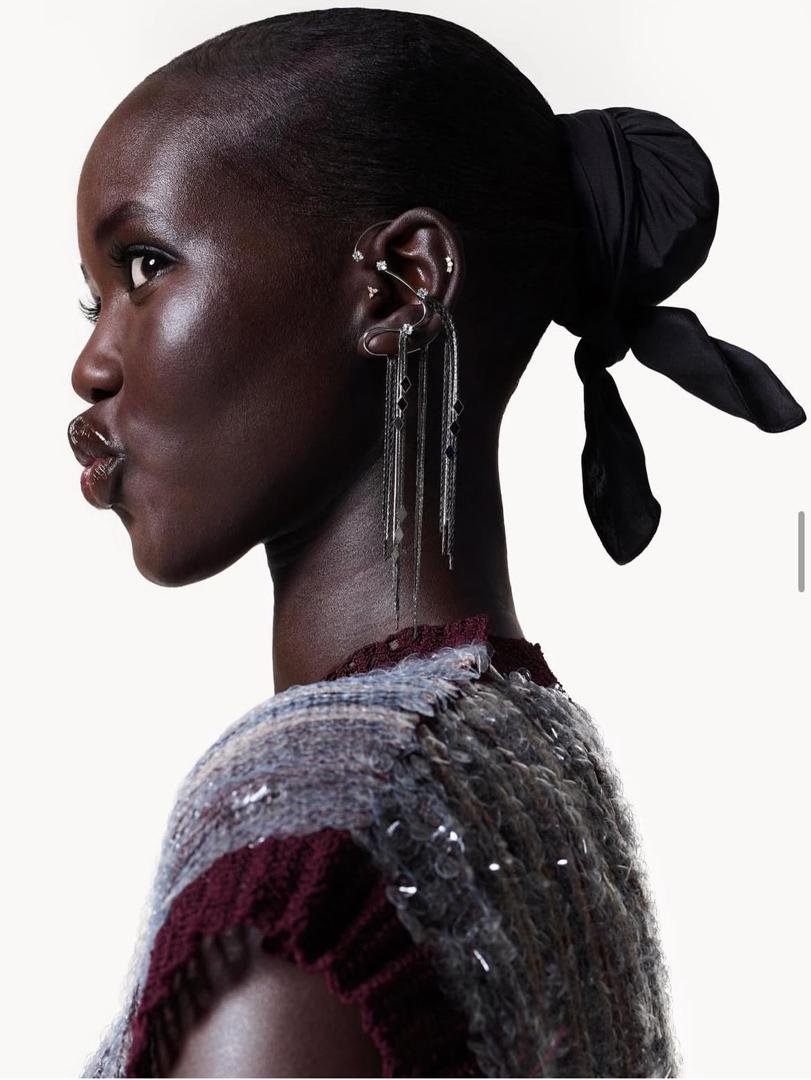
Adut Akech for Vogue magazine portrait photographed by Amy Troost
African fashion is now more than ever a part of the international conversation. There’s a global spotlight on us and our runways from Lagos to Dakar. We have African designers being called to Paris, Milan, and New York, which are the world's fashion capitals. However, as our fashion capital continues to grow, there’s an important question that lingers: “Where are African women in this picture?”
Yes, I know that African women are present. They are models in campaigns and muses in mood boards. But visibility doesn’t always mean representation. They are styled, positioned, and seen as symbols of beauty, culture, and inspiration as they should be. However, they are less often seen as creators, directors, and visionaries shaping the industry’s direction. Also, if there’s one thing fashion has constantly done, it is turning African women into symbols while excluding them from decision-making.
For instance, in 2009, Vogue Italia’s “Rebranding Africa” issue featured African models on the spreads, styled in luxury. However, no African woman held creative credit from the photographers to the designers. In fact, Europeans ran that issue. There’s Louis Vuitton’s “Spirit of Travel” campaign in 2014, which used Maasai women and African landscapes as exotic backdrops, but the creative power didn’t even come close to Africa.
In 2022, Mango’s “Tribal Spirit” collection, which was built around African-inspired accessories and “tribal” influences, was fronted by Kendall Jenner. A reminder that sometimes African women don’t even get to be the face, much less the minds behind it. Even when they break into high fashion, African women remain muses rather than makers. Take Adult Akech, for instance; she is one of the most popular South Sudanese-Australian models and has fronted campaigns for Burberry, Chanel, and Valentino. Yet no creative direction for Africans, let alone African women.
The Western houses can borrow our aesthetics and even come to our continent for the shoot, and still exclude African women from authority. Dior’s 2019 crusade collection in Marrakech, which used wax prints, was shot in Morocco and featured African models. However, African designers and craftspeople were excluded from the process.
Perhaps this would hurt less if it were just a Western problem. However, within the continent, the same imbalance exists. South African designer David Tlale, for instance, is celebrated for his dramatic shows. But critics note how women appear as “ornaments” in his presentations. They are simply symbols and not collaborators.
However, when women are behind the work, the narrative is different. African women in fashion don’t just use women as inspiration; they create platforms where African women’s creativity, craft, and voices define the vision.
African women’s representation in fashion must go beyond mere imagery. There needs to be space for them to shape the structure of fashion as authorities. Having them on the mood board and simply using them as muses is unfair, especially if the inspiration is drawn from African women.
For Africa’s fashion to thrive, we must move past surface-level visibility and head towards where African women are valued as innovators, strategists, and leaders. Sure, we already got the global spotlight, but our women need to be more than just in the picture; they need to be directing the scenes.