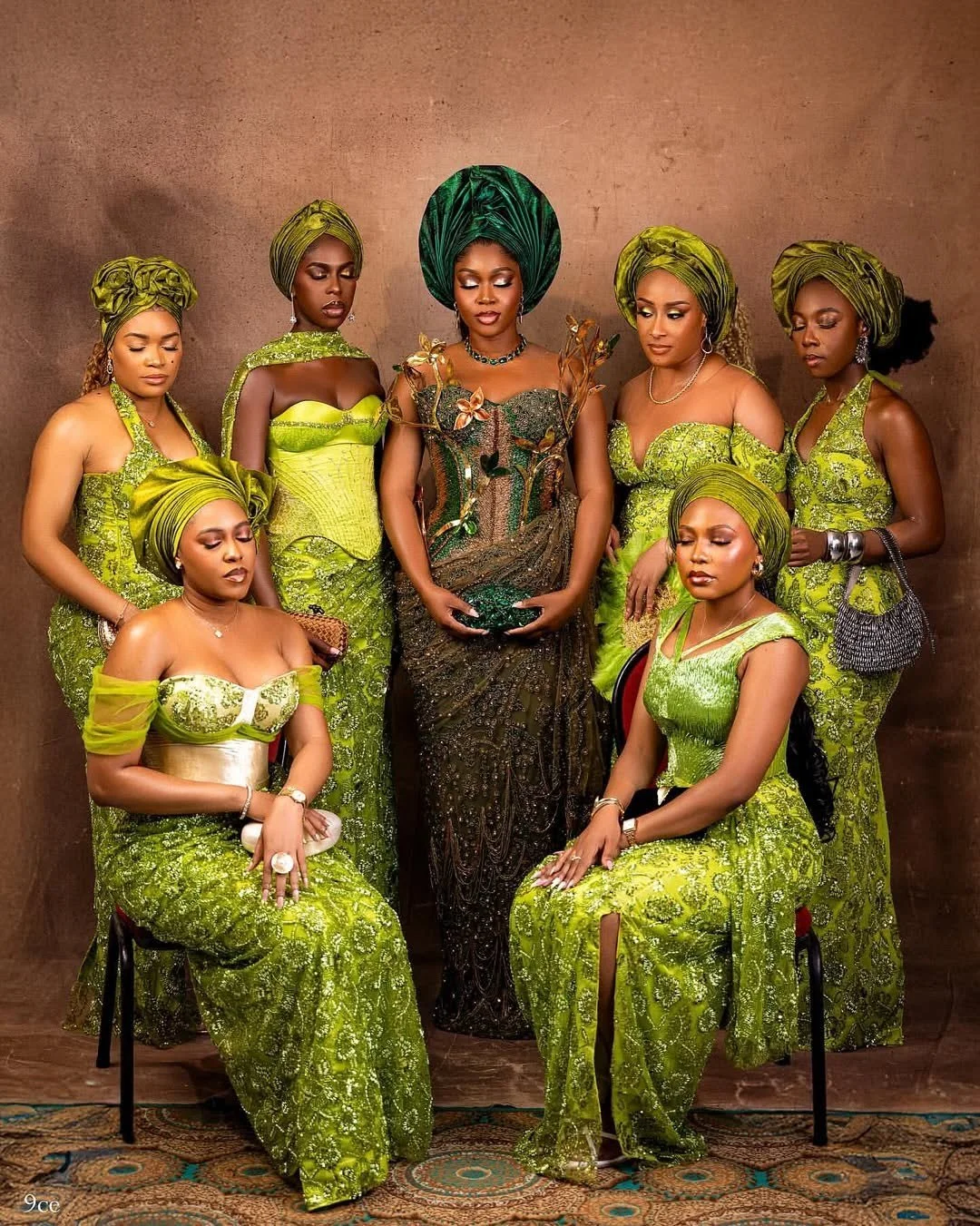
A bridal train in aso ebi photographed by 9ce Photography
In Nigeria, weddings are more than just ceremonies. They are cultural spectacles, social statements, and in many cases, fashion laboratories where designers experiment, innovate, and set trends that ripple far beyond the aisle. Unlike in Europe or North America, where the bridal industry occupies a clearly defined niche, Nigerian bridalwear often serves as a research and development (R&D) platform for the broader fashion industry.
It is in weddings that bold ideas are tested, traditional fabrics are reimagined, and new silhouettes gain cultural legitimacy and popularity before being scaled into ready-to-wear collections.
The Big Business of Nigerian Weddings
Weddings in Nigeria are monumental occasions. Ceremonies can span several days and incorporate both traditional rites and Western-style receptions. This creates not just one bridal look but sometimes three or more wardrobe changes, each requiring a distinct design. The financial investment is equally significant: Nigeria’s wedding industry alone is estimated to be worth millions of naira, even dollars annually, with couples often spending more on attire than on the venue itself.
For designers, this presents a fertile ground for innovation. A wedding commission allows them to work with luxurious fabrics, intricate beadwork, embroidery, and cutting-edge silhouette designs that may be too elaborate or costly for everyday wear but are welcomed in the bridal context. These experiments can set the tone for seasonal collections, red carpet gowns, and even international runway pieces.
Aso-Ebi as Mass Fashion Testing
In Nigeria, the aso-ebi tradition serves as another layer of fashion experimentation. The bride and groom’s family and friends are offered special fabrics, which they always turn into unique styles. This creates a live runway of hundreds of interpretations of one textile, testing what works, what turns heads, and what might have commercial appeal.
For designers, aso-ebi is a form of crowdsourced R&D. The fabric is standardised, but its styling possibilities are endless. A style that garners admiration at a wedding may later be incorporated into a designer’s ready-to-wear line. At the same time, certain embellishments or cuts may inspire seasonal trends for other designers and in urban centres like Lagos and Accra.
Bridalwear as a Cultural Archive
Nigerian weddings also act as cultural preservation hubs. Yoruba brides may wear aso-oke styled in extravagant ways, paired with intricate gele head ties. In contrast, Igbo brides might showcase beautiful two-piece outfits made from awkaocha or akwete, featuring heavy red beading. These ensembles are more than just clothes; they are living archives of heritage, reinterpreted with and for modern tastes.
This blending of tradition and modernity keeps cultural aesthetics alive while ensuring their relevance in the global fashion conversation. It also provides designers with a framework for innovation: by reimagining heritage fabrics like aso-oke, or akwaocha bridalwear, they test how far tradition can stretch while still retaining authenticity.
From Aisle to International Runway, and Special Occasions
Several Nigerian designers who have gained recognition in bridalwear have used weddings as a springboard to international acclaim. Alonuko, founded by Gbemi Okunlola, is a London-based Nigerian brand specialising in bespoke bridal couture, known for its intricate lacework, Illusion lace, and body-conscious tailoring. Starting with wedding gowns, the brand has expanded into eveningwear, showcasing how bridal innovation translates seamlessly into luxury fashion.
Similarly, brands like Mai Atafo and Deola Sagoe both leveraged their bridal startups to redefine their craftsmanship and delve into the world of red carpet and high fashion. This pivot demonstrates how bridalwear occasionally functions as a training ground for mastering fabric manipulation, embellishment techniques, and bespoke tailoring.
And finally, as a trampoline to luxury fashion at large.
Additionally, asoebi has recently entered the educational sector. During celebrations like prom, graduation, and Thanksgiving Dinners, it is very common to see predominantly asoebi or wedding styles flood the school ballrooms and halls.
The Future: Weddings as Innovation Hubs
Nigerian weddings definitely have a solid stake in the future of African fashion. With the global rise of Nigerian and African luxury, bridalwear may remain the most lucrative and experimental frontier. Collaborations with textile producers and other key figures in the fashion industry prove that a decline in the profitability of bridalwear is unlikely.
In this way, weddings are not just personal milestones but societal laboratories; places where the Nigerian fashion industry prototypes the future of style.
Conclusion
Nigerian weddings are a celebration of love and a fashion experiment, in the best way possible. Weddings present designers with the freedom, resources, and cultural backing to push creative boundaries, preserve heritage, and influence broader fashion trends. For Nigerian and African designers, bridalwear is a propeller to greatness.
As the world turns its attention to Nigeria’s fashion industry, one thing becomes clear: the glamour showcased on the runway is sometimes created in Nigeria’s true fashion labs—weddings.