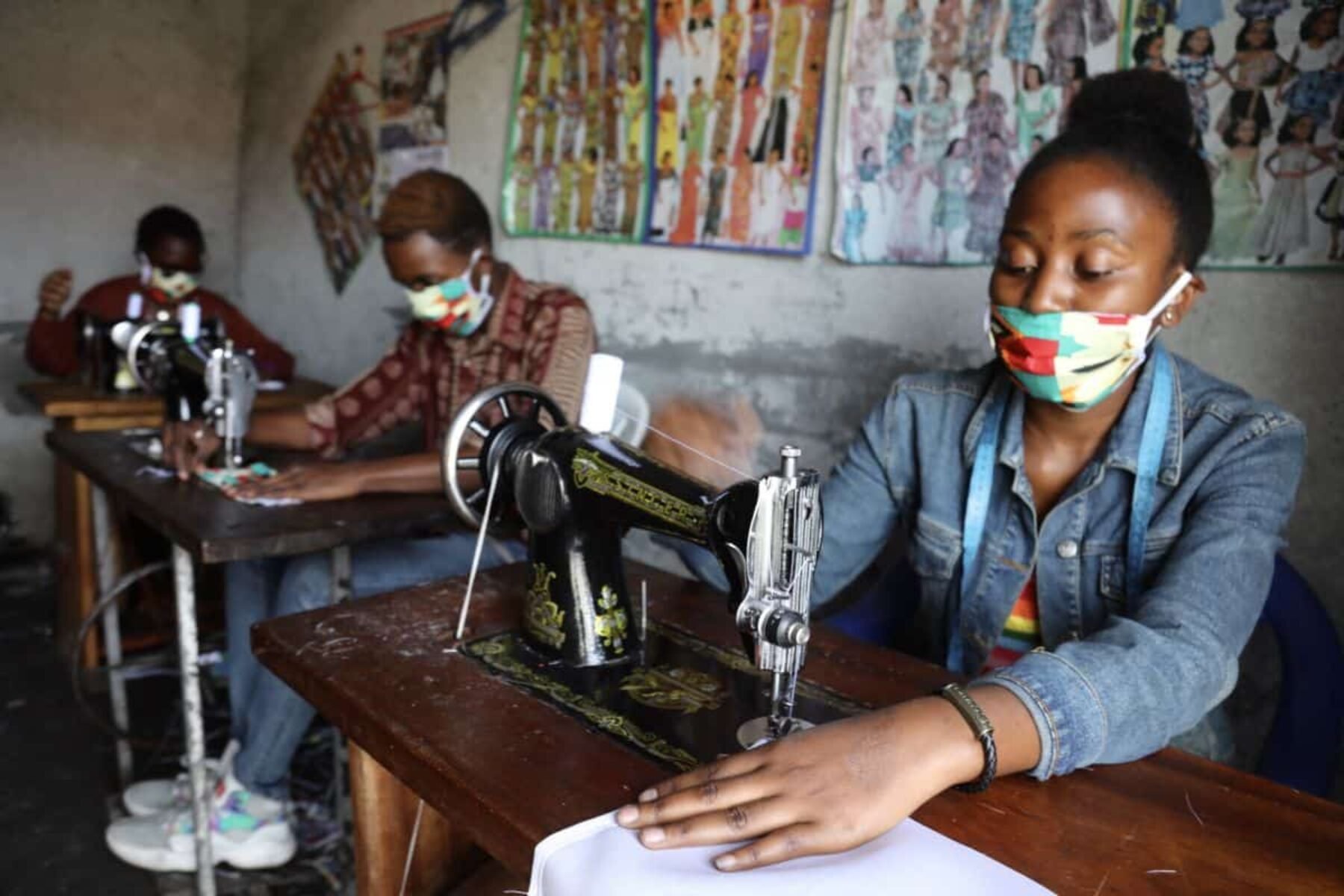
African tailors at work, photographed by Peter Yeung
As many African countries step into their ready-to-wear and made-to-order era, let’s not forget the people who have been keeping Africans stylish for years — the tailors. You see them on the roadside, in bustling local markets, or tucked inside small and large shops filled with sewing machines, colorful fabrics, and sewing materials. These tailors are more than just needle and thread workers; they are the unsung architects of Africa’s fashion story.
Behind every dress, runway look, celebrity or regular outfit, and viral campaign lies a community of artisans such as tailors, beaders, and fabric workers, whose hands bring designers’ and customers' visions to life. While the spotlight often shines on fashion designers and influencers, it is the tailors who do the heavy lifting, quite literally stitching together almost every piece of fabric on the continent.
The Real Engine of African Fashion
In cities like Lagos, Accra, and Nairobi, tailors form the backbone of the fashion ecosystem. They are the reason why custom-made clothes remain a cultural norm across Africa. Before “bespoke” became a buzzword, African tailors were already perfecting the art of made-to-measure fashion, taking pride in crafting outfits that fit like a second skin and express personal identity and taste.
Whether it’s the neatly tailored agbada, an ankara two-piece, a flowing boubou, or a figure-hugging ankara dress, the tailor stands at the heart of the creative process. They are interpreters of design, translating sketches and fabric choices into garments that suffice for multiple occasions. Their work bridges creativity and culture, technique and tradition.
Guardians of Culture and Craft
Tailors are not just producers; they are custodians of heritage. In a time when mass production dominates the global scene, they preserve Africa’s long-standing fashion traditions — intricate embroidery, hand-beading, indigenous weaving, and unique draping styles.
Each region tells its own story through craftsmanship. In Nigeria, the artistry in special Ankaraankara styles or hand-embroidered kaftans reflects generational skill. Across East and Southern Africa, tie-dye, shweshwe, and kitenge patterns remain testaments to the continent’s creative legacy.
By holding onto these techniques, African tailors ensure that local fashion retains its authenticity even as it evolves to meet global standards.
Keeping Economies Alive, Stitch by Stitch
Beyond the artistry, tailoring sustains local economies. Tailor shops, from small roadside setups to mid-sized ateliers, employ thousands across the continent. Apprentices learn the trade from masters, eventually opening their own shops and creating a ripple effect of job creation and skill transfer.
In fashion districts like Lagos’s Yaba, Kumasi’s Kejetia, or Nairobi’s River Road, you’ll find micro-economies built around tailoring from fabric vendors and button sellers to dyers, weavers, and cutters. Each garment made feeds an entire network of livelihoods.
This informal structure has proven remarkably resilient. Even when major industries struggle, tailoring thrives, keeping creativity and entrepreneurship alive in communities where opportunities can be limited.
The Invisible Hands Behind the Glamour
Despite their importance, tailors often fail to receive the recognition they deserve. Many work long hours under challenging conditions, often without fair pay or acknowledgement in brand credits. Yet, without them, no fashion collection could exist. They are the link between concept and reality; the people who turn fabric into form.
As African fashion gains global visibility, it’s time to amplify their voices and tell their stories. The industry cannot celebrate growth without honoring the people who make it possible.
Honoring the Hands Behind the Stitch
A few designers are already setting an example by giving credit to their production teams and even inviting them to share the spotlight at fashion shows. These gestures, though small, send a strong message that the fashion industry must value the makers as much as the names on the labels.
African fashion’s rise isn’t just about creativity; it’s about community. From the busy roadside tailor to the skilled atelier craftsman, they are the real power behind the continent’s fashion.
Always remember this: the future is being sewn, one stitch at a time, by the same hands that have kept us stylish for generations.