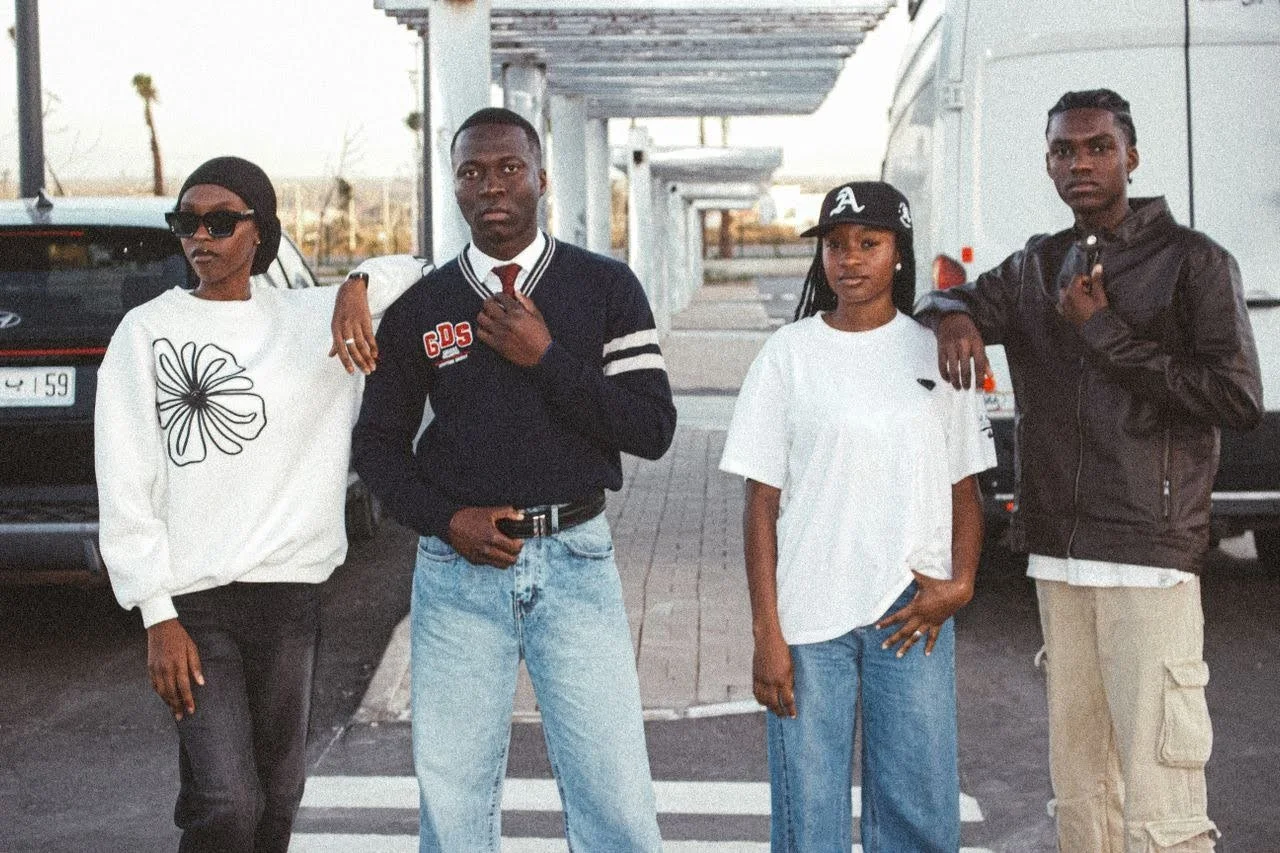
Group of fashionable young adults posing in an urban environment, showcasing casual streetwear style photographed by Foursight Studios
Before I get into this article, let me briefly define who a diasporan designer is. A diasporan designer is a designer who resides on another continent but creates fashion pieces that are strongly connected to their homeland. In this case, my focus is on African designers in the diaspora.
African fashion’s global visibility has never been higher. All thanks to social media, online stores, and international shipping. Many of these designers, however, are not based on the continent. They are part of the African diaspora—raised, educated, or professionally rooted in Europe and North America, yet sometimes drawing inspiration from African heritage.
This raises an important and often uncomfortable question: are diaspora designers a win for the African continent, or does their success complicate the fashion ecosystem for Africans in general?
The answer is not straightforward.
The Power of Diaspora Visibility
There is no denying the impact diaspora designers have had on global perceptions of African fashion. With access to established fashion systems, funding, press, and international buyers, they are often better positioned to tell African-inspired stories on global platforms.
Some diasporan designers have helped dismantle the outdated idea that African fashion belongs only in “ethnic” or artisanal categories. They have reframed it as contemporary, conceptual, and commercially viable. In many cases, they are the first point of entry for global audiences seeking to engage with African aesthetics beyond stereotypes.
This visibility matters. It opens doors, challenges narratives, and proves that African-inspired fashion can compete at the highest levels of the industry and deserves respect.
Distance Shapes Perspective
However, distance, both physical and cultural, inevitably shapes how Africa is represented. Many diaspora designers engage with Africa through memory, research, or symbolism rather than lived, present-day experience. This can result in romanticized or frozen depictions of African identity, even to the extent that it almost comes off as appropriation.
While these narratives are not inherently invalid, they often prioritize heritage over reality. Africa becomes a reference point rather than a living, evolving space. This can unintentionally reinforce the idea that African culture exists mainly as inspiration, not as a contemporary force actively shaping its own fashion future.
Designers on the continent, meanwhile, are responding to different pressures, such as local economies, infrastructure limitations, consumer needs, and cultural shifts that are rarely visible from abroad.
Who Benefits Economically?
One of the most critical questions in this conversation is economic impact. When diaspora designers draw heavily from African culture, textiles, or labor, how much of that value flows back to the continent?
In some cases, collaborations with artisans, weavers, and local producers create employment and preserve craft traditions. In others, Africa serves only as an aesthetic resource, while production, profits, and brand equity remain offshore.
This imbalance fuels resentment among local designers and even locals, who lack access to the same capital, media attention, and global infrastructure despite being closer to the source of the culture being celebrated.
The Gatekeeping Problem
Diaspora designers often become cultural translators for global fashion institutions. They are seen as more “legible” to Western audiences. They are considered “fluent” in the language of luxury, branding, and fashion diplomacy. As a result, they are frequently positioned as representatives of African fashion as a whole.
This creates a hierarchy where designers based on the continent are overlooked, underfunded, or expected to fit narrow narratives in order to be recognized. African fashion becomes validated through proximity to the West, rather than through merit or innovation at home.
The danger here is not diaspora success, but exclusivity. When only certain voices are amplified, the ecosystem becomes skewed.
Connection Versus Consumption
The healthiest diaspora–continent relationships are built on connection, not consumption. Designers who maintain active engagement with their countries through mentorship, sourcing, collaboration, and knowledge exchange create value beyond aesthetics.
This kind of relationship recognizes Africa not just as inspiration, but as a partner. It allows for shared growth rather than one-sided extraction.
Unfortunately, not all diaspora engagement operates this way. When cultural symbols are detached from accountability, fashion risks becoming exploitative, even when intentions are good.
Is It a Win or Not?
Diaspora designers are not inherently a loss or a gain for Africa. Their impact depends on how they engage, who benefits, and what narratives they prioritize.
They can open doors, challenge stereotypes, and elevate African fashion globally. But without intentional collaboration and reinvestment, their success can also reinforce inequality within the industry.
Toward a More Balanced Future
African fashion does not need a single spokesperson or aesthetic. It needs an ecosystem where designers on the continent and in the diaspora coexist without competition or malice.
This means creating platforms that center local designers, investing in fashion infrastructure within Africa, and encouraging diaspora creatives to move beyond inspiration toward partnership.
Representation without redistribution is incomplete.
Diaspora designers are a powerful force in global fashion, and their contributions should not be dismissed. But their success should not overshadow or replace the voices of designers working within Africa’s complex, dynamic fashion landscapes.
The future of African fashion lies not in choosing between diaspora and continent, but in building relationships that are ethical, reciprocal, and rooted in respect.
Only then can diaspora success truly become a win for Africa, not just in image, but in impact.