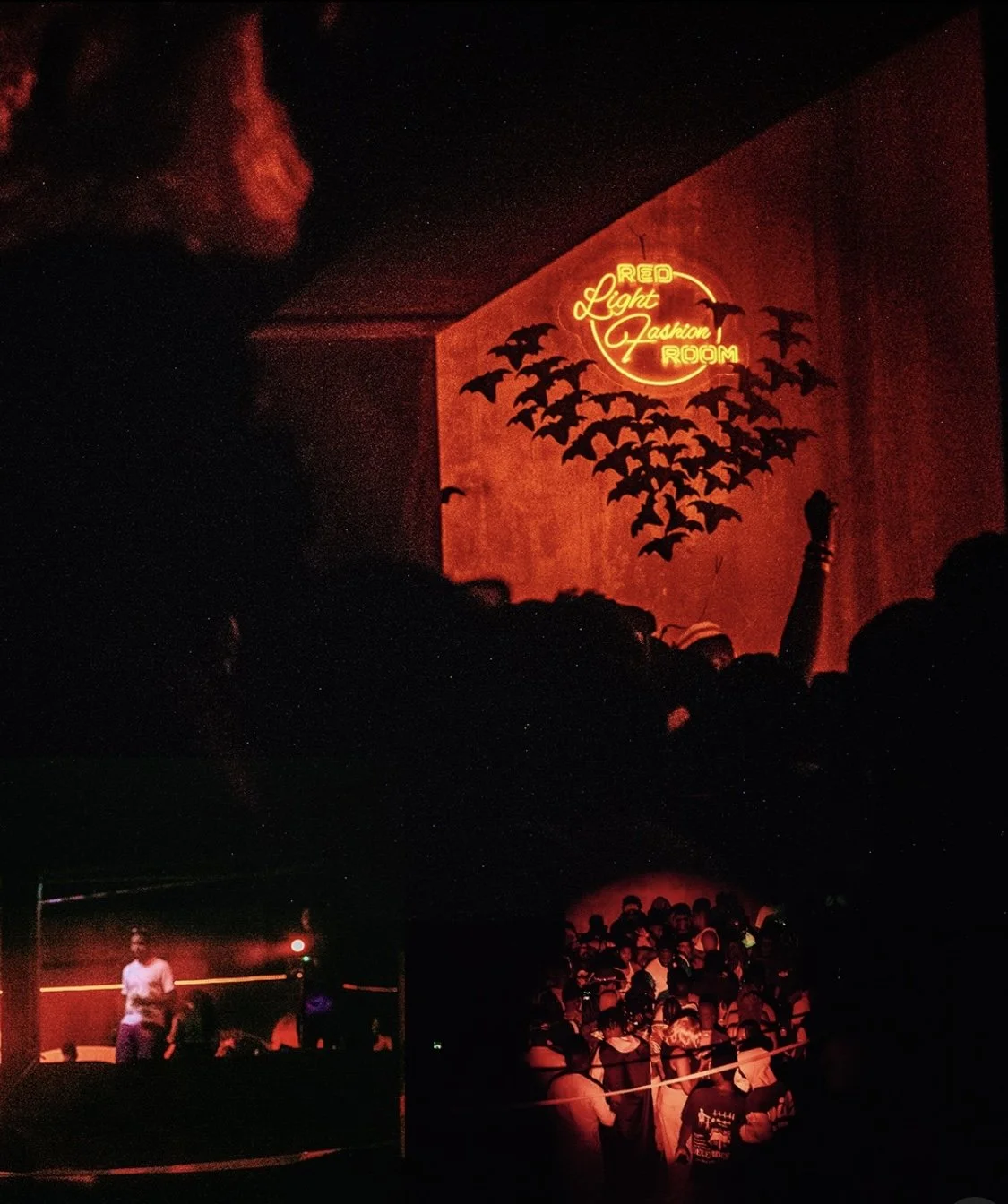
Image Source: Redlightfashionroom on Instagram
On December 26, 2024, I strutted down the paved roads of Magodo GRA with a random stranger I had just met who was heading to the same place as me. It was a rave called Government House. This was my first rave, and it was the perfect introduction to the scene. The other people I've invited to raves since then have not been so lucky.
I remember arriving and wondering whether I would have a great time. I was barely familiar with the type of music being played, and the one person I knew who was supposed to be there never showed up. So I experienced my first rave alone. Perhaps that explains why I continue to be a fan of attending raves by myself.
The fashion at this rave was fairly typical of Lagos nightlife, but I had seen pictures online and knew that ravers expressed themselves in distinct ways through fashion. It was at my second rave, HMO, that I confirmed what I had seen on social media. It felt like a fashion show. At every rave I have attended since then, I have watched people express themselves in ways that the average Nigerian environment often restricts.
So what makes raves the perfect place for this kind of freeing self-expression, especially in terms of fashion?
I personally believe it is because the rave culture we adopted from overseas is predominantly queer. At its core, queerness rejects rigid and binary norms surrounding sexuality and gender. It makes sense, then, that in a society often bound by rigid aesthetic expectations, raves have become spaces where those expectations are actively challenged.
In everyday Nigerian life, it is almost impossible to express yourself as freely as you might want to. This is not to say that fashionable Nigerians are not expressing themselves authentically. Rather, it suggests that there are constraints in place. The rave scene removes many of those constraints.
As a result, rave culture has helped redefine fashion as more than just polished appearances. Patterns, colors, unconventional silhouettes, and extravagant accessories become tools for storytelling.
My most recent rave was Group Therapy in collaboration with Red Light Fashion Room. It was held at Woodland Forest. The first thought that came to mind when I heard the location was "fairy." When I arrived, I saw someone wearing wings and another person with fairy lights wrapped around their legs. There had been no discussion beforehand, but it felt instinctive. Many of the outfits from that event leaned heavily into the forest theme.
Even when there is no obvious theme, ravers continue to ensure that their outfits are as self-expressive as possible. And it is not just the clothing. The makeup looks I see at raves are among the most creative in the Nigerian fashion scene. There is also a constant use of inventive accessories that continues to surprise me.
What fascinates me most is that rave fashion is rarely about looking attractive in the conventional sense. In many Nigerian social spaces, fashion often serves a social purpose: to signal wealth, respectability, femininity, masculinity, or status. Rave fashion seems to reject those expectations. At raves, I have seen people wear outfits that are playful, theatrical, futuristic, sensual, and sometimes intentionally strange. The goal does not appear to be fitting into a particular box, but rather to explore who you can be when those boxes no longer matter.
Perhaps that is why rave fashion feels so liberating. For a few hours, people are allowed to exist outside the expectations that shape everyday life. They can dress in ways that might attract judgment elsewhere, experiment with aesthetics that do not fit conventional ideas of gender, or simply wear something because it brings them joy. In a society where self-expression is often filtered through what is considered acceptable, respectable, or normal, the rave becomes one of the few places where individuality takes precedence over conformity.
The popularity of these fashion choices also suggests a broader desire among young Nigerians for spaces where identity can be explored rather than prescribed. The clothes may be the most visible part of that expression, but they represent something larger: a desire for freedom, creativity, and the ability to be seen on one's own terms.
If there is any lesson to be taken from the rave scene, it is that fashion becomes far more interesting when people are given the freedom to experiment. The creativity on display at these events shows what becomes possible when self-expression is valued over conformity. Perhaps the broader African fashion scene does not need more rules about what is acceptable or polished. Perhaps it needs more spaces that encourage people to play, explore, and define their own beauty.