How South African Bodies Became Fashion’s Ultimate Hourglass Ideal
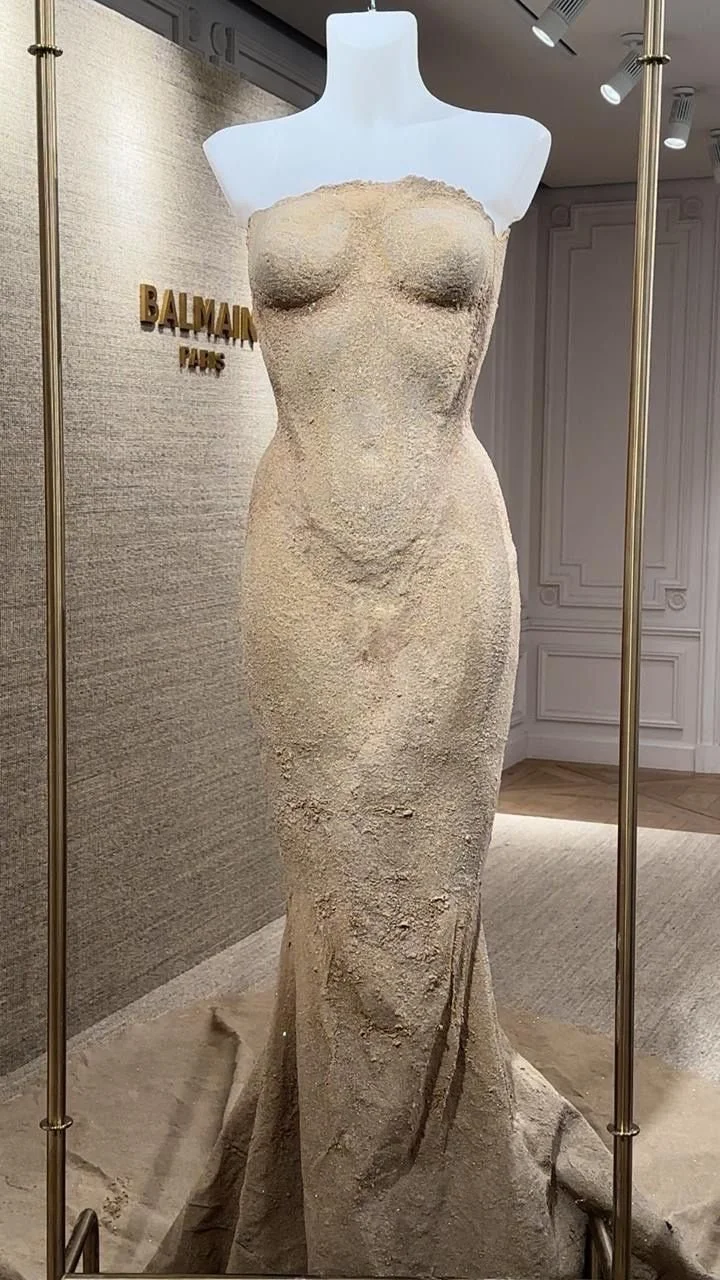
Tyla’s 2024 MET Gala Dress
Photograph sourced from Vogue and courtesy of Balmain
The hourglass figure has survived centuries of changing beauty standards. While trends have shifted from fuller bodies to ultra-thin bodies and back again, the appeal of a narrow waist, rounded hips, and a full bust has remained consistent.
Today, the hourglass silhouette dominates celebrity culture, fashion campaigns, and social media. It’s essentially hailed as the ultimate “ideal” body for women, which is why it is even surgically achieved.
In African fashion, this fascination is impossible to ignore.
We have designers crafting dresses that cinch the waist, accentuate curves, and dramatize hips. Currently, the corset is a major feature of a large percentage of African fashion. It shows up in everything from bridal wear to red carpet gowns. When designers are not using a corset, they focus on creating the illusion of a slim waist and a more pronounced hip line.
But where does this fascination come from? And why has the hourglass figure become so popular and stable in the fashion industry?
First, let’s look at the history of the hourglass.
Corsetry to get an hourglass figure became popular during the Victorian era. The fashion in the era saw women wearing tightly laced corsets. These corsets used steel and whalebone solely to compress women's waists. Some women even suffered injury from lacing too tightly.
The next time the hourglass figure became popular was at the end of World War II. Christian Dior had stunned the runway with a “New Look” featuring an ultra-feminine silhouette.
This collection is remembered for the Bar suit, which featured a very small waist, tailored top, and wide skirt.
The existence of the screen goddess, Marilyn Monroe, and pin-up girls like Bettie Page further blew up the hourglass frenzy through the fifties.
The 2010s were the next era for the hourglass figure, with figures like Nicki Minaj and Kim Kardashian at the forefront. This period also saw the rise of Brazilian
Butt Lift (BBL) producers and waist trainers.
However South Africa brings a different perspective to this conversation.
Long before BBL's popularity among celebrities and influencers, many South African communities already celebrated fuller hips, thighs, and buttocks as markers of beauty, femininity, fertility, and strength.
The hourglass body type itself naturally exists among certain populations in South Africa. Among several South African populations, a genetic condition or trait known as steatopygia exists. This condition causes fat to be stored predominantly in the hips, thighs, and buttocks, resulting in a silhouette with a pronounced lower body.
What makes this history complex is how colonial observers responded to it. Rather than understanding these bodies within their cultural context, European explorers and scientists frequently objectified them. African women’s bodies became subjects of fascination and scrutiny.
One of the most famous examples is Sarah Baartman, a Khoikhoi woman who was taken to Europe in the early nineteenth century and displayed before audiences because of her physical appearance. Her body became the subject of public spectacle and scientific curiosity, revealing the colonial obsession with African features.
The irony is difficult to ignore. Features that were once mocked and fetishized have now become desirable. In many ways, contemporary fashion has taken traits that were heavily stigmatized and turned them into ideals.
Today, African brands heavily lean into the hourglass ideal. Think of the corset dresses that cinch the waist and the bodycon dresses that hug the waist and flare at the hips. Fashion, after all, sells aspiration. The hourglass figure remains one of the most marketable body types, especially in a continent like Africa, where fuller bodies are quite common.
It’s important to note that while the hourglass ideal gives many women a sense that their body type is celebrated and desired, it narrows the definition of beauty to a single silhouette. This results in various women struggling to fit that body type. As we can see in the rise of BBL culture, which continues to dominate not only Western but also African culture.
This does not mean that African fashion should not celebrate curves. The problem is when one body type becomes the definition of beauty.
African women have never looked the same. So to address this, the African fashion industry must become a space where everyone's type is catered to. Fashion brands need to consider a range of body types when designing outfits. They also need to display these various body types on their websites and social media pages.
Representation is key!