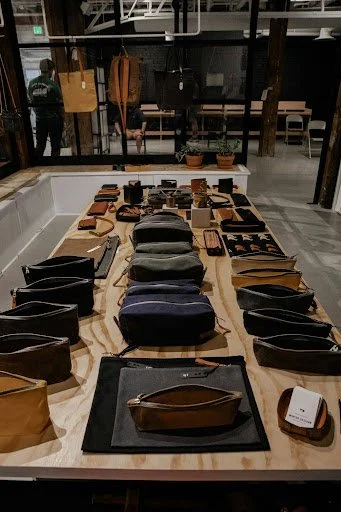
Leather goods photographed by Logan Weaver.
Africa accounts for over a quarter of the world’s livestock population, making it a very essential figure in the leather and hides industry. Yet, despite this abundance, the continent often finds itself trapped at the lowest stage of the value chain: exporting raw hides and skins at a low price, while importing finished luxury leather goods at steep markups.
This cycle raises urgent questions: Why is Africa not at the forefront of luxury leather? What systemic issues prevent its tanneries and designers from climbing the global value ladder?
Africa’s Leather Wealth
Nigeria, Ethiopia, Kenya, and South Africa all boast thriving livestock industries, producing millions of hides annually. Ethiopia, for instance, has one of the largest cattle populations in Africa, making leather one of its top exports. Sokoto goatskin, known locally as “Morocco leather,” has been prized for centuries for its smoothness and durability. On paper, Africa should be at the forefront of global leather fashion. Yet, the reality is starkly different.
The Value-Chain Trap
The value chain in leather production has clear stages:
Raw hides and skins (collected after slaughter)
Semi-processed leather (often exported as “wet blue” hides)
Finished leather (tanned, dyed, and refined)
Luxury goods (bags, shoes, accessories, jackets)
Most African countries remain stuck at stage 1 or 2. Tanneries export semi-processed hides to Italy, Spain, India, and China, where they are turned into luxury products sold back to Africa at exponentially higher prices. This “value-chain trap” mirrors the wider colonial pattern of resource extraction: Africa produces the raw, the West sells back the refined.
Challenges Facing African Tanneries
Several systemic problems keep African leather industries from scaling up:
Infrastructure Gaps: Many tanneries operate with outdated machinery and inconsistent power supply, limiting efficiency and quality.
Environmental Concerns: Tanneries require heavy water use and proper chemical treatment. Weak environmental regulation has left many unable to meet international sustainability standards.
Little to No Investments: In certain African countries like Nigeria, the government is unwilling to invest heavily in the leather and hides sector. This means the very few tanneries that exist are privately owned, which makes it difficult to scale and meet the estimated global demand.
Skills & Technology: There is limited access to advanced tanning technologies and design expertise compared to Italy or France.
Market Access: African brands struggle to break into luxury markets where “Made in Italy” carries far more weight than “Made in Nigeria” or “Made in Ethiopia.”
The Missed Luxury Opportunity
Global luxury houses, such as Hermès, Gucci, and Louis Vuitton, dominate the leather market, sourcing hides worldwide while maintaining production in Europe. African designers rarely compete at this level because they lack the marketing power, craftsmanship, branding, and global distribution networks that European houses control.
Yet, the irony is clear: the same goatskin or cowhide that leaves Africa at a low price is transformed abroad into a handbag worth thousands of dollars. This disparity isn’t just about fashion; it’s about missed economic opportunity.
Designers Causing a Change or Adding to a Problem?
Some African designers are attempting to break out of the value-chain trap:
Some instances are Zashadu, Winston Leathers, and Shekudo. These are Nigerian brands that work with locally sourced leather, but once again, the cost of these brands, especially to locals, is no different from that of luxury brands. It raises the question: What is the point of using Nigerian leather from Nigerian tanneries if the end product is too expensive for Nigerians?
What now distinguishes these Nigerian brands from European brands?
However, one must also consider the cost of production and the need to establish a reputation among other renowned brands.
It is also crucial to note that, due to inflation, these brands are relatively more affordable to foreigners than to locals.
I must admit that these brands prove that with innovation and ethical positioning, African leather can compete on design and storytelling. However, they remain exceptions rather than the norm.
What Needs to Change
To climb the leather value chain, Africa needs structural shifts:
Investment in Tannery Infrastructure: Modern, eco-friendly tanneries could meet international standards and retain more value on the continent.
Policy Protection: Governments can restrict raw hide exports to encourage local processing, as Ethiopia has attempted.
Brand Building: African designers must tell stories around heritage leathers, such as Sokoto goatskin, positioning them as luxury heritage materials.
Global Collaboration: Partnerships with established luxury houses could provide the technical know-how while showcasing African craft.
Leather is one of Africa’s most promising resources, but without breaking free of the value chain trap, the continent will continue to export wealth while importing prestige. To transform leather into a luxury product, African governments, tanneries, and designers must collaborate to invest in processing, branding, and sustainability. Only then will “Made in Africa” leather stand proudly beside “Made in Italy” on the global stage.