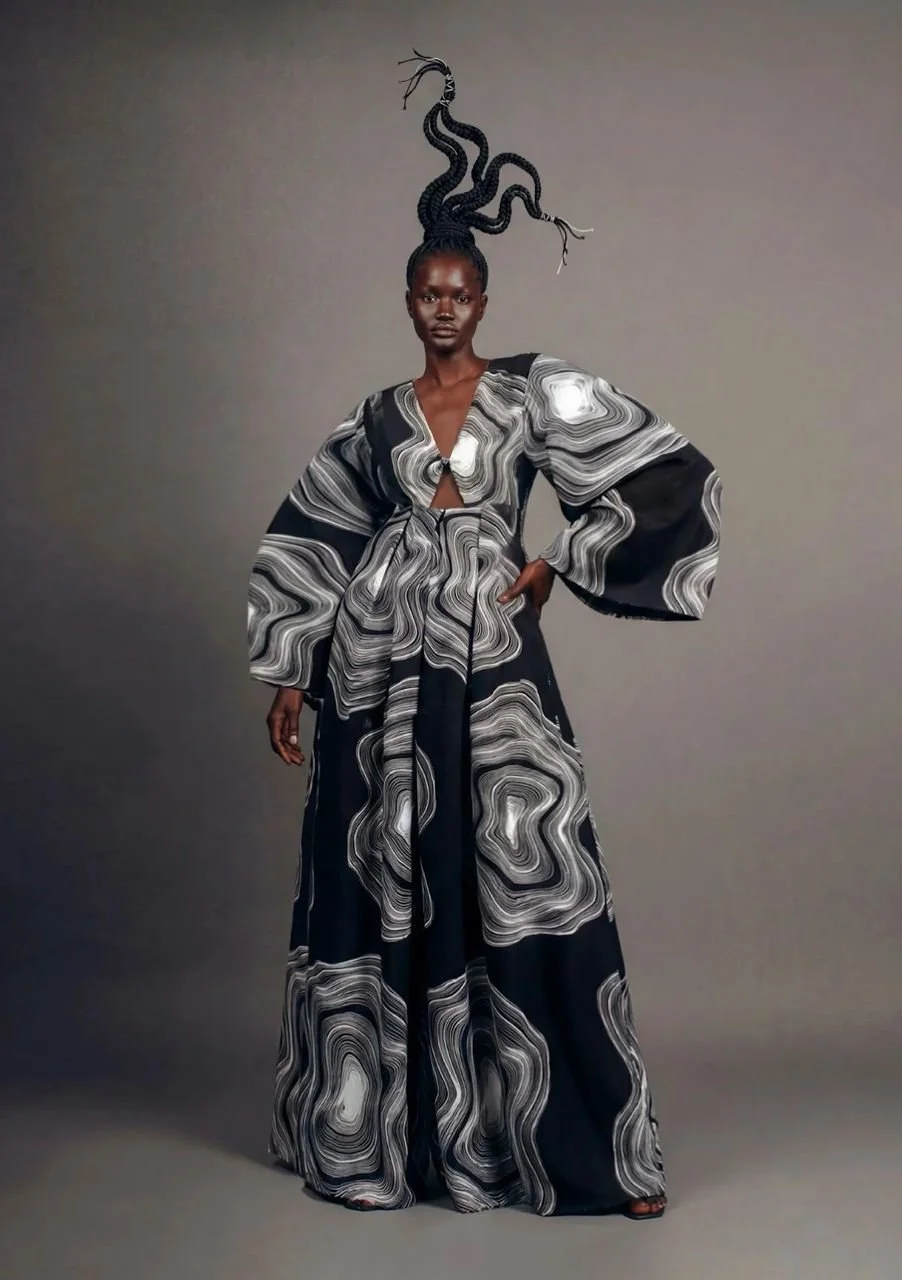
Model in Malu Suit by Tongoro Studio
Photograph sourced from Tongoro Studio
What comes to mind when you hear 'made in Africa'?
For some people, Tongoro comes to mind. Tongoro means star in Sango, the national language of the Central African Republic. It’s a fashion brand named to constantly pay tribute to her Motherland.
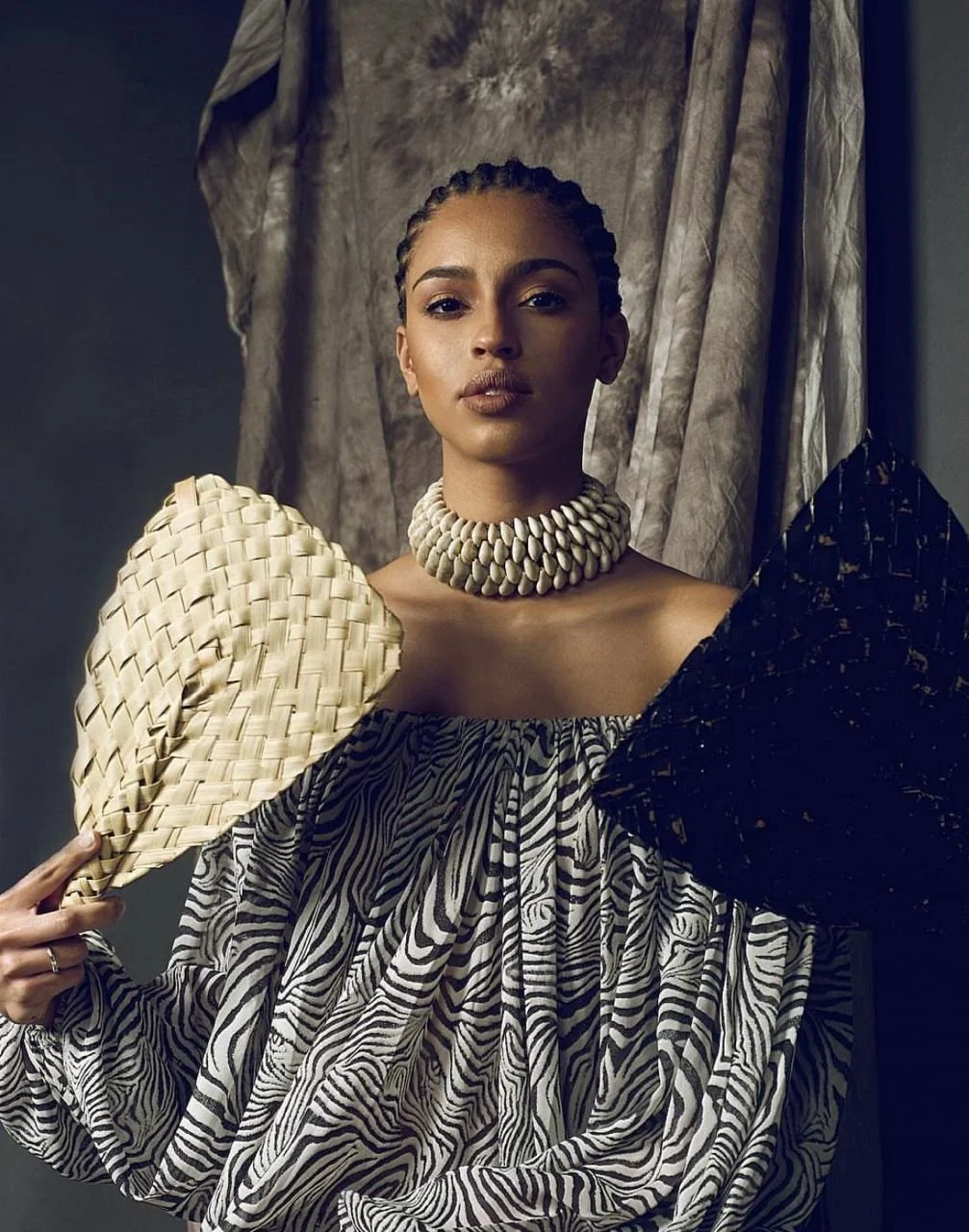
Model in Tongoro
Photograph sourced from Tongoro Studio
To truly highlight this brand, I scrolled down to their first Instagram post from 2016. The first collection Tongoro made was titled “An African Dream”. The collection featured some pieces in black-and-white prints. As the brand turns 10 this year, it continues to favor black-and-white prints. This is mainly due to Diouf Sarah, the founder of Tongoro, and her love for 1960s photographers like the Malian Malick Sidibé and Seydou Keita, whose works were in black and white.
In its 10 years of existence, the brand has become globally recognizable for its looseness, flowing sets, vibrant prints, and exaggerated silhouettes that move with the body. Each piece made by Tongoro is perfect on the body, photographs well, and also translates across borders, cultures, and platforms. It requires no context, and a simple glance reveals its African nature. It is because of this that Tongoro has become so embedded in the global fashion system.
So what then is Tongoro’s influence globally?
One way to see it is through visibility. Tongoro has dressed Beyoncé multiple times. That alone places the brand in conversations most African designers are not easily invited into. When Beyoncé wears something, it gets seen, shared, and saved. And because of that, Tongoro is not positioned as local; it is positioned as global. The brand has also been worn by Naomi Campbell, Alicia Keys, and other global stars.
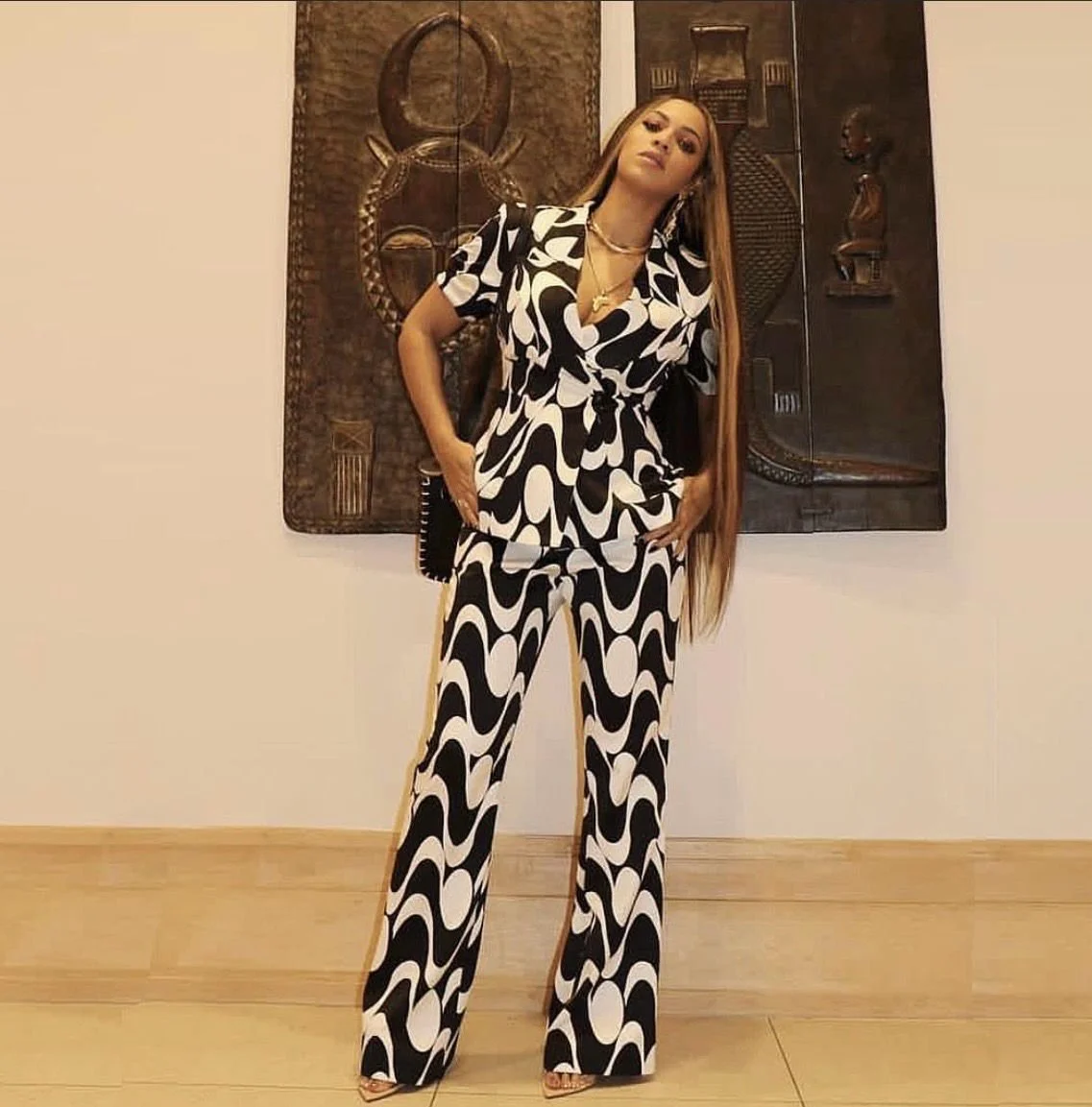
Beyoncé in Tongoro in 2018
Photograph sourced from Tongoro Studio (Instagram)
But influence goes beyond who wears the clothes. It also shows up in how other brands begin to move.
Take the Mburu bag. When Saint Laurent presented a similar style in its Fall 2017 collection, the resemblance was quite noticeable. This shows how ideas can travel, especially when one brand has more access and reach than the other.
Beyond specific pieces, Tongoro has helped shape a way of dressing that now feels normal. Matching sets are no longer styled as statement pieces. They are worn casually. Prints are no longer reserved for special occasions. They show up during the day, on holiday, on the street. There is less effort in how the clothes are put together, but more intention in how they look.
This ease is something Tongoro has always done well. Scroll through their page, and you’ll notice it. The clothes are rarely overstyled. There are no heavy layers or complicated combinations. Just one set, worn simply, and it works. That approach has now become common across many brands, especially those designing for a global audience.
It is also clear how people dress on vacation now. The idea of “resort wear” has shifted. It is less about structure and more about movement. Loose trousers. Open tops. Clothes that respond to heat, wind, and space. This is something Tongoro has been doing from the start.
Pinterest makes this even easier to see. Search “summer outfits” or “vacation looks,” and the same kind of images appear. Flowy two-pieces. Bright prints. Relaxed silhouettes. Outfits that look easy but are still put together. You will find different brands, different faces, different locations, but the feeling is the same.
Tongoro fits into that space without trying. Its clothes do what Pinterest rewards. They are clear, visual, and easy to love at a glance. That is why they are saved, reposted, and shared across different boards. Over time, the images blend. And that is where things get complicated. Because Tongoro is present in these images, but not always credited. The look travels, but the source becomes less obvious. What you are seeing feels global, even when it started somewhere specific.
So the influence is not always loud. It does not always come with recognition. But it shows up in how clothes are styled, in how collections are presented, and in how people now expect fashion to feel.
Tongoro did not just join the global fashion conversation. It helped shape how that conversation looks today. Pinterest helped make the shift visible. And Tongoro is right at the center of it all.