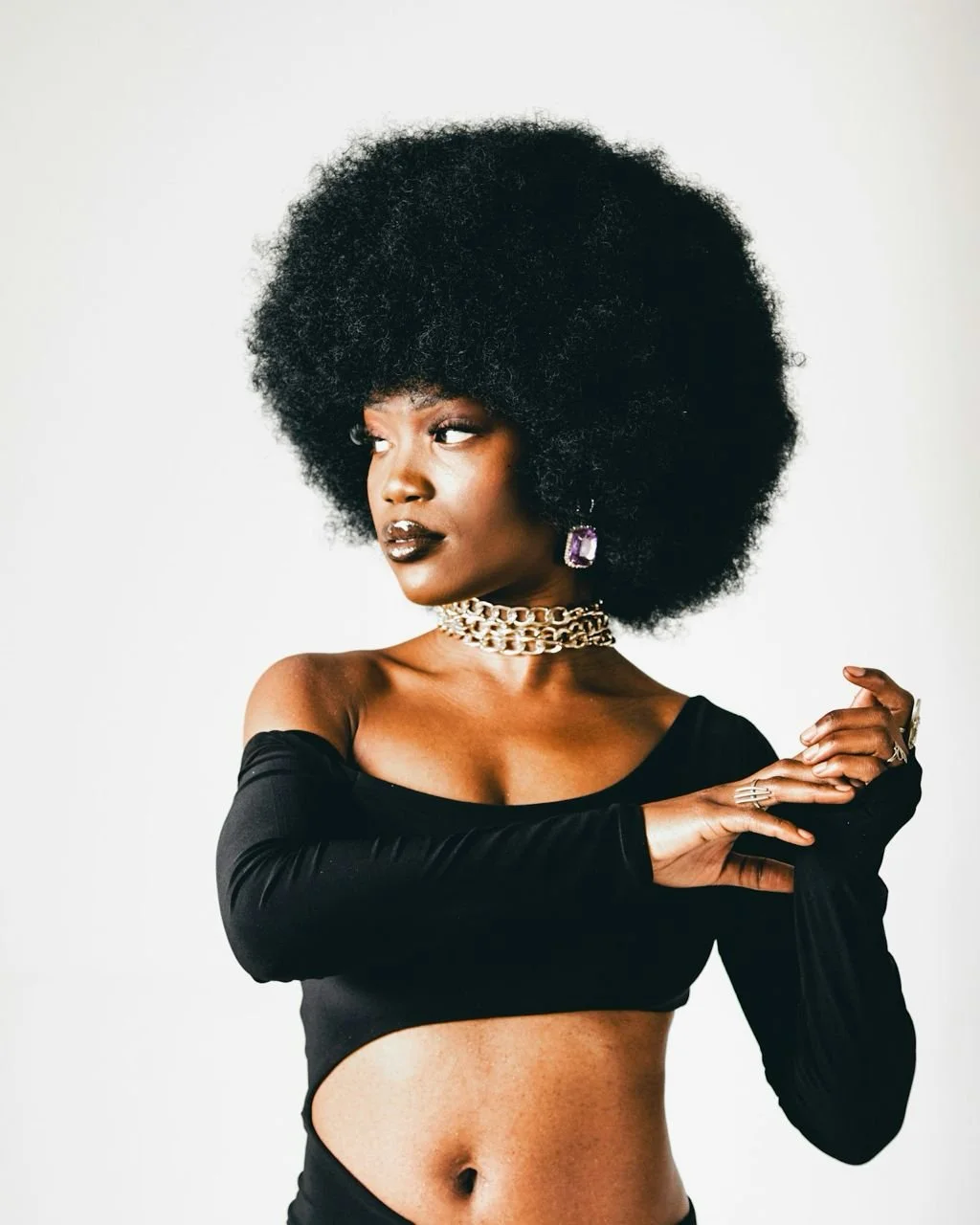
A model rocking their beautiful Afro photographed by Dwayne Joer b
Growing up, one thing I’ve constantly struggled with is the idea that hair is just hair. To me, hair carries meaning. It’s one of the great ways in which people show their identity and heritage. The styles chosen are an expression to be listened to. So when it comes to fashion, hair should never just be hair. This is because whatever styles fashion campaigns and runways choose for their models reflects which beauty standards are being uplifted.
Historically, our hair as Africans has been a badge of belonging. It signals belonging to a tribe, age, and social status. But with colonialism came a new idea of good hair and bad hair. Straighter textures of hair were encouraged and “idolized,” and our curls were discouraged.
Till today, this is the same tune that we hear. Even in fashion spaces, there’s a safe version of African hair that is accepted. It has to be slicked, relaxed, in wigs or specific weaves rather than just on its own.
Globally, many models still rely on stylists unfamiliar with textured hair, which often results in their hair becoming damaged. This has led many models to learn how to style their hair in a way deemed safe. So we have models in styles that flatten or neutralize their texture.
We have magazines like British Vogue with a cover featuring several African models, but none with their natural hair. Their looks were even made way darker than they naturally are. It felt more like an attempt to make them look exotic and acceptable to the white gaze than to represent them.
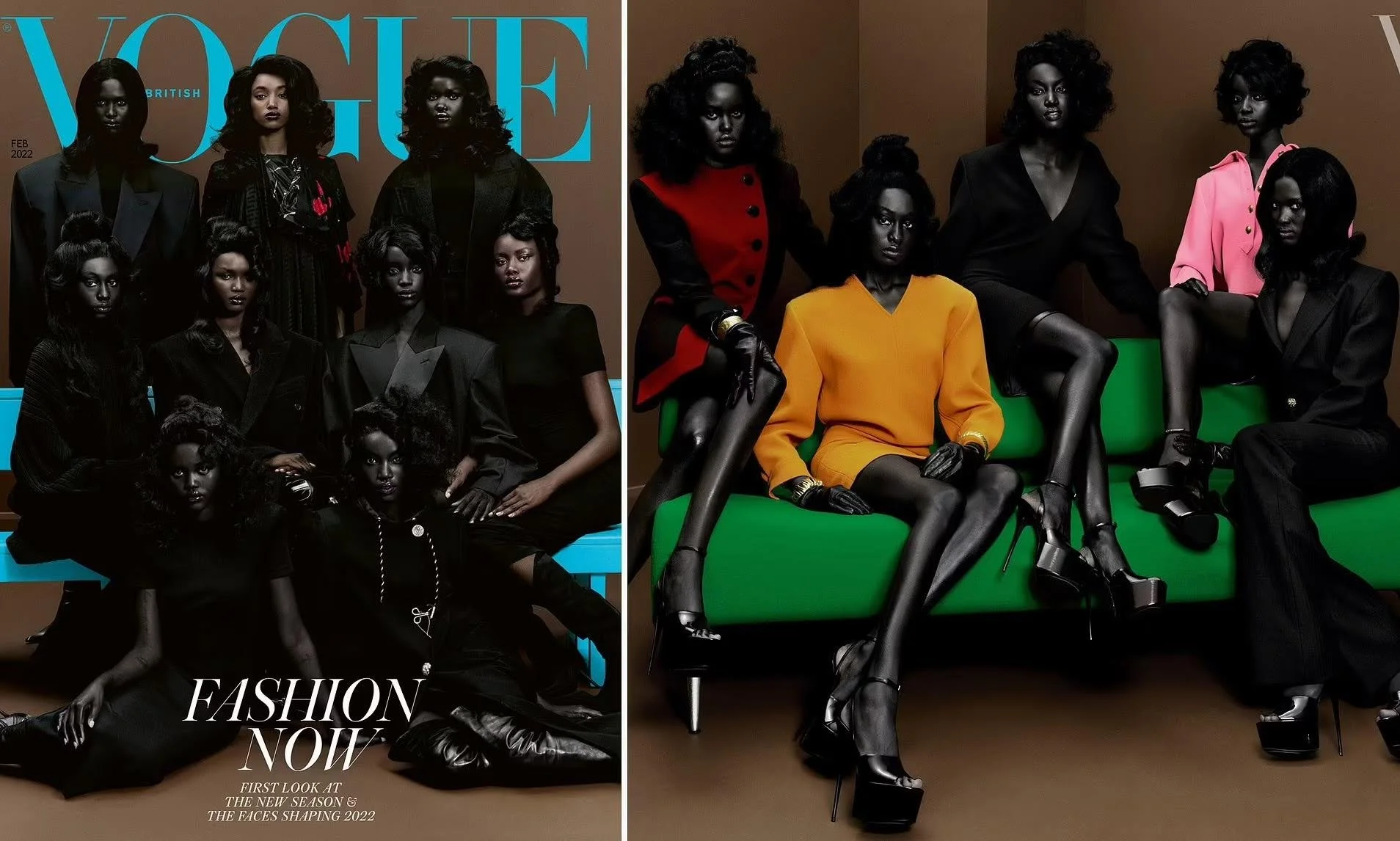
Models on the cover of British Vogue photographed by Rafael Pavorottio
Locally, we have campaigns and shows where wigs and straight weaves are favored. Most especially when their target audience is international. If our natural texture is missing when we run campaigns, the suggestion is that African hair needs a certain translation to be considered beautiful, even at the highest level of fashion.
Representation isn’t just about which faces walk the runway. It is also about how these faces are framed. When we lean into fully utilizing our braids and Afros, we affirm our identity and create a space where we can just be us. Essentially, a space where being us is just enough.
By using wigs and their variants in our campaign, we push the idea that only certain looks are marketable. Every choice we make in the fashion industry tells the audience what is valuable and what is sideline.
The politics of hair in African fashion is one that we must pay attention to. It is way beyond aesthetics, and by interrogating it, we can expand our style and the narrative we push out.
Although local brands that embrace our hair in its richness, like Orange culture. We also have the Ghanaian label Mafi, which has revived traditional threading as a striking modern statement. In Senegal, Tongoro Studio campaigns regularly spotlight headwraps. When we continue to make choices like this, we place our natural hair and style at the center of our fashion visual storytelling.
There are also artists like Laetitia Ky who used her sculptural hair art to turn hair into activism and storytelling. With works like this, we are reminded that our hair can be and is a declaration.
If there is any lesson in this, it is that our runways and campaigns are more than just spaces for clothes and style. They are arenas where the struggle for beauty, erasure, and identity plays out. Hence, we must be cautious about the image we present, not just because of the global audience and our need to present our true image to them. But also for the locals, who look at these campaigns as an expression of what they should be to be acceptable. It would be unfair if the message is anything other than to just be themselves.