The Return of Adire: How Nigerian Designers Are Modernizing an Ancient Craft
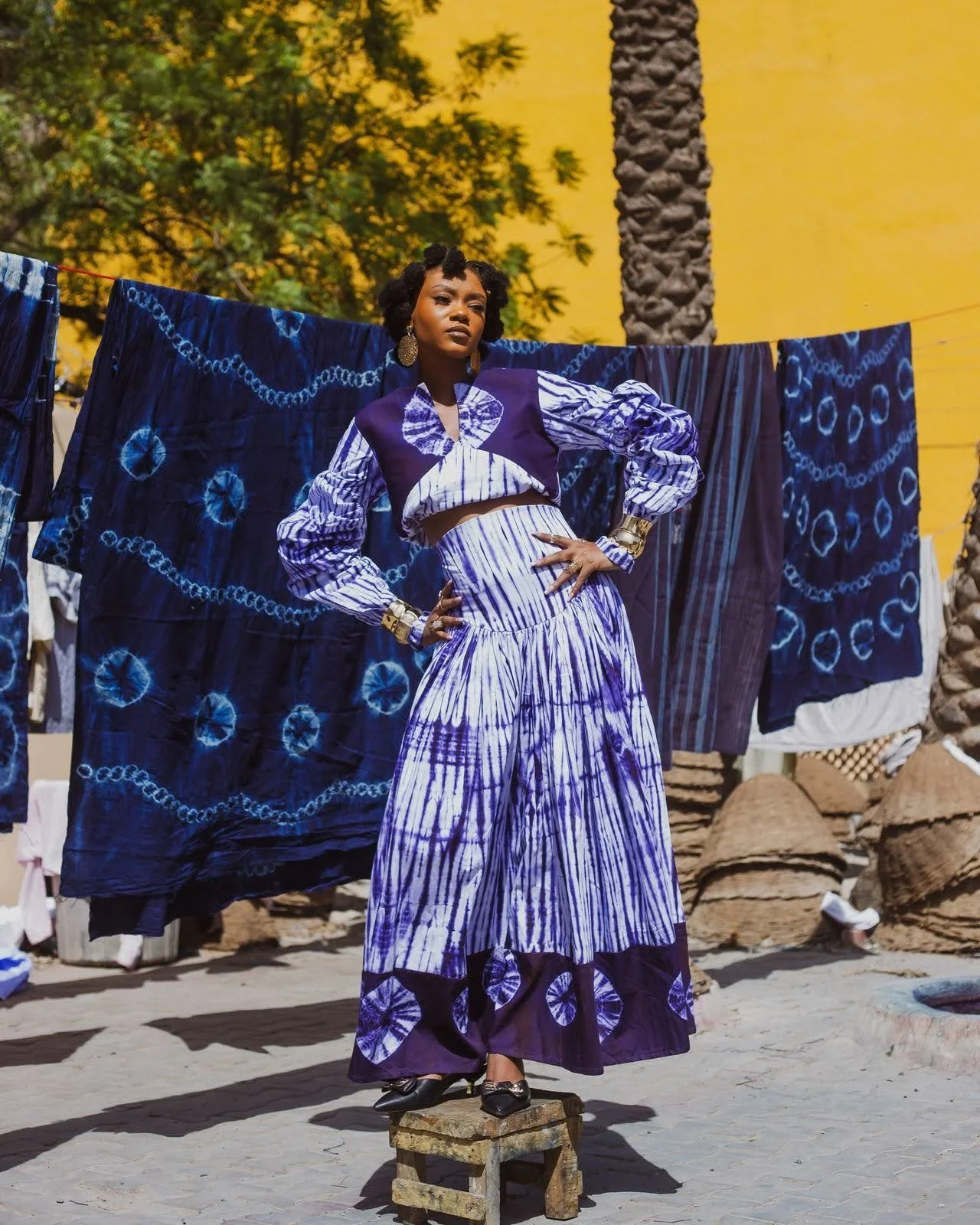
Model adorned in Adire photographed Umar Faruq
Adire has re-entered mainstream Nigerian fashion, not as a relic of the past, but as a living, evolving textile being reimagined by a new generation of designers. Everywhere I look in Nigeria, I see this fabric in rows of stores in the markets, superstores, and plazas.
As happy as we are about this development, it seems society is finally ready to start deconstructing the westernization of its fashion ecosystem. I must speak about two things I have noticed.
The type of clothes made with this fabric, and the context in which they are worn.
The Types Of Clothes
The Adire fabric is usually used to make free-form pants, also known as “palazzo” pants. You can see it as A-line halter-neck gowns in different lengths. Some still make beautiful two-piece fits like button-down shirts and shorts, or mini skirts.
It is crucial to acknowledge brands like Dye Lab and Kilentar, who have been creating more formal designs with Adire. It would be unfair to overlook the vast contribution they have made to formalising the use of Adire.
Now we see more formal designs of the fabric circulating; unfortunately, these are not the ones in mass production.
However, as stunning as the Adire pieces from multiple brands may be, we see that the fabric is largely relegated to specific kinds of clothes—informal clothes —and this brings me to my next observation: context.
The Context
Is it really worth celebrating that Nigerian fabrics are making a comeback, but are relegated to informal contexts and spaces? Rarely does it appear at high-level corporate events, diplomatic gatherings, or even weddings unless deliberately styled as a “traditional” moment.
Recently, Njideka Akunyili-Crosby, the daughter of late Dora Akunyili, presented her painting “The Obamas: Springing Forth (2026)” to former U.S. President Barack Obama and wife. She gave them this painting while wearing a dress from Dye Lab, which is one of the few occasions when traditional fabrics are worn in a formal context that involves international or global spectators.
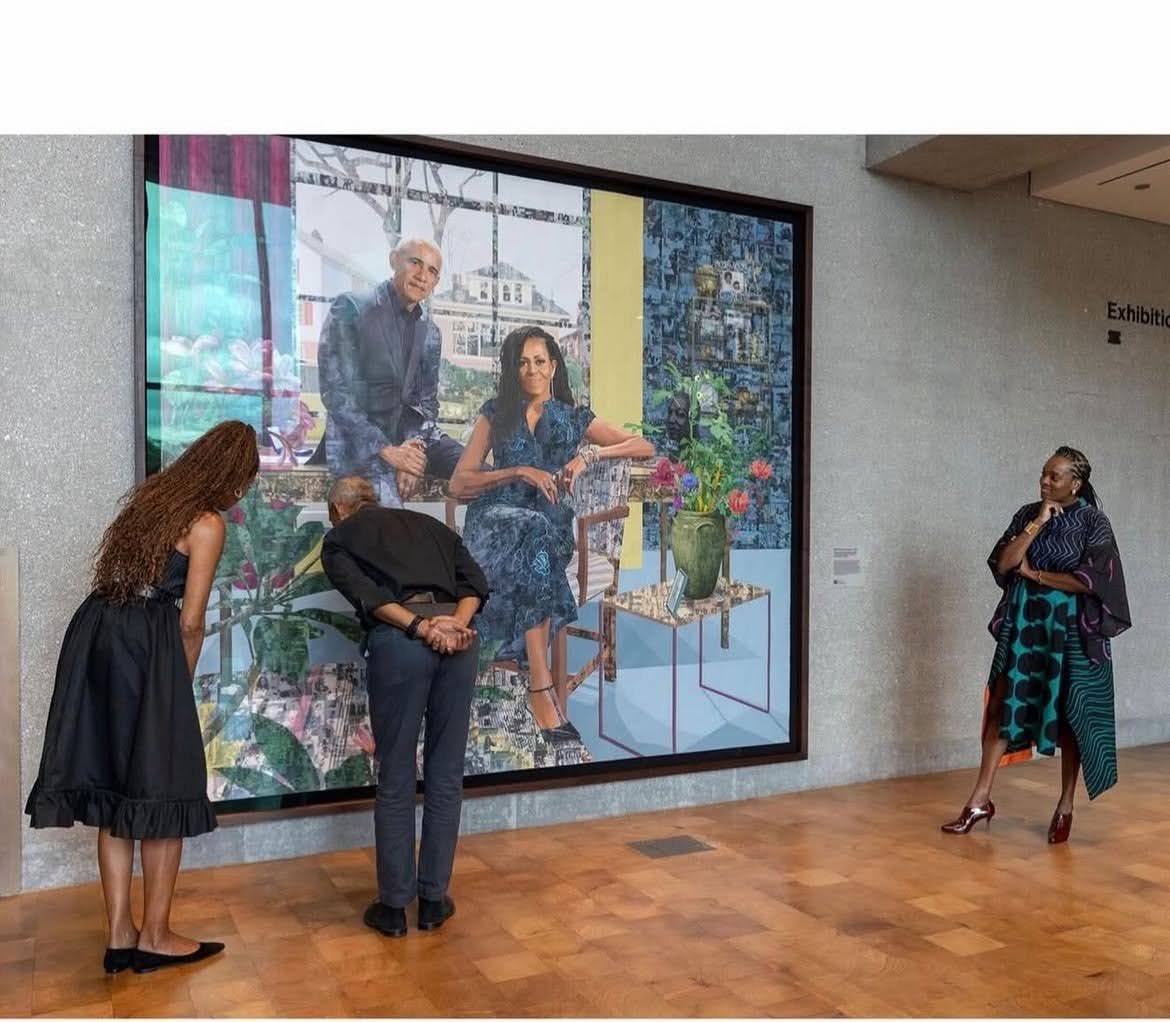
Njideka Akunyili-Crosby in Dye Lab presenting her painting to the Obamas photographed by Pete Souza
This also reminded me of the iconic 1977 photograph of Nigeria's Head of State, General Olusegun Obasanjo, standing beside U.S. President Jimmy Carter at the White House. Obasanjo wore a regal traditional agbada and fila, and he looked so phenomenal; that picture remains one of the most swank pictures ever taken.
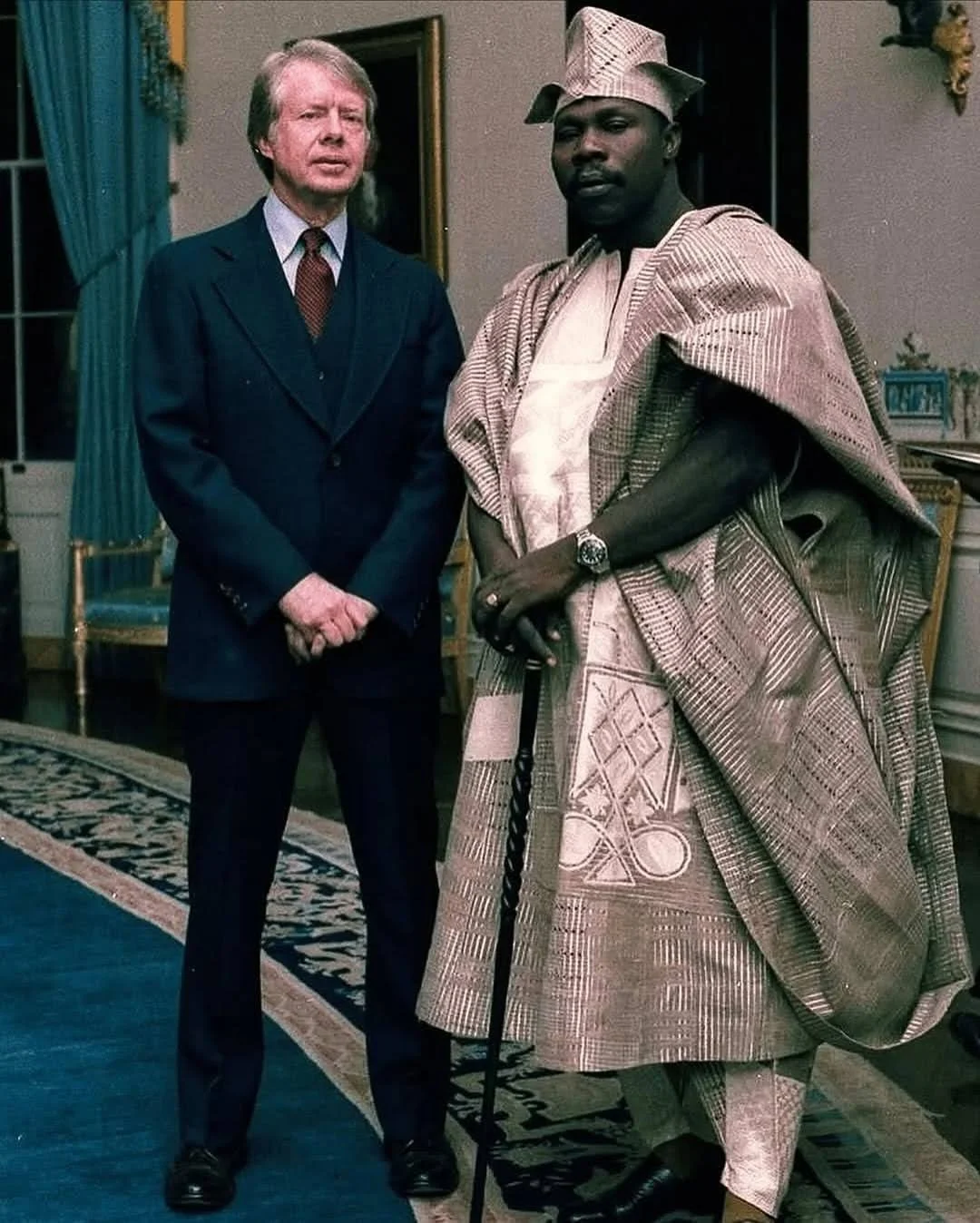
General Olusegun Obasanjo, standing beside U.S. President Jimmy Carter at the White House in 1977
Nevertheless, these two aforementioned instances bear similarities beyond the obvious one. Nigerian fabrics like adire and traditional attire usually make an appearance when the audience is international and involves public figures.
But when it comes to the locals, these fabrics rarely appear in formal contexts and do not appear as much. It is almost as if it were a performance when there is more international media. Or there is a need for less strict dressing policies in formal contexts/industries for those living in Nigeria.
So, while Adire’s comeback is worth acknowledging, its positioning remains limited. The fabric is celebrated—but only within carefully defined boundaries
This creates a subtle contradiction. On one hand, there is a growing desire to reclaim Nigerian identity through fashion. On the other hand, there remains an unspoken hierarchy of textiles, where Western fabrics are still considered more “appropriate” for formality, power, and prestige.
Note that this fabric was worn by the elites in the 1960s as a symbol of protest against Westernization. So I ask—If Adire is only acceptable in relaxed, international, or creative spaces, has it truly reclaimed its status?
Why This Matters
Textiles are not just materials; they are cultural signals. What we choose to wear—and where we choose to wear it—reflects how we value our heritage.
When Adire is excluded from formal contexts, it reinforces the idea that indigenous fabrics are aesthetically pleasing but not authoritative. Beautiful, but not powerful. Cultural, but not professional.
This perception has real consequences. It affects how designers experiment, how consumers invest, and how African fashion is interpreted on global stages.
Modernization should not mean dilution. It should mean expansion.
What True Modernization Could Look Like
For Adire to fully evolve, designers must push beyond casual silhouettes and explore its versatility. This includes structured tailoring, eveningwear, workwear, and ceremonial attire. It also means investing in fabric finishing, pattern placement, and dye consistency that can support more demanding designs.
Equally important is context-shifting. Adire deserves to be seen in boardrooms, on red carpets, at state functions, and in luxury retail spaces—not as a novelty, but as a standard.
This shift also requires consumers to participate. Choosing Adire for formal moments is a statement—one that challenges long-held assumptions about what sophistication looks like.
Conclusion
The return of Adire is a powerful step toward cultural reclamation, but it is only the beginning. Visibility alone does not equal progress. For this ancient craft to truly thrive in modern Nigeria, it must be allowed to exist beyond the confines of informality.
This does not negate the fact that its comeback is applauded and well-received. It just points to other key problems in our fashion ecosystem that are vastly overlooked. It also points to its imminent phasing out, as it is, after all, a trend.
Adire should not just be worn—it should be trusted, elevated, and expanded. Only then can its revival move from trend to transformation, and from nostalgia to true modern relevance.