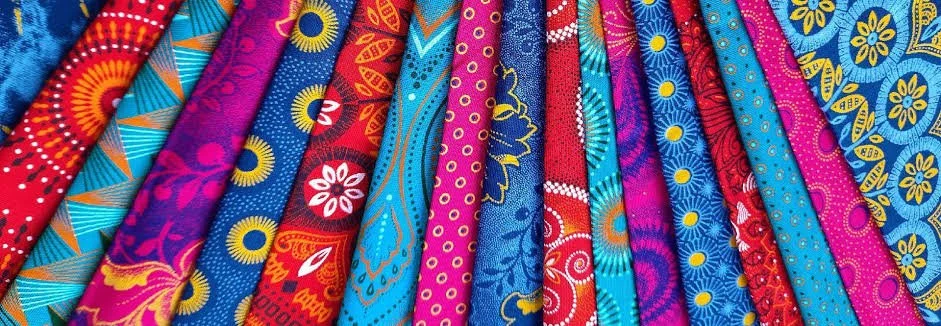
Different Shweshwe fabric photographed by Da Gama
The Shweshe fabric story began long before it reached the borders of South Africa. In fact, its story in Africa can be traced back to 2400 BC, when Arab and Phoenician traders brought the fabric to the East Coast of Africa.
It eventually reached South Africa in the 1600s when the Cape Dutch colonies established trade with East Asia. This was because goods bound for Europe had to pass through South Africa. The Dutch East India Company had established a port at the Cape of Good Hope, which was the hub through which the fabric circulated.
During the early 1800s, Britain had colonized the region. After 1845, a Modesty Law required Africans to cover themselves whenever they entered pioneer settlements. With no local textile industry at that time and a growing need for clothing that covered the body from neck to knee, South Africa became a market for European-made fabrics.
Originally known as indigo-dyed fabric, Shweshwe was dyed with indigo plants that could not grow in Europe’s cold climate and had to be imported from India. However, in the late 1800s, Germany developed synthetic indigo dye, and European Shweshe production started.
In the early 1840s, the French missionaries gifted indigo fabric to King Moshoeshoe 1 of the Sotho people. This was where the name “Shoeshoe” or “Shweshwe” came from. Later in 1858, the German settlers arrived in the Eastern Cape with the indigo cloth. The Xhosa women in the German mission stations adopted the fabric, and it spread through the Xhosa community. Among them, it became known as Ujamani, which translates to “a German”.
By the 1980s, it was so popular that it became entrenched in South African culture. The fabric’s popularity was due to its beauty, durability, and functionality.
In 1982, the local production of shweshwe began. The UK clothing brand Tootal invested in Da Gama (based in Zwelitsha) to produce shweshwe locally. Da Gama did so well that it trademarked Three Cats, which was a brand in England that South Africans used to import Shweshwe from.
Da Gama Textiles is still the only manufacturer globally to produce the original shweshwe. Da Gama’s Shweshwe is still so distinct. It has a salty taste, a starchy smell, and a stiff texture.
The 2000s were when Shweshwe really entered the contemporary fashion world. South African designers began experimenting with new silhouettes, causing Da Gama textiles to release more colors and patterns. By 2010, shweshwe was used for a variety of items, including bags, shoes, and underwear.
The fabric’s global reach became undeniable when, at the 2022 Paris Fashion Week, designer Jessica Molebatsi, through her label Jessica Jane, showcased a Swarovski-embedded Shweshwe piece on the runway.
Finding brands that still work extensively with Shweshwe can be difficult, possibly because of its local production. Some brands continue to keep the fabric alive. One brand that stands out is OYOO Style, which was founded by Rejane Gwynne and Krissie Gwynne in 2021. They were driven by a desire to create quality clothing that lasts. Their collection ranges from pants, aprons, shorts, stockings, and pillowcases, all with Shweshwe.
Even today, Shweshwe remains part of South African traditions, especially at weddings and ceremonies. The story that Shweshwe tells is important to South Africans and Africa as a whole. It’s not just about fabric, it’s about the past, present, and future. In many ways, the continual existence of Shweshwe shows how much fashion can hold identity, memory, and pride. It also reinforces the idea that tradition and innovation can coexist even in a changing world.