Kai Collective: Creativity and Ownership
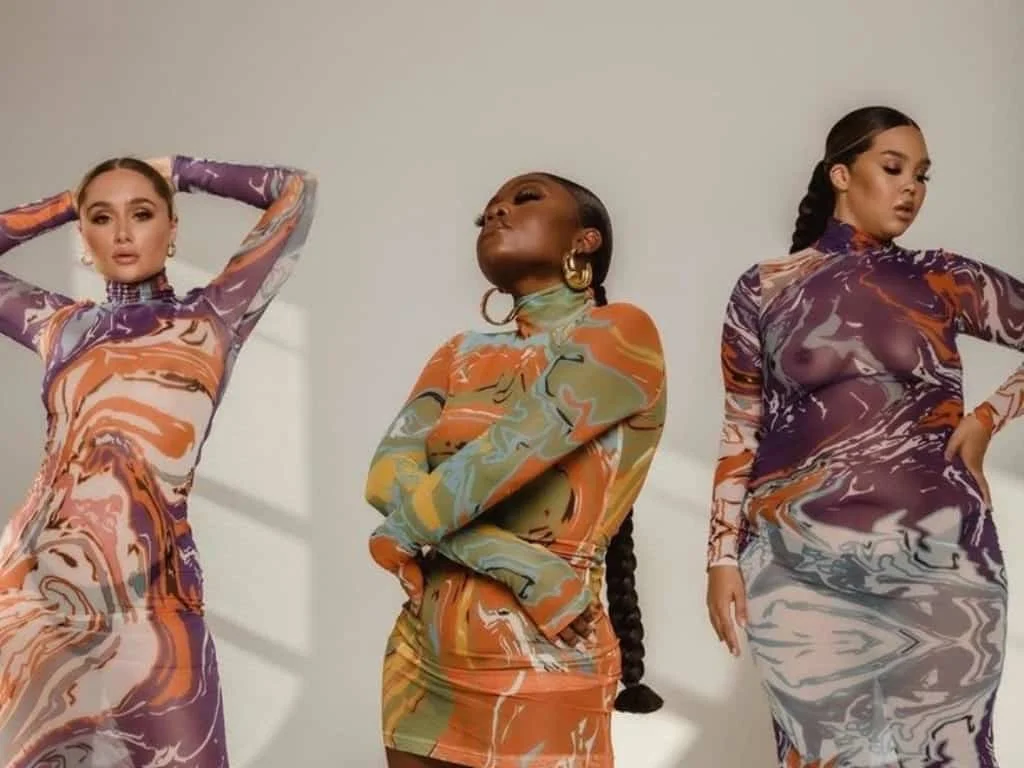
Image Source: Fisayo Longe on Instagram
It is impossible to mention black female designers and skip Fisayo Longe and, by extension, Kai Collective. Fisayo’s contribution to the fashion industry cannot be overlooked. Her experiences and achievements have set the precedent for many trends in the fashion industry.
Founded in 2016, Kai Collective was built on a simple yet powerful idea: creating clothing that celebrates women’s bodies and makes them feel confident. With its beautiful fabrics and one-of-a-kind prints, the brand quickly attracted a loyal global audience, particularly among Africans in the diaspora and at home.
The Viral Gaia Dress
It is impossible to discuss Kai Collective’s growth and journey to the limelight without mentioning the Gaia dress.
Kai Collective’s breakthrough moment arrived with the release of the Gaia dress, a sculpting knit garment defined by its hypnotic swirl print and body-hugging silhouette. The design became an instant phenomenon online. On social media, women shared photos and videos of themselves wearing the dress, praising how it celebrated curves and moved with their bodies.
The success of the Gaia dress was not accidental. Longe has spoken openly about how intentional the design process was. The print itself was developed in collaboration with Adebusola of Grapes Pattern Bank, and although what we have now is different from the initial print, it is undeniable that both women made magic.
However, the same print that propelled the brand forward also exposed it to one of fashion’s oldest problems: design theft.
The Boohoo Dispute
In 2021, Longe discovered that fast-fashion retailer Boohoo had released garments featuring prints that appeared strikingly similar to Kai Collective’s Gaia design. The discovery quickly sparked outrage among fans of the brand and fashion observers who saw the resemblance as too close to ignore.
Rather than remaining silent, Longe took immediate action. She publicly called out the issue and sent a cease-and-desist letter to Boohoo demanding the removal of the items and compensation for damages.
What made this case particularly significant was that Longe had already taken steps many young designers overlook: she had legally registered the Gaia print design. The print was protected in the United Kingdom and the European Union, with additional legal protections pursued in the United States.
This preparation gave Kai Collective a stronger legal footing than many independent designers typically have when confronting large corporations.
For many emerging designers watching the situation unfold, the outcome represented something rare in fashion: a small independent label successfully defending its intellectual property against a major fast-fashion company.
Despite these challenges, Kai Collective has continued to grow into one of the most recognizable diaspora-led fashion brands of the past decade.
The Impact
Much of the brand’s success lies in its ability to combine design with community. Through social media, storytelling, and direct customer engagement, Longe built a brand that feels deeply connected to the women who wear it.
The clothing itself reflects that philosophy. Kai Collective garments are designed not simply to fit bodies but to celebrate them. Fluid prints, sculpting fabrics, and confident silhouettes allow women to move freely while still feeling powerful in their clothing.
In a fashion landscape often dominated by legacy houses and traditional gatekeepers, Kai Collective represents a new type of luxury — one driven by authenticity, digital connection, and a clear sense of identity.
By protecting her work and standing firm against design imitation, Fisayo Longe demonstrated that independent designers do not have to accept those realities passively. And this is why she is being celebrated this month, she didn’t accept defeat or norms, she challenged them.
And in doing so, she created history and continues to do so with her breathtaking designs that have held the African community captive.
