Why African Fashion Houses Need to Think Like Tech Startups
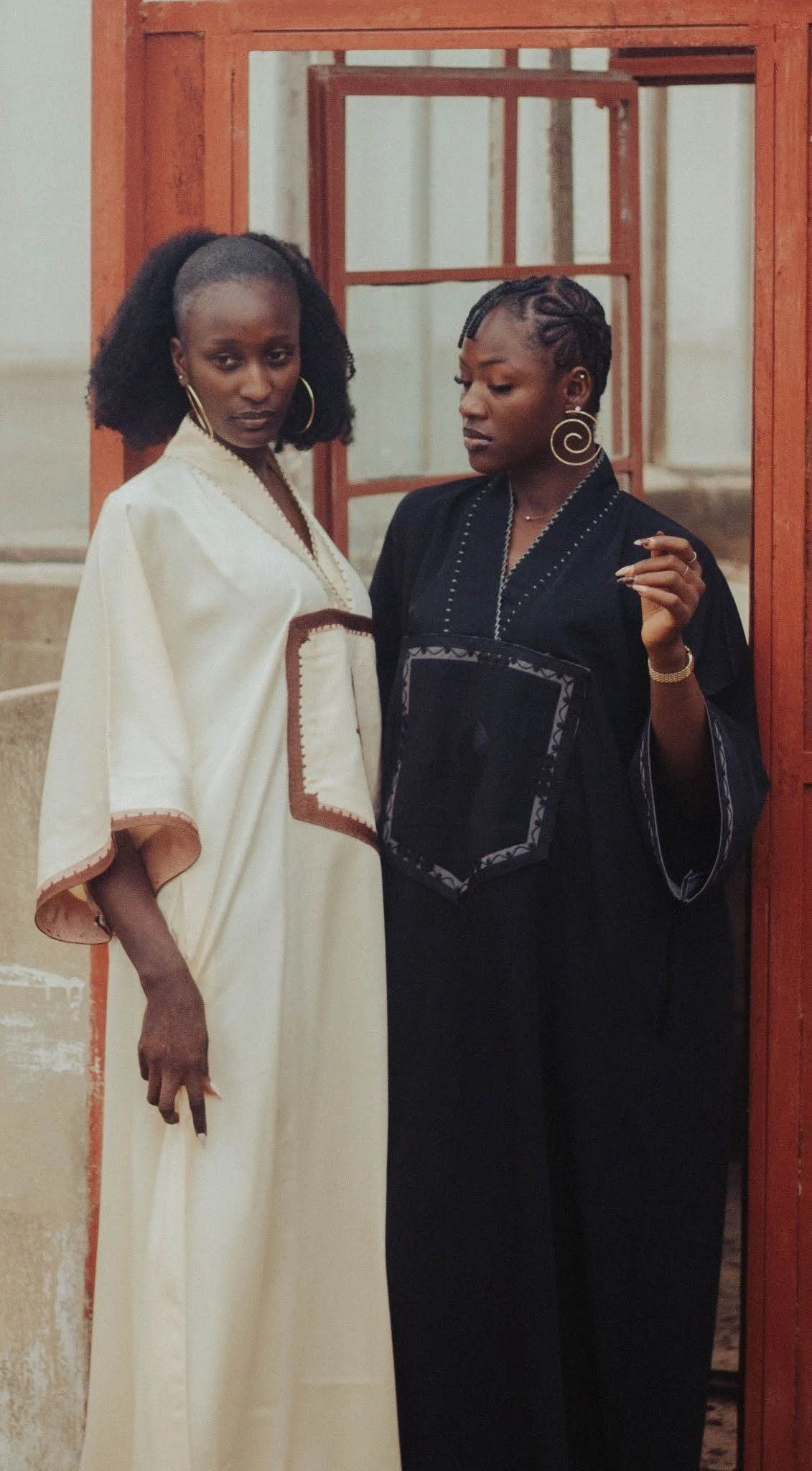
Two women stand gracefully by a vintage door photographed by Khalifa Yahaya
Everyone knows that African fashion has momentum. From Lagos to Johannesburg, Accra, and the African diaspora in London or New York, designers are making bold statements. Yet, for many fashion houses and brands, growth still feels limited. The challenge isn’t lack of talent, it’s the absence of a sustainable framework for scaling ideas into globally competitive brands. Of course, amongst other things.
This is where lessons from tech startups come in. No, fashion houses don’t need to release collections like apps or chase Silicon Valley-style venture funding. However, the startup mindset – characterized by fast validation, community-driven growth, digital-first reach, and smart data utilization- can give African brands the edge they need.
Here are five practical ways African fashion houses can think like startups, without losing their creative soul.
1. Adopt the Mindset, Not the Mechanics
When people talk about startups moving fast, it’s easy to picture chaotic sprints and endless product drops. That pace doesn’t translate directly into fashion, where design, production, and supply chains can’t shift overnight. However, what fashion houses can borrow is the principle of testing ideas before making a heavy investment.
Instead of committing to complete production runs, a brand can use digital tools to validate interest. Posting sketches or mockups on Instagram, running polls, or offering a small batch for pre-order allows customers to “vote” with their attention or even their wallets. This approach not only reduces waste and financial risk but also builds anticipation before the item is even released. It’s the fashion equivalent of a startup’s “minimum viable product” – launch small, learn quickly, then scale.
2. Lean Into Existing Communities
Startups expend time and resources on building a community and acquiring loyal users. However, some African fashion houses may not need to because certain communities are already woven into the culture. From campus associations, the alte community, and music subcultures to diaspora gatherings and cultural festivals, these “tribes” provide a ready-made audience.
The most successful brands are those that authentically tap into these communities. For example, creating capsule collections tied to cultural festivals like Afrochella or raves. The point is to target an already existing community and cater to their fashion needs.
By positioning themselves within these communities, fashion houses don’t just sell garments; they become embedded in lived experiences.
3. Digital Reach
Global scaling doesn’t have to mean opening physical stores abroad. In fact, for many African fashion houses, that’s not financially feasible. What is possible is leveraging digital platforms to reach a global audience. Instagram, TikTok, and even Twitter (X) make it possible for a collection to be seen around the world within minutes.
Pair this with innovative influencer partnerships, especially with Africans in the diaspora, and suddenly a local brand has visibility in London or Toronto. These influencers are already navigating the intersection of African identity and global style, making them natural ambassadors for this cause. By embracing a digital-first strategy, fashion houses can achieve international exposure without incurring the costs associated with extensive physical operations.
4. Simple Data, Not Dashboards
In tech, data drives decisions. But that doesn’t mean African designers need advanced analytics software to compete. Simple, observable patterns are just as powerful. Which Instagram posts get the most engagement? Which fabrics sell out first? Which designs are being resold quickly in thrift markets? These are all forms of “data” that reveal what customers value.
By paying attention to these signals, fashion houses can refine their collections with confidence. Maybe it’s learning that certain colors resonate more with your target audience, or that particular cuts are being styled and reposted more often by potential buyers. Small insights, applied consistently, can add up to more efficient production cycles and better market alignment. In other words, data doesn’t have to be intimidating; it just has to be observed.
5. Innovation Through Iteration: Building on What Exists
One of the most underrated lessons from startups is that you don’t always have to invent something brand new; you can build an improved version of what already exists. Instagram wasn’t the first social platform; it just made photo-sharing faster and cleaner than Facebook. TikTok didn’t invent video content; it perfected short-form engagement.
African fashion brands can take the same approach. Instead of feeling pressured to reinvent the wheel, they can study what’s already popular and make it sharper, bolder, or more culturally resonant. Take Tega Akinola, for instance. She didn’t invent sneakers or sportswear; she reimagined them through upcycling and unconventional material choices, transforming ordinary Nike socks and cables into high-fashion pieces that garnered global attention.
This “innovation through iteration” means African fashion houses can experiment on existing silhouettes, fabrics, or even distribution models, then add a twist that makes them uniquely African. The opportunity lies in improving and personalizing the familiar. Some may say it's copying, but it's actually a strategy.
A Startup State of Mind
The point isn’t for African fashion houses to mimic Silicon Valley. It’s about adopting the mindset that makes startups thrive: move with agility, listen closely to your audience, leverage digital reach, and learn from real-world signals.
African fashion already has the creativity and cultural depth to scale. The challenge is to build structures that can facilitate this scaling. By borrowing the proper lessons from startups, fashion houses can reduce waste, grow their influence, and build brands that aren’t just locally celebrated but globally competitive.
The future of African fashion won’t be decided by how many collections are released, but by how well brands understand and connect with the people who wear them.