The Politics of Presentation in African Life
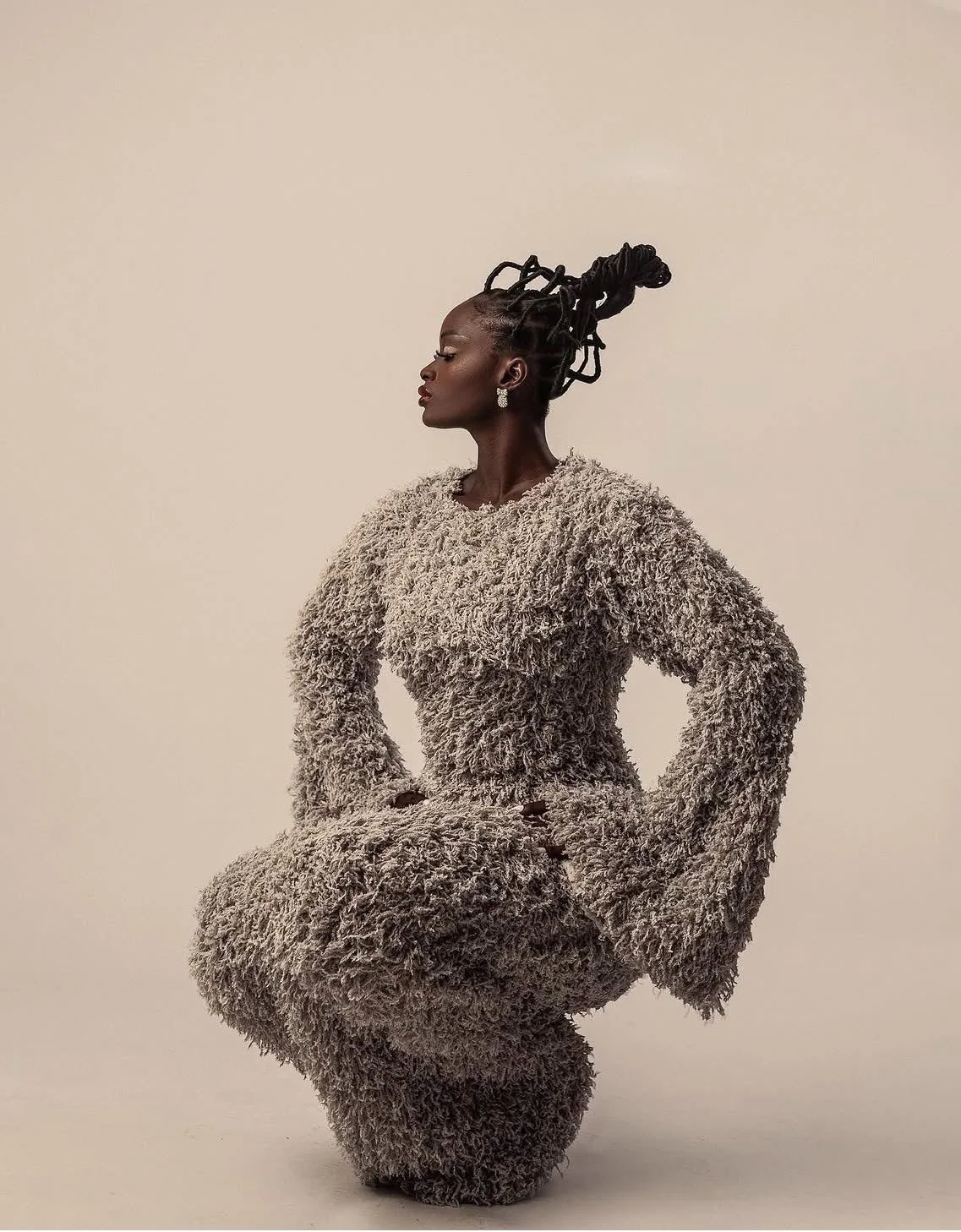
Model for Queen & Cloth by Ademola Adetoyi
Fashion is often framed as a matter of personal taste. We wear what we like, what suits us, what feels expressive. But in many African societies, clothing has rarely been just a personal choice. Before personal branding, aesthetics, and identity politics entered mainstream discourse, fashion functioned as a social language. It helped communicate class, religion, respectability, political allegiance, cultural belonging, and even safety.
To get dressed in many African contexts is to make a statement, whether intentional or not.
A young professional arriving at a job interview in Lagos understands that appearance may influence how seriously they are taken. A woman entering a church service knows that certain styles will be read as respectful while others may attract criticism. A politician carefully selects traditional attire during campaigns to signal cultural authenticity. Even within nightlife spaces, clothing often communicates affiliation, status, and belonging.
These dynamics are not new. They are rooted in a long history in which clothing has served as both a marker of identity and a tool of political expression.
In nineteenth- and early twentieth-century Yorubaland, dress was already carrying meanings. Clothing communicated social status, character, wealth, and communal identity. Political actors understood this well. During the rise of cultural nationalism under colonial rule, some members of the educated elite deliberately rejected European clothing and embraced Yoruba attire. Their decision was not simply about fashion. It was a visible critique of colonial domination and an assertion that African culture possessed value independent of European approval.
The choice communicated multiple messages at once. To colonial administrators and missionaries, it signaled resistance to the assumption that progress required cultural assimilation. To fellow Africans, it represented participation in a growing conversation about identity, self-determination, and the future of Yoruba society.
Clothing became a political language through which larger ideological battles could be fought.
Yet the politics of fashion were never straightforward. Clothing could unite, but it could also distinguish. In Abeokuta, early Christian converts often adopted European styles introduced through missionary communities. Certain garments became associated with Christianity and modernity. Over time, however, these styles spread beyond the communities that first wore them. Tailored blouses once linked to Christian conversion were eventually adopted by Muslim and traditional Yoruba women as well.
Fashion, in this sense, proved capable of transcending the political meanings initially attached to it. It began as a marker of religious identity and became part of a broader aesthetic culture.
At the same time, clothing remained deeply connected to class. The fabrics a person wore often revealed their economic position. Imported silks, velvets, and other luxury materials signaled wealth and political influence. Clothing did not merely reflect status, it helped define it. To appear prosperous was, in many ways, to be recognized as prosperous.
This relationship between appearance and power continues to shape African societies today.
Across the continent, respectability politics still influence how people present themselves. Certain ways of dressing are associated with professionalism, intelligence, morality, or success, while others are viewed with suspicion. These assumptions affect access to opportunities, influence social interactions, and shape public perceptions.
In many ways, contemporary conversations around appearance echo older historical patterns. Clothing remains a means through which individuals negotiate their place within society. The language has changed, but the stakes often remain the same.
The connection between dress and political identity can also be seen in African diasporic communities. Among Somali refugees and immigrants, for example, traditional and religious clothing has often served as a visible expression of cultural continuity. For communities displaced by conflict and scattered across multiple countries, dress can become a way of preserving collective memory and national identity.
For many Somali women, garments such as the jilbab and garbasaar function as more than religious attire. They represent connections to history, community, and a homeland that many can no longer easily access. In this context, clothing becomes a form of cultural preservation and, in some cases, political resistance.
These examples challenge the notion that fashion is somehow separate from politics. In African societies, the two have long been intertwined. Clothing has been used to resist colonialism, signal religious affiliation, demonstrate social status, preserve cultural memory, and negotiate belonging.
Perhaps this is why debates about fashion continue to carry such emotional weight. Arguments over what people wear are rarely just about fabric. They are often arguments about identity, morality, power, and the kind of society people wish to create.
To dismiss fashion as superficial is therefore to overlook one of the most visible ways people communicate with the world around them.
In African life, clothing has never simply covered the body. It has told stories, marked boundaries, challenged authority, and signaled aspiration. It has served as both a mirror of society and a tool for reshaping it.
Fashion, in other words, has never been apolitical. It has always been part of the conversation.