Why Ayra Starr's Gèlè Era Sent Me Down a Yoruba Fashion Rabbit Hole
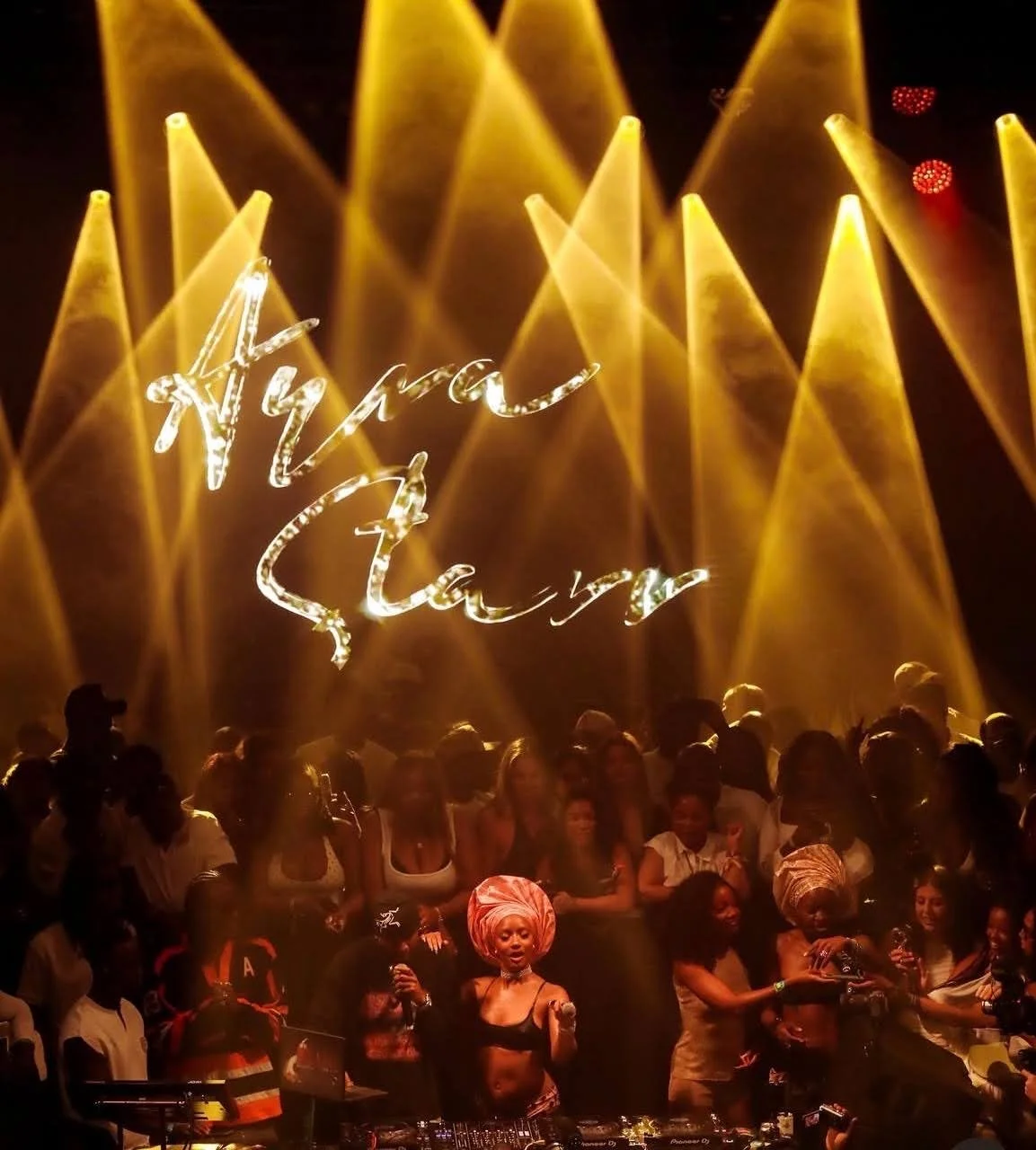
Ayra Starr in London photographed by Gold Owolabi
Lately, it feels like you can't escape Ayra Starr in a gèlè. She's worn one to the club. She's worn it in promotional images. She's sent gèlè to fans as part of her album rollout. At this point, the headwrap has become one of the most recognizable visual motifs of this era.
And honestly? I think it's cool.
Not because celebrities wearing traditional clothing is groundbreaking. Nigerian artists have always drawn inspiration from culture, fashion, and heritage. What caught my attention was the choice of the gèlè itself.
Because for something many of us now treat as a stylish finishing touch for weddings and owambes, the gèlè once carried a surprising amount of meaning.
I never knew there was any significance behind the way a gèlè was tied until I came across a clip from Tunde Kelani's 2002 film “Agogo Eewo”. I was too young to have seen the film when it first came out, but the clip sent me down a research rabbit hole.
According to the scene, there are three gèlè styles with specific meanings. A front-tied gèlè was associated with young women. A back-tied style was associated with older women. Then there was the ear-level style, which signified a married woman.
Suddenly, the headwrap I had always seen as an accessory became something much bigger.
It turns out that the history of the gèlè stretches back centuries.
The earliest forms of the gèlè can be traced to the Oyo Empire, where women used woven fabrics, particularly Aṣọ Òkè, as head coverings. Over time, these wraps evolved into a distinct marker of Yoruba womanhood. The fabric itself mattered, but so did the way it was worn.
A woman's gèlè could communicate age, marital status, social standing, wealth, and respectability. Long before social media bios, outfit captions, and aesthetic moodboards, clothing often served as a language of its own.
What fascinates me is that something as simple as the direction of a tie could hold so much cultural weight.
The gèlè wasn't merely decorative. It was social messaging. Without speaking a word, it could tell people where you stood within society and how you were expected to be perceived. The shape, size, and positioning all contributed to that message.
Today, many of us interact with gèlè very differently. We pick colours that match our fabric, save inspiration photos from Pinterest, and trust a talented gèlè artist to make something beautiful. Most of the time, we're thinking about aesthetics rather than symbolism.
But that doesn't make the modern gèlè any less interesting. As Yoruba society evolved, so did the gèlè.
What began primarily as a cultural signifier gradually became a canvas for creativity. Women started experimenting with dramatic folds, sculptural shapes, new fabrics, and increasingly elaborate designs. Professional gèlè artists emerged. Social media accelerated innovation. Entire businesses were built around transforming this fabric into wearable art.
The gèlè moved beyond tradition and became fashionable. And yet, even as it evolved, it never completely lost its connection to identity.
Today, a woman might wear a gèlè to a wedding. Another might wear one to honour her heritage. Someone else might wear one simply because it completes the outfit.
The meanings have expanded. That is partly why seeing Ayra Starr incorporate gèlè into her album rollout feels so interesting.
Not because she is reinventing the headwrap or introducing it to a new audience, but because she is participating in the latest chapter of its evolution.
For generations, the gèlè has adapted to the women who wear it. It has moved from royal courts to family celebrations, from cultural tradition to fashion statements, from markers of social identity to symbols of personal style.
Now it appears in music rollouts, promotional campaigns, music videos, and fan packages. The context in which the gèlè features change, but the gèlè remains.
Perhaps that's why it remains a staple. Many cultural garments survive because they are preserved. The gèlè survives because it evolves with time to fit the current generation and style. Each generation finds a new way to wear it, reinterpret it, and make it relevant to their own moment.
Whether it's tied for a wedding, an owambe, a photoshoot, or an album rollout, the gèlè continues to do what it has always done best: command attention.