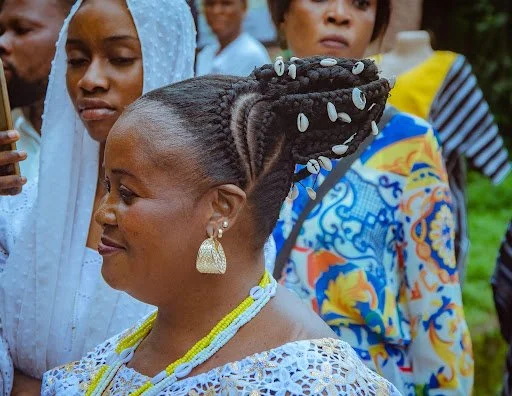
A traditional Yoruba woman with Didi-Shuku photographed by Ajayi Pelumi from Ekinken Creates.
In the age of Instagram and viral TikTok trends, hairstyles that were once deeply rooted in Nigerian culture are making a massive comeback. From intricate braids to sculpted cornrows, what was once a marker of ethnicity, age, and status is now a global fashion statement.
However, as these styles reemerge, they often do so under new names, stripped of their cultural context. This rebranding sparks an important debate: Is this evolution good for cultural preservation, or does it erase history?
The Return of the Old with a Twist
Styles like Shuku, Kiko, Pick and Drop, One-one, and Didi were once symbols of Nigerian heritage. These hairstyles were for beauty, but they also carried meaning. For example, Shuku, a hairstyle where braids are gathered at the crown of the head, symbolised elegance and was often associated with royalty or marital status.
Today, these styles are resurfacing but under names like “feed-in braids,” “Coi Leray braids,” “Jayda Wayda braids”, “boxer braids”, “knotless braids”, “summer braids,” or even “banana braids.” While some of these names are linked to cultures propelled by black communities worldwide, others are outright generic or coined for the global beauty market while not fully taking into account or crediting their historical origins among Black and African communities and diasporas.
Some of the aforementioned names are definitely not bad or can be called appropriation, but some names are attributed to celebrities who have popularly gentrified Black and African culture time and time again. And some of these names are given to hairstyles that already have African names.
So the issue comes when African and black hairstyles are stripped of their heritage and undergo a form of gentrification. When African and black people wear these styles, they are scorned but once the name is changed and upheld by people from other races it becomes trendy.
This raises questions: When cultural elements are renamed for global appeal, who benefits?
Cultural Appropriation vs Cultural Evolution
The global fashion and beauty industries often borrow from African cultures, repackaging traditions as trendy innovations. This practice is not new, but social media amplifies its impact. International celebrities have popularised braids, often without acknowledging their African roots, sparking accusations of cultural appropriation.
In Nigeria, however, the conversation takes a different tone. For many young Nigerians, these new names make the styles more “fashionable” or “modern,” helping them gain acceptance in professional and global spaces. What was once dismissed as “local” is now considered chic, though often only after being validated by Western influence.
Losing the Names, Losing the Narrative?
Language plays a vital role in preserving culture. When Didi becomes “flat twists,” and Kiko becomes “threaded hairstyle,” something is lost in translation. These names carry stories, songs, and traditions. By discarding indigenous names, we risk erasing the cultural heritage tied to these hairstyles.
Take Kiko, for example, who involves wrapping hair with thread. Historically, it wasn’t just a protective style; it was a bonding activity among women, a time to share stories and wisdom. Now rebranded as “threaded styles” or “African threading” on Instagram, the cultural narrative is often omitted, replaced by trending hashtags and influencer tutorials.
Why Are Nigerians Embracing Rebranding?
Part of the reason lies in globalization and marketability. Social media algorithms thrive on catchy, easy-to-pronounce names, which often favor Western terms. Moreover, younger generations, influenced by global pop culture, often seek modernized expressions of heritage that fit into today’s beauty standards.
Local salons and stylists also play a role. Marketing a style as “knotless braids” instead of “Didi” may attract a wider audience, including diaspora Nigerians and non-Africans, who associate the former with Instagram trends. The rebranding thus becomes a business strategy, though at the expense of cultural identity.
Good or Bad? The Grey Area
So, is the rebranding of Nigerian hairstyles inherently bad? Not entirely. On one hand, it has revived interest in traditional styles, ensuring they remain relevant in contemporary fashion. It has also created economic opportunities, with hairstylists leveraging these trends to reach a global audience.
On the other hand, the erasure of indigenous names and meanings risks diluting cultural heritage. Future generations may wear these styles without understanding their historical or social significance. The challenge, therefore, is to strike a balance, celebrating evolution while preserving roots.
The Way Forward: Reclaiming the Narrative
One solution lies in education and intentional naming. Stylists, influencers, and fashion platforms can highlight the original names alongside their modern counterparts. For instance, hashtags like #ShukuBraids or #DidiTwists can normalise indigenous terminology in global beauty spaces. Additionally, documenting these styles in digital archives or social media campaigns can help keep their stories alive.
As cultural aesthetics continue to merge with global trends, the conversation must shift from mere aesthetics to ownership and acknowledgment. Hairstyles are more than fashion; they are a reflection of history, identity, and pride.
So, the question remains: When you book your next “cornrow braid” appointment, will you also remember its original name, Didi and allback?