When Style Becomes Theft
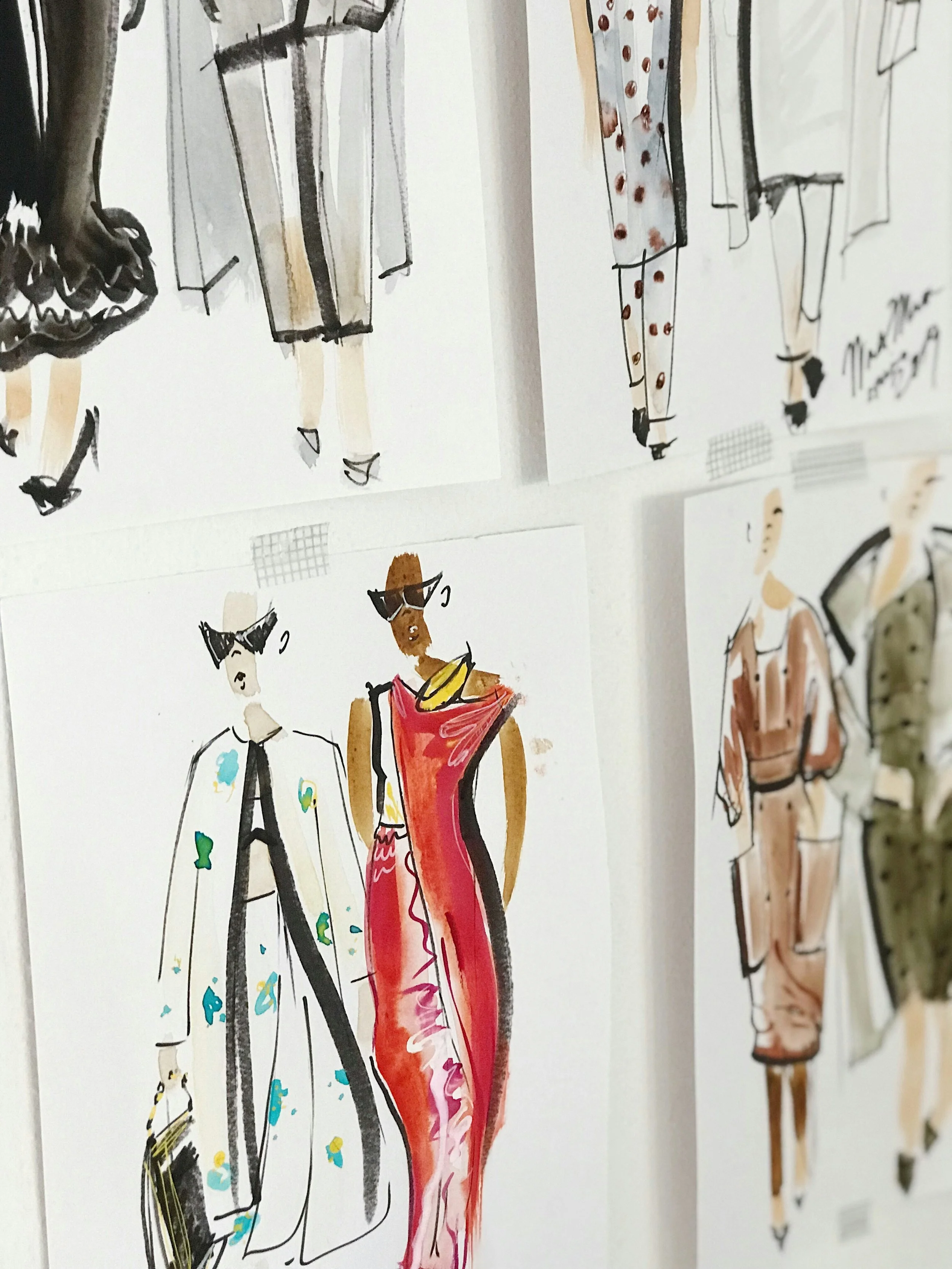
Fashion illustrations photographed by Charlota Blunarova
When Nigerian designer Veekee James called out a Senegalese designer for copying her viral Bonang Matheba dress, the internet did what it does best. There was rallying, rage, and we lived on. Before this, Tania Omotayo had faced the same problems when a vendor copied her design and logo, then sold the imitation piece for half the price online. The story is no longer shocking. It’s now a familiar routine in African fashion. A designer creates, someone copies, and nothing really happens after.
There’s something almost poetic about an industry built on creativity being so vulnerable to theft. Across the continent, we have designers doing more than just making clothes. They are telling stories and giving identities a home. From Lagos to Accra, to Nairobi, there's so much fashion energy. An energy so strong that it has pushed African designers onto the global runway. Now the rest of the world is finally learning our names, but our laws are struggling to protect these designers.
Fashion law, even globally, is complicated. What differentiates inspiration from imitation? Can a print be copyrighted? The questions are never simple. The challenge in Africa is quite structural. Intellectual property (IP) systems are patchy, expensive, and very poorly enforced. Most designers don’t even know where to start.
Intellectual property is really about ownership. It is the right to profit from what you create. In fashion, IP takes many forms: a trademark to protect your name or logo; copyright for unique prints and fabric patterns; or design rights for the distinctive shape of your dress. In theory, these laws give designers the power to fight back when their work is copied. In practice, many Africans can’t access that power.
Sometimes the process of accessing it feels out of reach. It’s expensive, bureaucratic, and full of jargon. Other times, it’s because the systems themselves don’t function well enough to make a difference.
I’ve watched how this plays out online. There’s the viral outrage, the callouts, the think pieces that follow. But you know one thing imitation outlasts? Outrage. When a copied dress circulates, it’s not just about taking a sale away from the original designer. It steals their narrative, their recognition, and even their place in an industry that’s already so difficult to navigate.
Africa’s fashion economy is valued at over $30 billion. This is an empire built on imagination and creativity. It supports millions of people, from farmers to stylists and tailors. It's a thing of pride across our borders. We have initiatives like the African Continental Free Trade Area, which are meant to make cross-border trade easier, but they also facilitate the movement of counterfeit goods. This same openness that powers growth also carries significant risk.
And it’s not just within; there’s the global fashion industry, which has long flirted with African aesthetics while denying African ownership. Western brands love to borrow freely without credit. When African designers face imitation within their market, the silence is louder.
Our governments should make IP registration cheaper, faster, and digital. Designers also need to understand that everything they create is an asset. Our legal systems must start treating the creative economy like the billion-dollar industry it is. It needs to catch up, especially as the fashion industry continues to grow and gain all kinds of interest.
For designers, protection is important. Register your logo, draft simple supplier agreements, and, most importantly, don’t share sketches without an NDA. These are the small steps to take while we work towards stricter legislation.